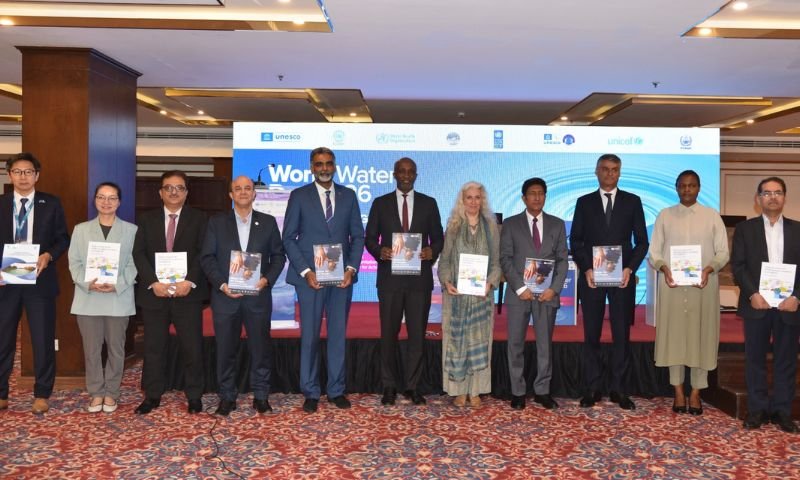
Islamabad, GNP: Water availability in Pakistan is declining while gaps in investment for water, sanitation, and hygiene services continue to grow, according to new United Nations reports launched in Islamabad.
The reports were presented during an event organized as part of extended World Water Day celebrations by the United Nations Educational, Scientific and Cultural Organization (UNESCO), the World Health Organization (WHO), UNICEF, and UNDP, in collaboration with Pakistan’s water sector institutions and development partners.
The UN World Water Development Report 2026 revealed that globally 2.1 billion people still lack access to safely managed drinking water, while 3.4 billion people remain without safely managed sanitation services.
In Pakistan, WHO and UNICEF estimates show that around 55 percent of the population does not have access to safely managed drinking water, while more than 58 percent of rural residents lack safely managed sanitation facilities.
Speaking at the event, Federal Minister for Water Resources Mian Muhammad Mueen Wattoo highlighted the country’s declining water availability, saying that Pakistan’s per capita annual freshwater availability has fallen from over 5,000 cubic meters at independence to below 1,000 cubic meters today.
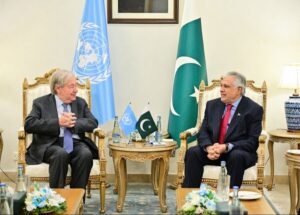
UN Resident Coordinator in Pakistan Mohamed Yahya emphasized the need for practical and inclusive water solutions based on local knowledge, stressing that water challenges require coordinated efforts.
According to the UN-Water Global Analysis and Assessment of Sanitation and Drinking-Water (GLAAS) 2025 Report, Pakistan’s Water, Sanitation and Hygiene (WASH) budgets increased from PKR 225 billion in 2022 to PKR 265 billion in 2024. However, due to inflation, this represented a 20 percent decline in real terms.
The report noted that while the WASH investment gap in urban areas has increased, the deficit in rural areas has slightly reduced compared to the 2021–2022 period.
The event also highlighted the gender dimension of the global water crisis, noting that women and girls spend around 250 million hours every day collecting water worldwide — more than three times the time spent by men and boys.
Under the theme “Water and Gender,” UN agencies stressed that lack of access to safe water and sanitation increases inequalities, with women and girls often carrying the greatest burden.
Experts, policymakers, researchers, and development partners discussed ways to improve climate-resilient water management, strengthen governance, and increase women’s participation in water-related decision-making.
A high-level roundtable explored recommendations from the newly launched publications, focusing on water security, climate change adaptation, public health, and the importance of stronger cooperation between science, policy, and practice.
Participants agreed on the need for evidence-based policies, improved institutional coordination, sustainable water management, and inclusive approaches to ensure water security for all.