
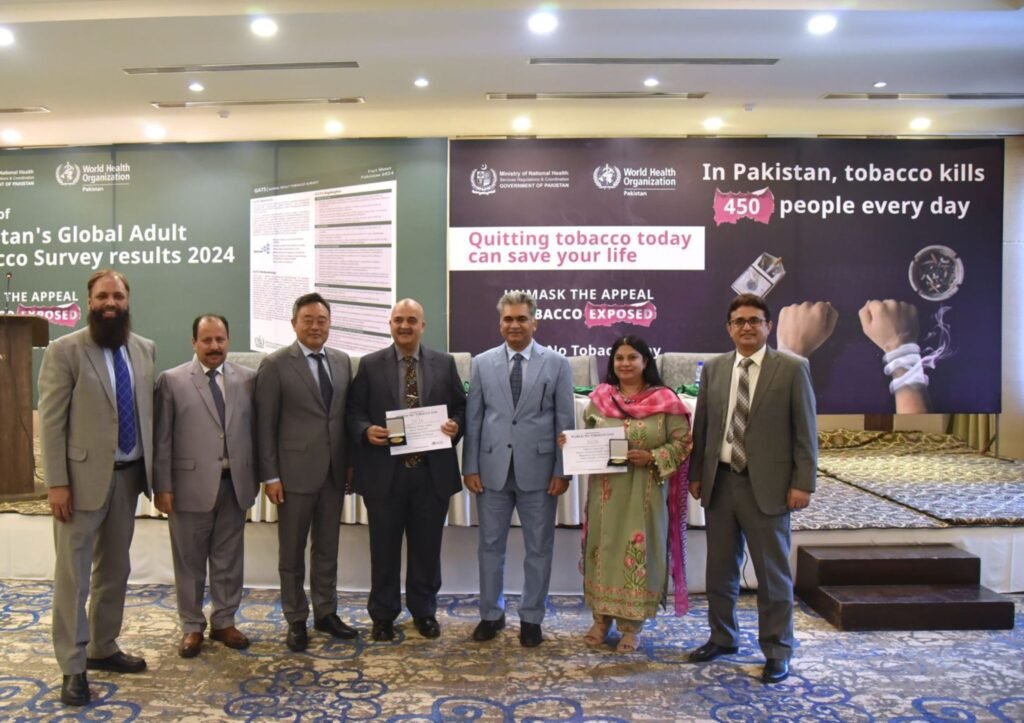
Islamabad, GNP: Pakistan has successfully reduced tobacco consumption by 15.7% over the last ten years, according to the findings of the Global Adult Tobacco Survey (GATS) 2024, conducted by the Government of Pakistan in collaboration with the World Health Organization (WHO) and the CDC Foundation.
The survey findings were officially presented in Islamabad during the extended celebrations of World No Tobacco Day 2026, under the leadership of Federal Health Minister Syed Mustafa Kamal.
According to the survey, tobacco control measures implemented under the WHO Framework Convention on Tobacco Control (FCTC) have contributed significantly to the decline in tobacco use across the country. Despite this progress, tobacco products are still used by 16.1% of Pakistan’s population aged 15 years and above, representing approximately 22.7 million adults.
Health authorities noted that tobacco remains a major public health challenge in Pakistan, causing nearly 163,600 deaths annually, or about 448 deaths every day, while imposing an economic burden exceeding Rs1.8 trillion (US$6.6 billion) each year.
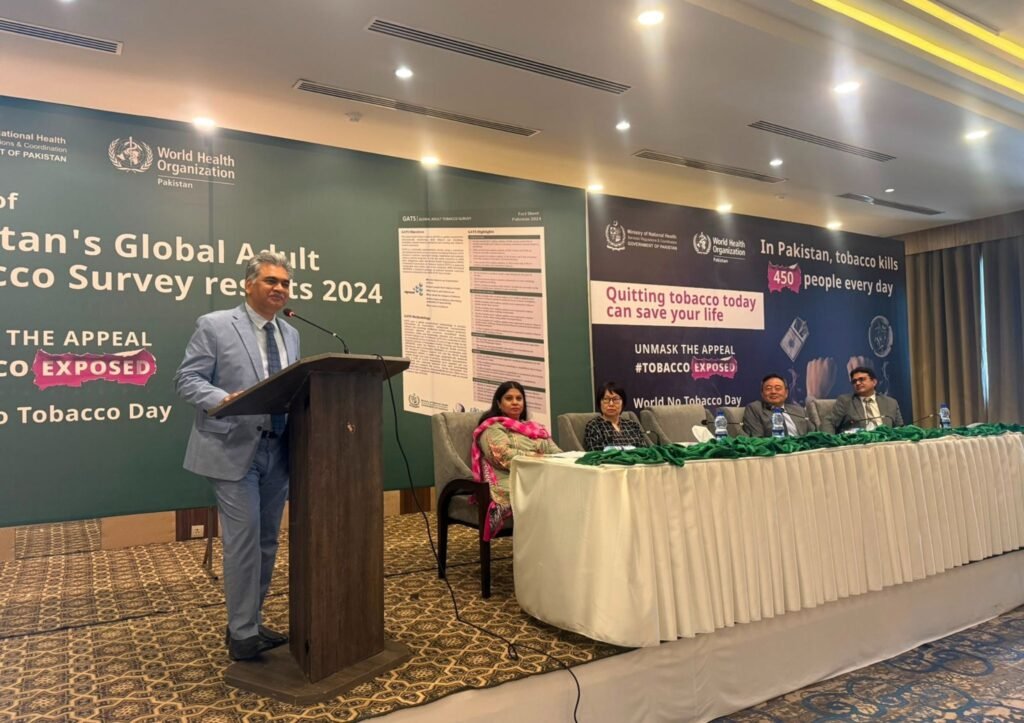
Speaking at the event, Secretary of the Ministry of National Health Services, Regulations and Coordination, Muhammad Aslam Ghauri, said the survey results demonstrate the positive impact of Pakistan’s tobacco control policies. He reaffirmed the government’s commitment to strengthening implementation of the WHO FCTC and building a healthier, tobacco-free future for coming generations.
He emphasized that this year’s World No Tobacco Day theme, “Unmask the Appeal – Countering Tobacco and Nicotine Addiction,” highlights the growing threat posed by emerging nicotine products, including e-cigarettes, vaping devices, heated tobacco products, and aggressive digital marketing strategies targeting youth.
The survey also revealed a significant decline in exposure to secondhand tobacco smoke across multiple settings between 2014 and 2024. Exposure at homes dropped from 48.3% to 28.8%, workplaces from 69.1% to 35.9%, government buildings from 64.6% to 40.7%, healthcare facilities from 37.6% to 24.5%, restaurants from 86% to 55.2%, and public transportation from 76.2% to 45.4%.
Similarly, exposure to tobacco advertising and promotions showed a downward trend. Exposure to tobacco promotions in stores declined from 20.4% to 17.8%, while overall exposure to tobacco advertisements, promotions, and sponsorships decreased from 38.6% to 30.5% during the same period.
However, the survey highlighted several concerns. Tobacco use among women increased slightly, with 5.9% of women aged 15 years and above now smoking, representing a rise of 1.7%. The percentage of smokers attempting to quit in the past year also declined marginally from 24.7% to 24.1%, while fewer smokers reported receiving advice to quit from healthcare providers.
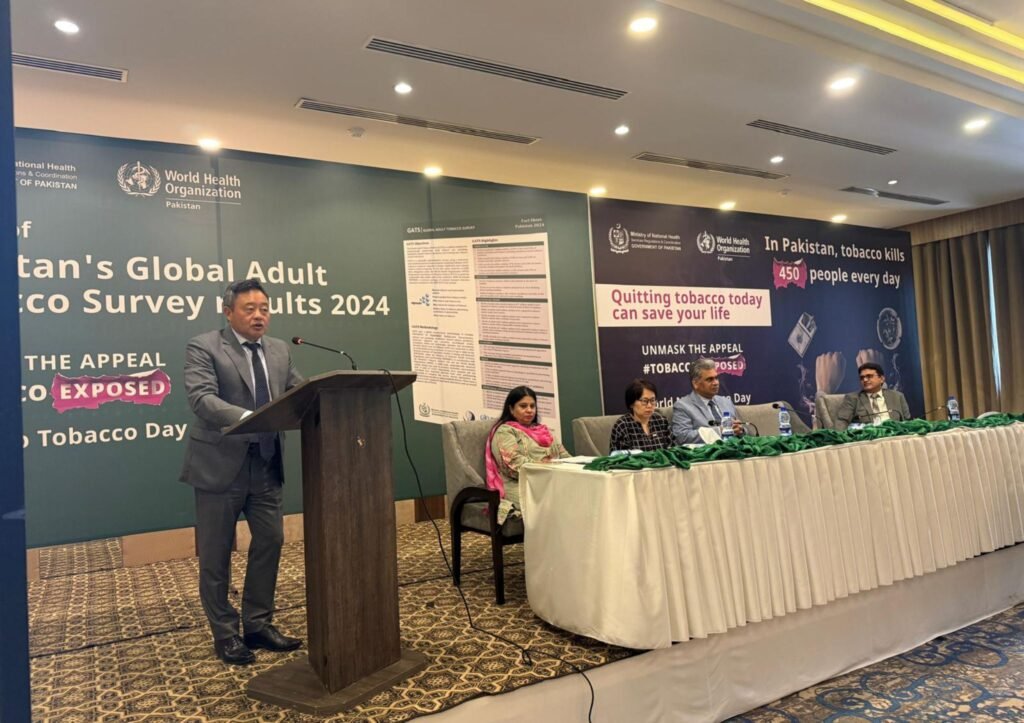
WHO Representative in Pakistan, Dr. Luo Dapeng, praised Pakistan’s achievements in tobacco control, stating that the survey results demonstrate the effectiveness of evidence-based measures such as increased taxation and restrictions on tobacco advertising.
“The science is very clear: all tobacco products are harmful. WHO will continue to support Pakistan in protecting children, youth, and families from the devastating health effects of tobacco and nicotine addiction,” he said.
Since 2014, Pakistan has introduced several major tobacco control measures, including a 208% increase in tobacco taxes during the 2022–23 fiscal year, larger pictorial health warnings on cigarette packs, a nationwide ban on the sale of loose cigarettes, implementation of the National Tobacco Control Strategy 2022–2030, and the establishment of provincial Tobacco Control Cells and monitoring committees.
The GATS 2024 survey was conducted by the National Institute of Population Studies Training and Research in collaboration with the Ministry of National Health Services and WHO. More than 11,000 interviews were completed nationwide, achieving an overall response rate of 95.6%.
Health experts believe the survey findings will help policymakers further strengthen tobacco control efforts and support Pakistan’s commitments under the WHO Framework Convention on Tobacco Control, which the country signed in 2004.