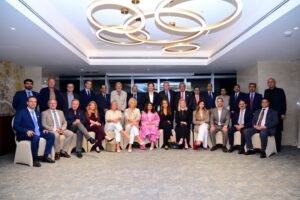
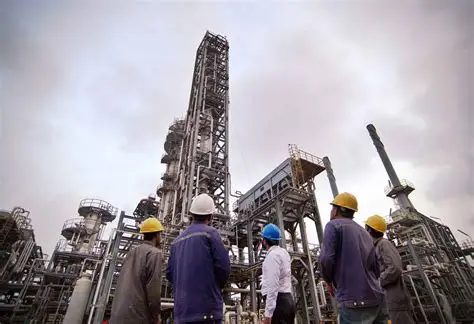
Islamabad (GNP): Pakistan Hub Refinery Project 2026 took a major step forward as Federal Minister for Commerce Jam Kamal Khan met with a delegation from SPEC Refinery Pvt Ltd, led by Chairman Zafar Sheikh, to discuss the development of Pakistan’s first Deep Conversion Greenfield Refinery planned at Hub, Balochistan.
The delegation briefed the Minister on the project’s progress and highlighted its strategic importance in strengthening Pakistan’s energy security, reducing dependence on imported petroleum products, and driving industrial growth across the country.
The proposed refinery will use advanced deep conversion technology capable of producing high value petroleum products while processing a wide range of crude oil grades sourced from international markets. The delegation informed the Minister that groundwork for the Pakistan Hub Refinery Project 2026 has already commenced and that future implementation strategies are being finalized.
They also requested the government’s support in facilitating the Greenfield Refinery Policy and speeding up the remaining regulatory approvals required by the FBR for the project to move forward on time.
Also read: Pakistan’s Landmark Refinery Project to Drive Growth
Chairman Zafar Sheikh told the Minister that the project is expected to create approximately 2,000 direct and indirect employment opportunities in Hub and the surrounding areas during both its construction and operational phases. He added that the project would contribute to regional economic development, skills enhancement, technology transfer, and industrial growth in Balochistan and beyond.
The delegation also shared its broader vision for developing associated petrochemical facilities in the future, including the production of industrial feedstocks and value-added products that could support Pakistan’s manufacturing sector and generate new export opportunities.
Pakistan Hub Refinery Project 2026 Strengthens Energy Security
Jam Kamal Khan warmly welcomed the investment and said Pakistan offers tremendous opportunities for large scale industrial and energy projects. He highlighted Pakistan’s strategic location at the crossroads of South Asia, Central Asia, the Middle East, and Western China as a major advantage for attracting long term investment.
The Minister said that Pakistan’s growing domestic market of over 250 million people, expanding trade corridors, and connectivity initiatives provide a strong base for transforming the country into a regional hub for trade, energy, logistics, and manufacturing.
The Minister stated that Pakistan possesses untapped potential in refining, petrochemicals, logistics, and value added manufacturing, and that strategic projects like the Pakistan Hub Refinery Project 2026 can play a vital role in strengthening industrial capacity, enhancing energy security, creating jobs, and attracting both foreign and domestic investment.
He reaffirmed the government’s commitment to supporting investments that contribute to economic growth, industrial modernisation, import substitution, and export development.
Both sides agreed on the importance of continued public and private sector collaboration to accelerate industrial investment and unlock Pakistan’s full economic potential. The meeting concluded with a shared commitment to advancing strategic projects that support sustainable growth, job creation, and national economic development.