
Washington (GNP): Yemen economic crisis 2026 has reached a critical juncture, with the World Bank’s latest Yemen Economic Monitor warning that the country’s economy contracted again in 2025 and now faces mounting additional pressures linked to the intensifying conflict across the Middle East region. The Spring 2026 edition of the Monitor, titled “Pushing Against the Tide,” paints a deeply troubling picture of a nation struggling to survive against overwhelming odds.
The Yemen economic crisis 2026 deepened further as national real GDP declined by 1.5 percent in 2025, and the World Bank now projects a further contraction of 0.5 percent in 2026. The country continues to be weighed down by persistent structural constraints, external shocks, and a challenging business environment that leaves little room for recovery or growth.
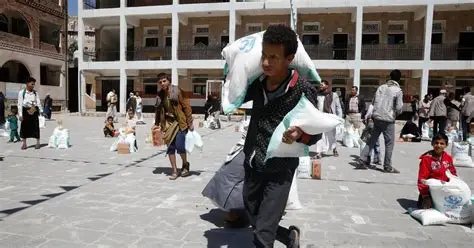
Oil exports remain blocked, activity across sectors continues to be held back by limited access to finance and weak domestic demand, and humanitarian financing has fallen sharply. Funding for the United Nations Response Plan covered only 28 percent of needs in 2025, a dramatic drop from 56.5 percent in 2024, leaving millions of Yemenis without essential humanitarian support.
Fiscal pressures intensified significantly in 2025 as government revenues fell to just 5.6 percent of GDP, driven primarily by reduced external grants. The resulting reduction in expenditure has directly affected salary payments for government employees, subsidies for essential goods, and spending on critical public services, underscoring the country’s severely limited fiscal space and its near-total dependence on international financial support.
The World Bank warned that without sustained engagement from development partners and meaningful progress toward peace and institutional stability, the country’s fiscal position will remain precarious for the foreseeable future.
Also Read: CDC Responds to Ebola Outbreak in DRC and Uganda
Monetary developments in 2025 were shaped by the Central Bank of Yemen’s exchange rate stabilization measures. The Yemeni rial in Aden appreciated sharply in August 2025 and has since stabilized, supported by Central Bank interventions and external inflows, including financial support from Saudi Arabia. While this has helped ease inflationary pressures to some degree, the overall situation remains deeply fragile.
Remittances, exports, and aid, the three main sources of income for the Yemeni economy, remain persistently weak, leaving the currency stabilization vulnerable to any further deterioration in the country’s external environment.
Regional Conflict Intensifies Economic Risks
The escalation of regional conflict across the Middle East has further clouded Yemen’s already bleak economic outlook. Since the overwhelming majority of essential goods consumed in Yemen are sourced from abroad, the country is highly exposed to rising global prices, supply chain disruptions, and increased shipping costs resulting from regional instability.
These factors are expected to increase inflation further and continue to erode the purchasing power of Yemeni households, who are already among the most economically vulnerable in the world. The World Bank estimates that nearly three-quarters of Yemen’s population currently lives below the poverty line, and a large share of the population does not have enough food to eat on a daily basis.
World Bank Urges Sustained International Engagement
Dina Abu-Ghaida, World Bank Group Country Manager for Yemen, issued a stark warning about the country’s economic trajectory. She stated that Yemen’s economy continues to face profound challenges, with limited buffers available to absorb new shocks. She stressed that sustaining macroeconomic stability, protecting basic services, and supporting jobs and livelihoods would require continued engagement from development partners, alongside meaningful progress toward peace and institutional stability.
Despite operating in an exceptionally challenging environment, the Internationally Recognized Government of Yemen has taken meaningful steps toward stabilization. These include the adoption of a comprehensive 2026 reform agenda and a national budget that seeks to maintain fiscal discipline under extraordinarily difficult circumstances.
The World Bank acknowledged these commitments as offering a potential pathway toward stability and eventual recovery. However, the report cautioned that the success of these reforms will depend entirely on continued implementation and sustained financial and political support from Yemen’s international partners.
Yemen has been embroiled in a devastating civil conflict since 2014, which has created one of the world’s most severe humanitarian crises. The conflict has destroyed critical infrastructure, collapsed public institutions, and pushed millions of Yemenis into extreme poverty and food insecurity. The World Bank has been one of the primary international institutions working to support economic stabilization and recovery efforts in the country.