Islamabad (GNP): Pakistani television has long been known for emotionally driven storytelling, complex family relationships and socially relevant narratives. For decades, however, female characters were frequently written within familiar roles, the dutiful daughter, sacrificing wife, obedient daughter-in-law or long-suffering mother.
In recent years, a noticeable shift has taken place. Women on Pakistani television are increasingly being portrayed as ambitious, outspoken, resilient and capable of making difficult choices for themselves.
This evolution has not happened overnight. From the memorable female characters of classic television to contemporary protagonists, Pakistani dramas have gradually expanded the idea of what a “strong woman” can look like.
From Traditional Heroines to Women With Agency
Earlier Pakistani television also produced memorable independent women. Characters from dramas written by writers such as Haseena Moin demonstrated that female protagonists could be intelligent, humorous, career-oriented and unconventional.
Characters such as Zara in Tanhaiyaan and Zoya in Dhoop Kinarey have been cited as examples of strong female representation from that era. The difference in recent dramas is that female strength is increasingly connected to agency—the ability to make decisions, challenge social expectations and shape one’s own future.
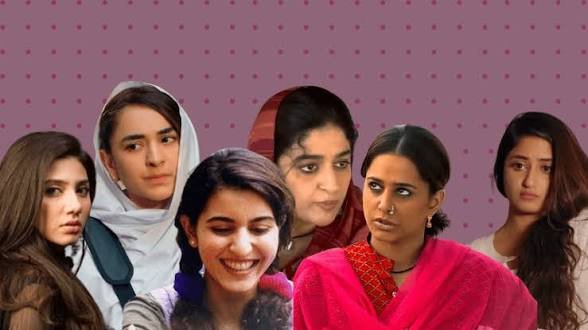
Kashaf — Zindagi Gulzar Hai: One of the most recognizable examples is Kashaf Murtaza, played by Sanam Saeed in Zindagi Gulzar Hai. Kashaf comes from a financially struggling family and grows up experiencing the consequences of gender and class inequality.
Rather than allowing these circumstances to define her future, she prioritizes education, independence and professional achievement.Her character is particularly significant because she is not presented as perfect.
Kashaf can be guarded, frustrated and judgmental, making her feel more human than the stereotypical flawless heroine. Contemporary commentary has frequently identified her as an important example of ambition and female resilience in Pakistani drama.
Dr Zubia — Yakeen Ka SafarAnother important character is Dr Zubia, played by Sajal Aly in Yakeen Ka Safar.Zubia’s journey combines personal trauma with professional ambition.
Despite difficult circumstances, she continues pursuing her medical career and gradually develops greater confidence and independence.
Her story illustrates an important change in Pakistani television: a woman’s professional aspirations can exist alongside her emotional journey rather than simply serving as background to a romance.
Pakistani media commentary has highlighted Zubia as an example of a female character determined to fulfil her ambitions despite severe personal challenges.
Meera and Sheedan — Udaari: Udaari took the conversation further by placing women at the centre of a story dealing with deeply sensitive social issues, including sexual abuse and social stigma. The characters of Meera and Aapa Sheedan demonstrate different forms of resilience.
Meera’s journey involves overcoming social and economic barriers while pursuing her passion for singing, while Sheedan represents maternal strength and solidarity.
Academic research on Udaari has specifically examined how its female characters challenge patriarchal structures and transform from being treated as victims into survivors who seek justice. Importantly, the drama does not suggest that strength means having no vulnerability.
Instead, it presents resilience as the ability to confront difficult circumstances and continue moving forward.
Mannat — Cheekh: Saba Qamar’s Mannat represents another variation of the strong female protagonist. Mannat is outspoken and determined to pursue justice despite social and personal pressure.
Her character demonstrates how Pakistani dramas increasingly use women to challenge silence surrounding wrongdoing rather than simply endure it.
Commentary on the drama has particularly emphasized Mannat’s independence, confidence and determination to seek justice.
Hala — Mere Humsafar: More recently, Hala from Mere Humsafar, portrayed by Hania Aamir, became another widely discussed female protagonist.
Hala begins her story in an environment where she is neglected and mistreated. Her development is therefore less about physical power and more about discovering self-worth, establishing boundaries and finding the confidence to speak for herself.
Her journey reflects a recurring theme in contemporary Pakistani dramas: strength can emerge gradually after years of silence.
What Makes These Characters Different?
The strongest female characters are not necessarily those who are aggressive or fearless. Pakistani television has increasingly shown different forms of strength:Educational ambition, as seen in Kashaf and Zubia.
Economic and professional independence, particularly in career-focused storylines.Emotional resilience, demonstrated by characters who survive personal trauma.
Speaking against injustice, as explored in Udaari and Cheekh.Self-respect and boundaries, particularly in stories involving marriage and family pressure.
Solidarity between women, where female characters support rather than compete with one another. At the same time, the transformation is not complete. Recent scholarship points out that Pakistani dramas can simultaneously challenge gender inequality and reproduce traditional ideas about women’s morality, family responsibilities and social respectability.
Also Read: The Human Stories Behind Natural Disasters
The Changing Meaning of Strength
Perhaps the most significant development is that Pakistani television is gradually moving away from the idea that a “good woman” must simply tolerate hardship.Today’s memorable protagonists can be ambitious, imperfect, emotional, outspoken and determined.
They can make mistakes and still remain central to their own stories. From Kashaf’s ambition to Zubia’s professional determination, from Meera’s resilience to Mannat’s pursuit of justice, these characters demonstrate how Pakistani television has expanded its portrayal of women’s experiences.
The journey is still evolving, but the growing presence of multidimensional female protagonists shows that audiences are increasingly being offered stories in which women are not merely supporting characters in someone else’s narrative—they are driving the story themselves.