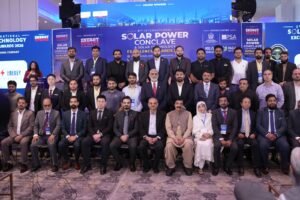
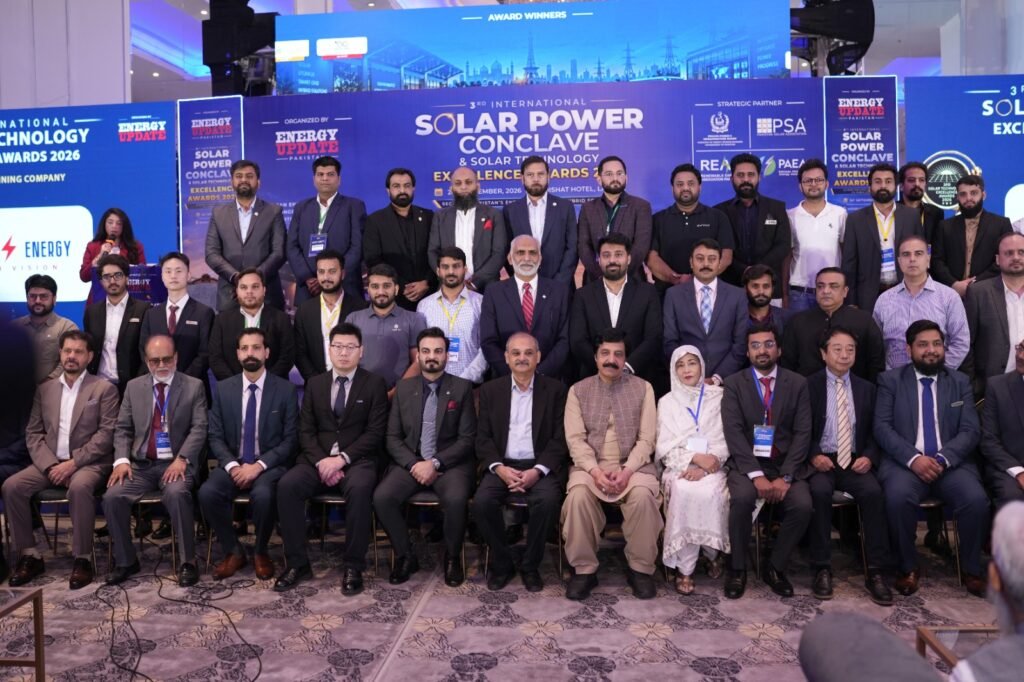
Lahore (GNP): The 3rd International Solar Power Conclave and Solar Excellence Awards brought together senior government officials, policymakers, technocrats, engineers, corporate representatives, international business stakeholders, renewable energy experts and industry leaders to discuss the evolving landscape of Pakistan’s solar energy sector.
The conference was organized by Energy Updates with strategic partnership and participation from the Global Engineering Network for Innovation and Intelligence (GEN_II), Pakistan Solar Association (PSA), Ministry of Energy (Power Division) and Renewable Energy Association Pakistan (REAP).
The event featured keynote addresses, expert panel discussions, emerging-leader sessions and recognition of leading companies contributing to Pakistan’s solar industry.
Governor Punjab Calls for Shift Towards Indigenous Solar Manufacturing
Governor Punjab Sardar Saleem Haider Khan, who attended the conference as Chief Guest, highlighted the rapid expansion of solar energy across Pakistan, particularly in the agriculture, residential, industrial and corporate sectors.
In his address, the Governor noted the growing adoption of solar power and highlighted various government-backed initiatives aimed at promoting renewable energy.
He emphasized that Pakistan should gradually move beyond dependence on imported solar modules and develop indigenous manufacturing capacity to strengthen the country’s domestic renewable-energy value chain.
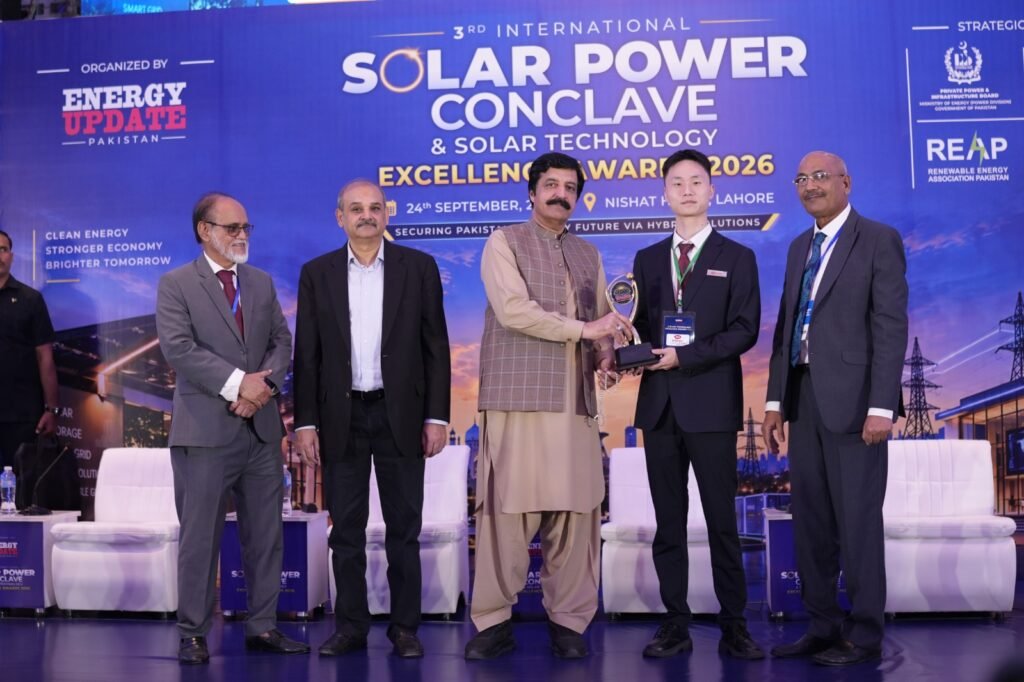
Punjab Energy Minister Emphasizes Domestic Production and Energy Governance
Punjab Energy Minister Faisal Ayub Khokhar also addressed the gathering and supported discussions concerning the rationalization and removal of import duties affecting solar-sector development.
He emphasized the need to strengthen local manufacturing and production of solar technologies in Pakistan.
Speaking about institutional responsibilities, the Minister noted that energy management is fundamentally a national subject, while also highlighting Punjab’s contribution to expanding solar power generation and renewable-energy deployment.
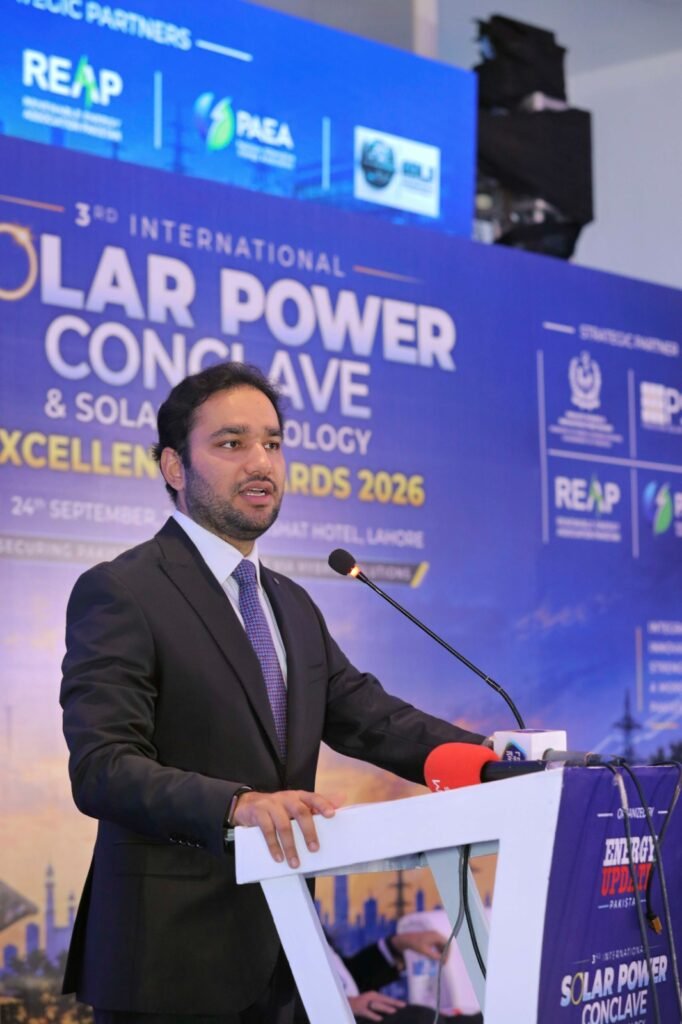
GEN_II CEO Highlights Inclusive, Distributed and Technology-Driven Energy Transition
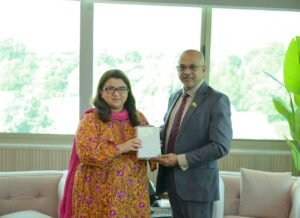
Ms. Qurrat-ul-Ain Cheema, CEO of Global Engineering Network for Innovation and Intelligence (GEN_II), participated as the conference’s sole female speaker and highlighted the importance of gender inclusion and wider participation of women in Pakistan’s renewable-energy sector.
In her address, she discussed the significance of the Global Stock-take under the Paris Agreement and the increasing integration of renewable energy within national energy systems internationally.
Her remarks covered Pakistan’s evolving electricity-sector planning and market architecture, including the Indicative Generation Capacity Expansion Plan (IGCEP), Transmission Capacity Expansion Plan (TCEP) and Competitive Trading Bilateral Contract Market (CTBCM).
Addressing the technology and policy dimensions of the energy transition, she identified existing policy and implementation gaps and stressed the integration of IoT-based and other state-of-the-art digital solutions across the energy sector to improve monitoring, management, efficiency and system responsiveness.
Also Read: US, Iran Do Not Want to Continue the War
Ms. Cheema discussed the need for an affordable, reliable and appropriately structured solar tariff framework, while highlighting distributed-energy solutions for underserved and remote communities.
She particularly discussed the potential of Swarm Electrification and peer-to-peer (P2P) distributed energy models for remote areas, where decentralized generation can reduce dependence on extensive transmission infrastructure and associated costs.
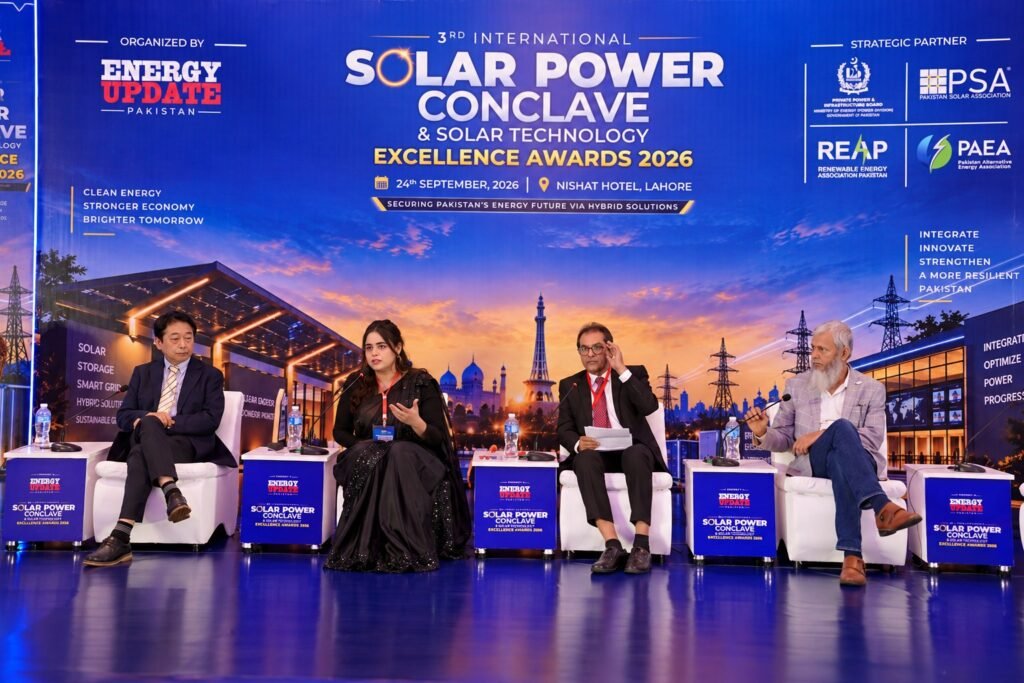
Ms. Cheema further called for greater participation of youth in green entrepreneurship, particularly in the development of indigenous manufacturing capabilities for solar, wind and green-hydrogen technologies.
She emphasized the role of appropriate renewable-energy financing and support schemes in enabling young entrepreneurs and emerging businesses to enter the clean-energy value chain.
Industry Recognition and OutlookThe conference also featured the Solar Excellence Awards, recognizing companies and industry stakeholders contributing to the development and expansion of Pakistan’s solar-energy ecosystem.
The discussions reflected a broader transition in Pakistan’s renewable-energy sector, from increasing solar deployment toward a more integrated approach encompassing local manufacturing, distributed generation, grid integration, digital energy management, investment, financing, policy reform and human-capital development.
The event concluded with continued emphasis on strengthening collaboration between government, industry, technology providers, academia, investors and young professionals to support the development of a more resilient and sustainable energy system in Pakistan.