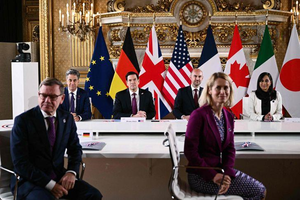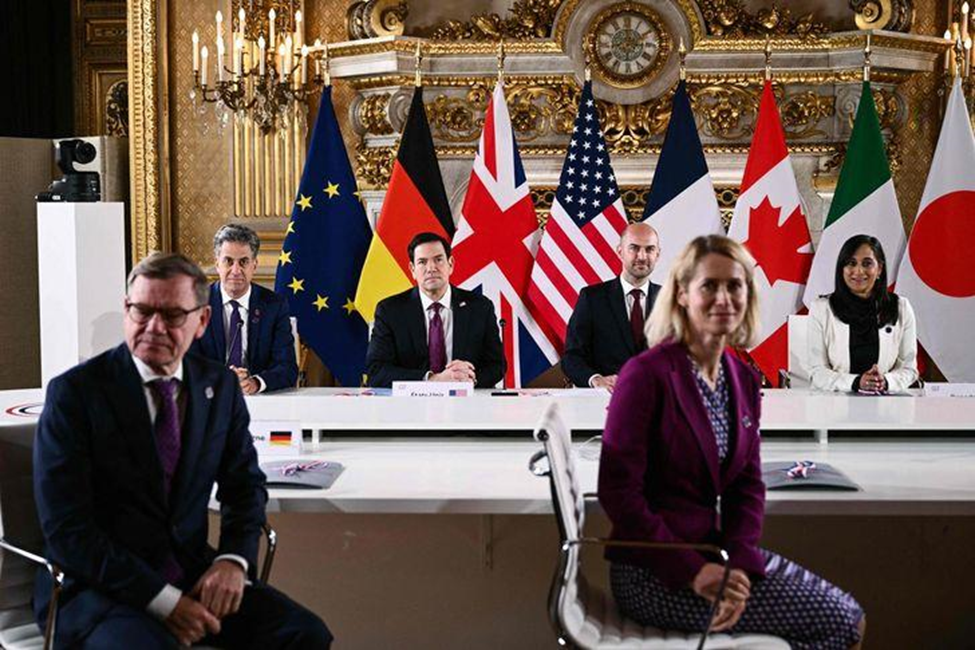
The 2026 G7 Paris summit discusses several issues, the tensions between Ukraine and its Western allies, Iran and global security.
Pressured Into International Unity
Foreign ministers of the G7 countries once again gathered in Paris on 9th and 10th November 2026 coinciding with overlapping conflicts, financial uncertainty and doubts about the longevity of the cooperation of the West. During France’s chairmanship, ministers met discussing Russia’s war against Ukraine, the crisis-driven Middle East, Sudan, maritime security and response, humanitarian assistance and risks of advancing artificial intelligence. The question now is if the big industrialised democracies can align their words and statements with their actions and vice versa. The credibility comes when these are in sync.
Ukraine is a trial case for this coordination. European governments have made Ukraine’s sovereignty and security a major priority and any chance of negotiations with Russia would come with the intentions of concern for Ukraine. Washington, Moscow and Kyiv doubt the power of European powers and question if their influence is strong enough to have a serious impact on this complicated conflict. The real settlement would not just be about Ukraine’s support from the G7, but whether they can agree on providing coordinated military assistance, sanctions, post-war reconstructions and security policy.
European Diplomats on Ukraine at G7 Meeting
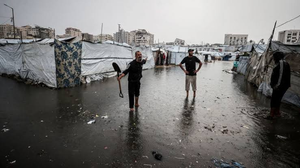
The Middle East comes with a separate baggage of pressure and disputes. The disruption in some of the most crucial shipping routes has caused complications that extend beyond that region, affecting energy supplies, shipping costs and global trade in general. The challenge for the G7 governments is to provide balanced support for de-escalating the conflict and enough humanitarian assistance with protection of these maritime routes. The solution could not be relied upon Western governments alone as it is a much intense and regionally rooted matter. The recognition of regional partners such as Egypt and Saudi Arabia shows the importance of inclusion for a sustainable result.
Also Read: The Unresolved Cyprus Dispute and Challenges to Conflict Resolution
This gathering comes at the time when international institutions face divisions. The conflict surrounding the International Criminal Court with several European allies of the United States has shown mistrust on the consistency concerning the rule of law within international order. The tensions are important to note because G7 is not just a meeting of economic powers but also a symbol of how change is approached through coordination and shared principles.
Disagreement would not direct towards ineffectiveness of the group. It’s essential to understand the working of G7, which exists without any foreign policy of its own and is not a supranational institutional body. Instead, it’s a government-led forum that leads by national policies and mutual agendas. Its importance can always be measured through the outcomes and steps taken by governments after such a meeting, instead of words of negotiations.
The Paris meeting should be judged based on change that each or it brings and what matters are prioritized, as seen by the number of members agreeing upon it. Different governments would have different goals that feed their national interest, so judging the intensity of the issue based on it would also or be accurate. The credibility of the G7 will be worthy of mention once diplomatic handshakes convert into a broader international community that brings peace in a world of interconnected disputes.