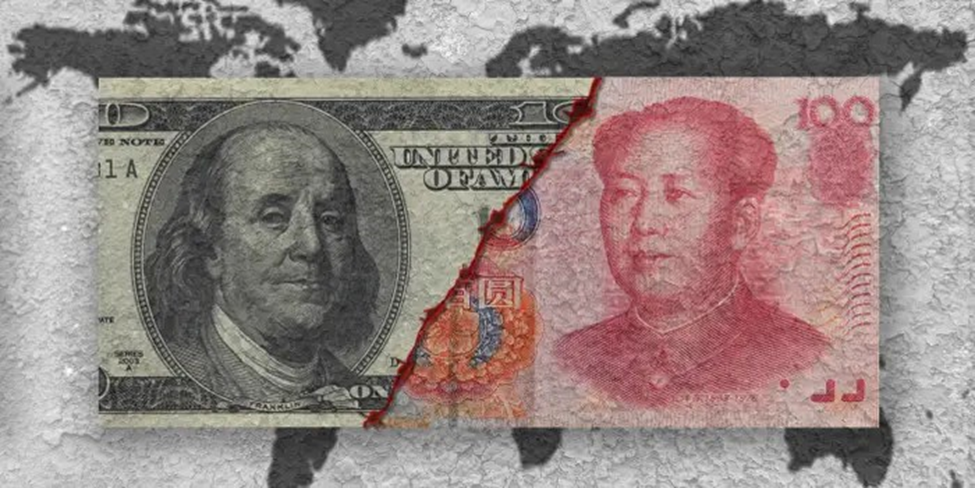
China’s efforts to increase the yuan’s role in the global arena are growing, but structural constraints make it unlikely that the yuan will displace the US dollar.
China’s yuan has gained increasing global traction, a sign of a push to move away from the US dollar and revise the present international financial system. For years, world commerce, monetary transactions and foreign currency holdings have been centred on the dollar. As geopolitical relationships have grown more unpredictable and the United States has imposed economic sanctions, several nations have been looking for alternative means of payment.
Yuan Challenging US for World’s Leading Currency
China’s ambition to promote the yuan’s internationalization cannot simply be labelled as an economic one.
It can be taken as a strategic act to reduce American financial control. The dollar’s dominance gives Washington hegemonic geopolitical leverage, mainly through its ability to limit access to financial institutions and impose economic restrictions. Alternative payment methods give countries the choice to make transactions without strictly following the entire Western financial system.
One of China’s goals is reflected in the Cross-Border Interbank Payment System (CIPS). The system allows cross-border transactions in the yuan and offers an alternative payment pathway. Its use reflects the fact that countries increasingly want to diversify their financial ties instead of relying on one dominant currency. Read about CIPS services here.
Major structural flaws and limitations remain in China’s ambitions. Although the yuan is growing in popularity, it cannot yet be considered equal to the dollar in its level of internationalisation. The biggest obstacle is China’s capital control system, which restricts the flow of money into and out of the country. Unlike the dollar, the yuan is not fully convertible, which limits international investors’ flexibility in managing and transferring their assets.
International support and confidence are another crucial factor. America’s deep involvement in financial markets, its extensive banking networks and the dollar’s common use in international trade give the currency a strong foundation. Replacing such a deeply rooted system requires more than creating a substitute payment mechanism. It requires institutional confidence, liquidity and economic stability that international markets can trust.
China can weaken the dollar, but any attempt to replace it would create further complications.
Also Read: G7 Nations Act as ‘Responsible Great Powers’ of Crisis-driven World
Moreover, economic power does not automatically translate into monetary power. States can use the yuan to trade with China while still holding dollars and carrying out other financial transactions in dollars. The difference between cutting off the dollar and working alongside it should be understood in order to avoid expecting a radical shift.
The development also exposes a growing contradiction in Chinese financial policy. Beijing is moving towards greater global use of its currency, yet it still maintains tight control over its financial system. The two goals can create tension, as international investors prefer greater capital access and mobility.
Chinese policy can be viewed as an effort to weaken the dollar’s geopolitical power rather than to remove it entirely. The international monetary system may become more diversified, and other currencies may become more prominent in certain regions and types of transaction. However, the dollar’s dominance makes a multipolar financial structure a more likely future than an absolute change.