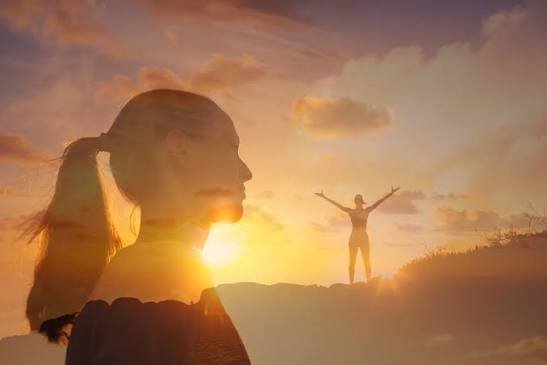
Journey of Losing to Finding Yourself
Islamabad (GNP): There are people who enter our lives and make us believe they will always be there. We share our happiest moments with them, tell them things we cannot tell anyone else, make plans for the future, and slowly begin to imagine our lives with them as a permanent part of the picture.
Then, sometimes without a dramatic ending, things change. Conversations become less frequent. Priorities move in different directions. The friendship no longer feels the same.
A relationship ends. Someone chooses a different path. Or perhaps we are the ones who decide to walk away. Losing people can hurt deeply because relationships are not just about spending time together.
They become part of our emotional world and, sometimes, part of how we understand ourselves.
Research supports the importance of these connections. A systematic review of 38 studies on adult friendship found that friendship quality and social interaction are generally associated with well-being.
Research among young adults has similarly found connections between friendship quality, self-esteem and loneliness.
But there is another side to losing people that is rarely discussed: sometimes, losing a relationship creates space for discovering who we are without it.
We Change, and Sometimes Our Relationships Change With Us
Growing up is not simply about getting older. It is also about changing our values, priorities, ambitions and understanding of ourselves.
The person you were at 17 may not be the same person you become at 22. Your dreams may change. Your boundaries may become clearer. Your interests may develop. You may start questioning things you once accepted without thinking.
And when you change, some relationships naturally change too. A friendship that once revolved around school may become difficult when careers, university, marriage or different responsibilities enter the picture.
Two people can still care about each other while no longer fitting naturally into each other’s daily lives. A 2024 longitudinal study following people from around age 20 to 30 found that friendship quality and its relationship with well-being can change as people move from emerging adulthood into established adulthood.
The study also found that many participants identified a different person as their best friend at age 30 than they had at age 20. That does not necessarily mean the earlier friendship was meaningless. It means people evolve.
Not Every Goodbye Is a Failure
We often treat the ending of a relationship as evidence that something went wrong.We ask ourselves:Was I not good enough? Did I do something wrong? Why couldn’t we stay the same? Sometimes there are clear reasons.
People can hurt us, betray our trust or repeatedly cross boundaries. In those situations, distance may become necessary. But not every ending needs a villain.
Sometimes two people simply grow in different directions. One person becomes interested in a completely different career. Another moves to another city.
One becomes more private while the other remains highly social. Their priorities change. Their expectations change. Their lives become different. The relationship may no longer work in the way it once did.
That does not erase the good memories.Some people are meant to be important chapters rather than permanent characters in our lives.
Losing Someone Can Make You Meet Yourself
When someone important leaves, there is suddenly a space where that relationship used to be. At first, that space can feel painful. You may miss the conversations, the routine, the jokes and even the small things you once took for granted.
You may repeatedly check your phone expecting a message that no longer comes. But eventually, if you allow yourself to experience the loss instead of constantly running from it, something else can happen.
You begin asking questions about yourself. What do I actually want? Who am I when I am not trying to keep someone happy? What kind of relationships do I want in my life? What boundaries do I need? What have I learned from this relationship? These questions can be uncomfortable, but they can also lead to self-understanding.
Sometimes we discover that we were changing ourselves to maintain a relationship. We were saying yes when we wanted to say no. We were hiding parts of our personality because we were afraid of being judged.
We were accepting less than we deserved because we were afraid of being alone.Losing that person can force us to recognize those patterns.
But Finding Yourself Does Not Mean Becoming Alone
There is an important difference between independence and isolation. After being hurt, it can be tempting to decide that you do not need anyone.
You might tell yourself that relationships are exhausting and that being alone is easier. But human beings need meaningful connection.
The World Health Organization defines loneliness as the painful feeling that there is a gap between the social connections we have and the connections we want or need.
Its 2025 Commission on Social Connection reported that approximately one in six people worldwide experience loneliness, with particularly high rates among adolescents and young adults.
So, finding yourself does not mean shutting everyone out. It means learning to build relationships in which you can remain yourself. You can have boundaries without building walls.
You can enjoy solitude without rejecting connection. You can leave unhealthy relationships without deciding that every relationship is dangerous. And you can love people without losing your identity in them.
Sometimes Distance Reveals What Was RealInterestingly, distance can sometimes clarify relationships.
When someone is constantly present, we may not realize what their presence means to us. After separation, we may understand what we genuinely valued. Sometimes distance makes us appreciate someone more.
Sometimes it confirms that leaving was necessary. Sometimes it teaches us that we were holding onto a memory rather than the actual relationship. And sometimes it shows us that we have become different people.
None of these outcomes makes the relationship worthless. A relationship can have been real, meaningful and valuable even if it does not last forever.
The People We Lose Can Still Teach Us Something
Not every person who leaves takes something from us. Some leave lessons.Someone may teach us what trust feels like. Someone else may teach us the importance of boundaries. Another person may show us what we never want to tolerate again. Someone may encourage us to become more confident.
Another may simply give us beautiful memories that remain meaningful long after the relationship ends.
Also Read: Career vs Family Expectations: The Dilemma of Pakistani Youth
Research on friendship dissolution among emerging adults shows that friendships can end or decline in quality for different reasons, and the process is part of the social development of young adulthood.
This is especially important for young people because the transition into adulthood involves enormous changes. Education, careers, family expectations, romantic relationships, relocation and personal ambitions can all reshape social circles.
We do not always get to choose which relationships survive those changes. But we can choose what we learn from them.
You Are Allowed to Become Someone New
Perhaps one of the hardest truths about growing up is that becoming yourself sometimes means becoming unfamiliar to people who knew the older version of you.
And that can be painful.Some people may not understand your boundaries. Some may question your choices. Some may say that you have changed. Maybe you have. And changing is not automatically a bad thing.
You are allowed to become more confident. You are allowed to change your goals. You are allowed to protect your time. You are allowed to leave relationships that no longer feel healthy. You are allowed to discover interests your old friends do not share. You are allowed to become someone your younger self would barely recognize.
The goal is not to lose people intentionally. The goal is not to romanticize loneliness or pretend that every goodbye is necessary.
The lesson is simpler: not every person is meant to accompany us through every stage of our lives. Some people walk beside us for years. Some stay for a season.
Some appear briefly but leave a lasting lesson. And when someone leaves, it does not always mean that you have lost yourself.
Sometimes, after the tears, the silence and the difficult questions, you realize that you are finally beginning to meet yourself.
Maybe that is what growing up really is—not keeping everyone who once mattered, but learning how to remain whole when some people no longer remain.