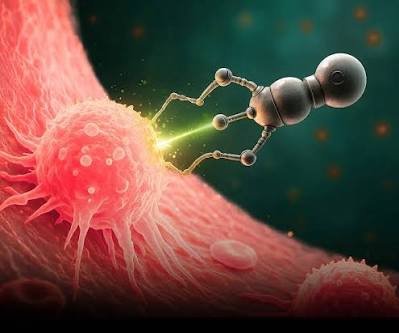
Stockholm (GNP): Researchers at the Karolinska Institute in Stockholm have developed a groundbreaking DNA-based nanorobot that can selectively target and destroy cancer cells while leaving healthy tissue untouched.
The innovation represents a significant step forward in precision medicine and could pave the way for safer, more effective cancer treatments with fewer side effects.The tiny nanorobots were created using an advanced technique known as DNA origami, which allows scientists to fold DNA into precise microscopic structures.
These structures act as delivery vehicles that carry a powerful cancer-killing peptide. Unlike conventional treatments, the peptide remains safely hidden while traveling through the body, preventing it from damaging healthy cells.
The nanorobot is designed with a built-in “kill switch.” It only activates when it reaches the acidic environment commonly found inside solid tumors. Healthy tissues usually maintain a neutral pH of around 7.4, keeping the nanorobot’s weapon folded and inactive.
As a result, the treatment specifically attacks cancer cells while protecting normal tissues from unnecessary harm.In preclinical animal studies, the technology produced encouraging results.
Researchers found that the pH-responsive nanorobots reduced breast cancer tumor growth by up to 70 percent compared with control groups. The findings suggest that this targeted approach could offer a more effective way to fight cancer without the severe side effects often associated with chemotherapy and radiation.
Traditional cancer treatments can affect both cancerous and healthy cells, leading to complications such as fatigue, hair loss, nausea, and weakened immunity.
Also Read: Frontline Climate-Vulnerable Countries Face Longer Wait For Loss And Damage Funds
By delivering treatment only where it is needed, DNA nanorobots have the potential to improve patient outcomes while significantly reducing treatment-related damage.Although the early results are highly promising, scientists emphasize that more research is required before the technology can be used in clinical practice.
Future studies will focus on evaluating its safety, toxicity, long-term effects, and effectiveness in human patients through carefully designed clinical trials.The development highlights the growing role of nanotechnology in modern medicine.
If future trials confirm its success, DNA nanorobots could transform cancer care by providing highly targeted therapies that are both safer and more effective. While the technology is still in the research stage, it offers fresh hope for millions of people worldwide and represents an important milestone in the future of precision oncology.