ISLAMABAD (GNP): Pakistan and other climate-vulnerable countries will have to wait longer for disbursements from the Fund for Responding to Loss and Damage (FRLD) after its board decided to allow more time to assess an overwhelming number of funding proposals amid limited financial resources.
The ninth meeting of the FRLD Board, held in Manila from July 8 to 10, ended without significant progress, a development that drew criticism from civil society groups, which said the fund was failing vulnerable communities increasingly exposed to climate-related disasters.
The funds was established at COP27 in Egypt in 2022, with a decision to operationalise it taken at COP28 in Dubai, followed by full operationalisation at COP29 in Azerbaijan. With nearly $500 million in its account, the fund launched its first call for proposals at COP30 in Brazil.
That call resulted in 176 funding requests from 119 developing countries, carrying a combined funding demand of $2.8 billion, more than 11 times the $250 million allocated for disbursement, according to the Fill the Fund civil society group. The average amount requested per proposal is about $15.9 million, ranging from $5 million to $20 million, according to an FRLD document.
At the Manila meeting, the board had been expected to consider proposals from Haiti, Jamaica, Nigeria and Ivory Coast in order to determine their funding requests and establish procedures for future grants. That decision has now been deferred until December 2026 because a large number of proposals have yet to be reviewed.
Civil society activist and Fill the Funds campaign member Harjeet Singh said the four proposals alone accounted for about 30 percent of the initial $250 million allocation, and that the board was hesitant to disburse such an amount without reviewing the full basket of proposals.
According to sources familiar with the matter, the board had intended to review and approve the four proposals to streamline its approval and disbursement procedures, but a final decision was deferred because the vast majority of the 176 submissions had not yet undergone review.
Ali Tauqeer Sheikh, Pakistan’s representative on the FRLD Board, said June 15 was the deadline for submissions, and that on that day alone the board received almost 100 requests. He said only a handful of proposals have so far undergone an initial review, adding that the board hopes to assess about two-thirds of the proposals by December before beginning disbursements. He said it was expected that around a dozen funding requests would be approved at the tenth board meeting, particularly if an additional $100 million were added to the funding pool.
The projects are to be approved under the two-year pilot phase known as the Barbados Implementation Mechanism (BIM), for which $250 million has been allocated. However, less than $500 million has actually been received by the fund to date, according to Brandon Wu, who oversees policy and campaigns at ActionAid USA.
In a statement, the Fill the Funds campaign said the $342 million now allocated to the BIM would still cover only 12 percent of the $2.8 billion requested, funding at most approximately 22 funding requests at an average of $15 million per request.
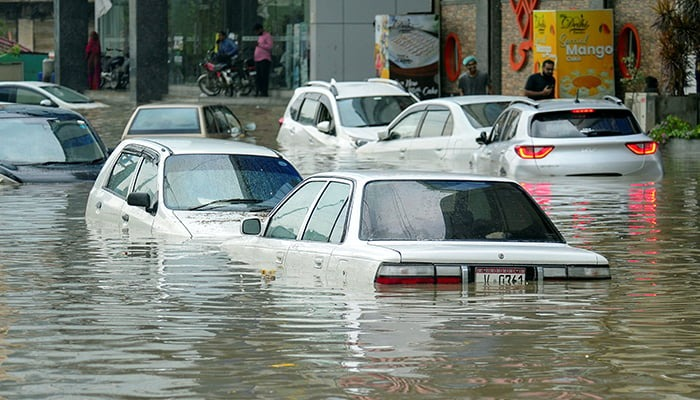
Pakistan, which frequently experiences devastating floods and heatwaves, has submitted three proposals to the FRLD. Official sources said one proposal has completed peer review and the country has received encouraging feedback, while comments on a second proposal for climate-resilient health systems in Balochistan were still awaited.
According to Fund for Responding to Loss and Damage (FRLD) documents, Pakistan’s three-year projects include a $20 million proposal titled Responding to Unavoidable Climate Impacts through Recovery and Systems Strengthening, submitted through implementing partner UNDP. A second proposal, Climate-Resilient Health Systems for Vulnerable Communities in Pakistan, focused on Balochistan, according to sources, seeks an $18 million grant through the WHO.
Also Read: Climate Change Action Urged As UNEP Highlights Global Crisis
A third proposal, which does not list an implementing partner, seeks $20 million for the compensation and rehabilitation of private fish farms and public sector fish hatcheries damaged in recent rounds of flash floods in Khyber Pakhtunkhwa. Sources acknowledged the funding constraints facing both the board and the FRLD Secretariat but expressed hope that Pakistan would secure funding for at least one of the three projects.
Civil society groups criticised the board on several additional fronts. The Fill the Funds campaign said the fund’s Resource Mobilisation Strategy had also been deferred until December, leaving it without a clear timeline or targets to mobilise the estimated $400 billion required annually.
It also said unresolved issues related to the World Bank’s hosting arrangements continued to hamper the fund’s ability to operate efficiently and disburse money quickly to frontline communities, problems one board member described as teething issues. The campaign further criticised restrictions on observer participation, saying its members had been excluded from several closed-door sessions during the board meeting.
Singh said the board must urgently break free from institutional roadblocks and immediately mobilise the hundreds of billions of dollars required, or risk remaining nothing more than an empty, broken promise.

Managing Editor at Global News Pakistan (GNP), with a Bachelor's degree in International Relations from Riphah International University, graduated with a Gold Medal. Reach out at sabahtareengnp@gmail.com