
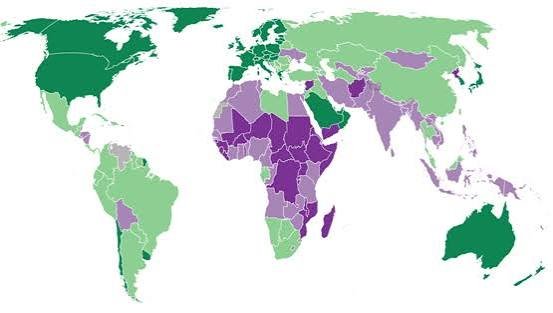
World Bank (GNP): The World Bank has released its latest Country Income Classifications for July 2026 to June 2027, announcing that six countries have moved to higher income categories.
The update reflects changes based on each country’s 2025 Gross National Income (GNI) per capita using the World Bank’s Atlas method. This year, no country moved to a lower income category. Five countries, Viet Nam, the Philippines, Sri Lanka, Jordan, and Micronesia, advanced from lower-middle-income to upper-middle-income status. Togo also improved its position by moving from the low-income group to the lower-middle-income category. Although these countries reached similar income thresholds, each followed a different path.
Viet Nam’s progress was driven by strong export growth and rapid economic expansion. The country’s exports increased by more than 15 percent in both 2024 and 2025, while GDP grew by 7 percent and 8 percent respectively. Between 2021 and 2025, Viet Nam recorded an average annual GNI growth of around 10 percent.The Philippines achieved its new classification through broad-based economic growth.Over the past five years, the country’s GDP expanded by an average of 5.8 percent annually, supported by steady growth across manufacturing, services, agriculture, and other key sectors.
Sri Lanka’s upgrade reflects its economic recovery after the severe financial crisis of 2022. In 2025, the country’s economy grew by 5 percent as tourism, financial services, and other industries recovered. Although Sri Lanka crossed the income threshold by a small margin, the achievement highlights the country’s resilience.
Micronesia’s progress came through gradual economic recovery following the COVID-19 pandemic. Growth in construction and agriculture supported the economy, although lower net primary income limited overall gains.
Jordan’s reclassification resulted mainly from updated national economic data. A comprehensive revision of national accounts showed that the country’s economy was nearly 10 percent larger than previously estimated. Combined with GDP growth of 2.8 percent in 2025, the revised figures pushed Jordan into the upper-middle-income category.
Togo’s move to lower-middle-income status was largely influenced by updated population data from its 2022 national census. The revised population estimate was significantly lower, increasing the country’s income per person. Economic growth and exchange rate changes also contributed to the upgrade.
Also Read: UNGA Votes 136–9 to Continue Cuba Embargo Debate
The World Bank emphasized that its income classifications are based on a rigorous methodology using the latest available economic data. While income levels alone do not fully reflect a country’s overall development, the classifications provide an important tool for comparing economies and tracking long-term progress.
The updated classifications cover 218 economies worldwide and help governments, researchers, investors, and international organizations better understand global economic trends. The World Bank noted that these figures may be revised as countries publish updated economic data in the future.