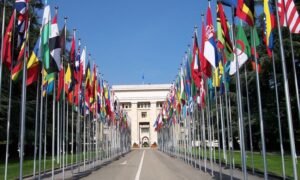
UNITED NATIONS (GNP): UN General Assembly voted by a wide margin on Tuesday to hold a special debate on the decades-old US embargo against Cuba, with Pakistan among the nations backing the move amid growing concerns over hardship on the island.
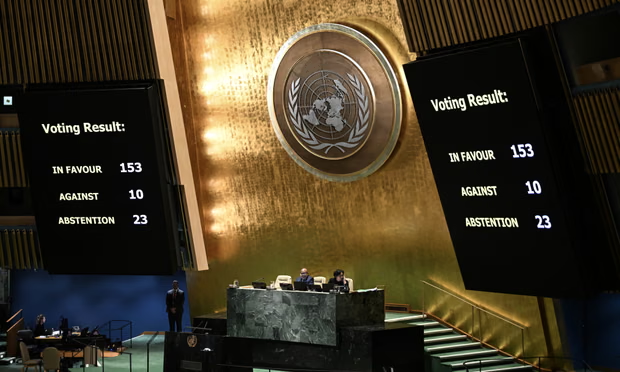
The 193-member body approved the procedural motion 136 votes in favor to 9 against, with 30 abstentions. Opposing the resolution alongside the United States were Argentina, Israel, Paraguay, Costa Rica, Morocco, the Czech Republic, North Macedonia, and Ukraine.
Cuba had pushed to bring the embargo issue onto the Assembly’s agenda despite firm opposition from the US delegation. The resulting debate drew broad participation from countries across Africa, Asia, Latin America, and Europe.
Pakistan’s UN Ambassador Asim Iftikhar Ahmad said following the vote that Islamabad shares concerns over how the embargo has affected Cuba’s economy, trade, and financial standing, as well as its impact on ordinary Cubans. He said lifting the embargo would mark a meaningful step toward easing the humanitarian situation and would help Cuban citizens pursue development and prosperity.
The ambassador reiterated Pakistan’s long-standing support for multilateralism and the UN Charter, stating that international cooperation grounded in sovereign equality and mutual respect remains central to global order. He added that unilateral economic measures — particularly when applied selectively against developing nations — run counter to those principles.
Opening the debate, Cuban Foreign Minister Bruno Eduardo Rodríguez Parrilla accused Washington of waging what he called an unconventional campaign against his country, one that he said has grown increasingly severe over the past seven months. He pointed first to what he described as an energy blockade comparable to a naval siege, alleging that US military pressure and intimidation tactics toward oil tankers were restricting Cuba’s fuel access.
He further criticized what he termed extreme extraterritorial measures, arguing that secondary sanctions were being used to deliberately engineer a humanitarian crisis and destabilize the country — actions he warned could ultimately be used to justify foreign military intervention and bloodshed.
Rodríguez Parrilla said the humanitarian situation had worsened significantly in recent months, describing it as a form of collective punishment amounting to systematic human rights violations against the Cuban population. He argued that such serious matters warranted a clear response from the General Assembly as the UN’s most representative body, and highlighted the toll on Cuban families dealing with power outages, water shortages, medicine and food scarcity, and rising prices for basic goods.
US Ambassador Michael Waltz pushed back sharply, suggesting that Cuban authorities always manage to keep the lights on for state propaganda efforts despite claims of blackouts. He called on Cuban leadership to change course and restore power for citizens, referencing the July 2021 protests in which large numbers of Cubans took to the streets demanding freedom.
That remark prompted an angry response from the Cuban foreign minister, who interrupted with a point of order, accused Waltz of lying, and demanded he be called to order. Waltz continued, saying the 2021 protesters were frustrated with a government he accused of hoarding wealth while citizens went hungry, and declared flatly that communism has never worked and never will.

Sohail Majeed is a Special Correspondent at The Diplomatic Insight. He has twelve plus years of experience in journalism & reporting. He covers International Affairs, Diplomacy, UN, Sports, Climate Change, Economy, Technology, and Health.