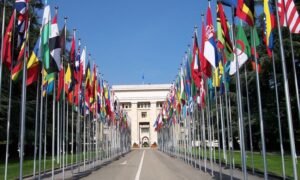
BURGENSTOCK (GNP): The United States issued a 60-day sanctions waiver on Iran on Monday following the conclusion of technical talks in Burgenstock, Switzerland, as part of Qatari- and Pakistani-mediated negotiations to end the US-Israel-Iran war. The talks, held under the Islamabad Memorandum of Understanding signed by the two countries on June 17, produced a structured framework for a permanent agreement but laid bare significant differences in how Washington and Tehran characterised the outcomes.
The US Treasury issued a general licence valid until August 21, permitting Iran to sell oil, petroleum and petrochemical products and receive payment. Iran’s Deputy Foreign Minister Kazem Gharibabadi confirmed the parties also agreed on the immediate release of $12 billion in frozen Iranian assets.
Iranian Foreign Minister Abbas Araghchi said Tehran had additionally secured the launch of a reconstruction and development plan for Iran. However, US Vice President JD Vance claimed the unfrozen funds would be channelled toward American agricultural products, a position Iran’s Central Bank Governor Abdolnaser Hemmati rejected outright, saying there was no such obligation under the agreement.
On the negotiating architecture, Gharibabadi said the parties agreed to establish four working groups covering sanctions removal, nuclear-related sanctions, reconstruction and economic development, and monitoring and implementation.
Future negotiations will be supervised by a high-level committee comprising Iranian Parliament Speaker Mohammad Bagher Ghalibaf and Foreign Minister Araghchi on the Iranian side, US Vice President Vance, Pakistani Prime Minister Shehbaz Sharif, and Qatari Prime Minister Mohammed bin Abdulrahman. The parties further agreed to establish a contact point among member states and develop a separate MoU to guarantee safe passage for commercial vessels through the Strait of Hormuz.
The sharpest divergence concerned nuclear commitments. Vance said Tehran had agreed to allow UN nuclear inspectors back into the country, and President Donald Trump wrote on Truth Social that Iran would permit inspections to ensure what he called “nuclear honesty,” warning he would “do what I have to do” if Iran failed to comply.
Also Read: Iranian President Pezeshkian Arrives in Islamabad on State Visit
Iran’s Foreign Ministry spokesperson Esmaeil Baghaei flatly denied this, telling IRNA that Iran had not discussed nuclear issues or made any new commitments at the talks. Iran’s nuclear programme has been suspended from IAEA inspections since the war broke out in February; Tehran maintains the programme is peaceful.
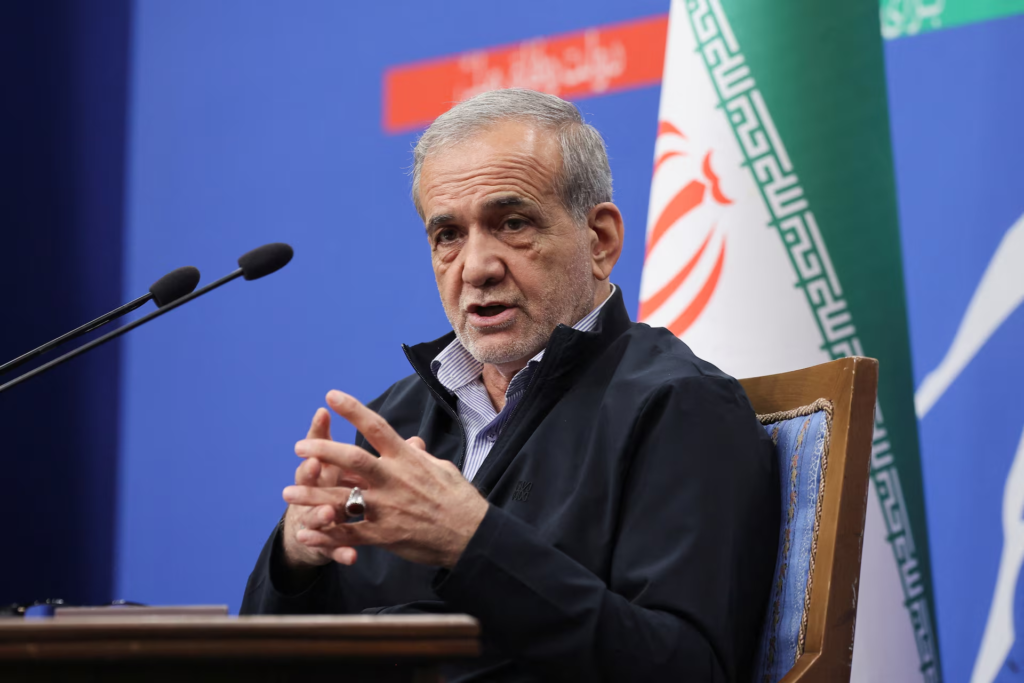
Iranian President Masoud Pezeshkian, who arrived in Islamabad the same day on a State Visit, addressed the flurry of competing public statements directly in a post on X:
“The effectiveness of the talks depends on full commitment to the agreed obligations and their precise implementation. Progress on this path will be measured by practical adherence to accepted responsibilities. Statements outside the agreed text do not help advance the negotiations.”
Pakistan and Qatar, serving as co-mediators throughout the process, said in a joint statement that “encouraging progress has been made.” Iran’s chief negotiator Ghalibaf said the talks produced “good achievements” particularly on the Strait of Hormuz, Lebanon, the oil waiver and frozen funds, while noting the parties remain at the beginning of a longer process. Technical talks under the Burgenstock framework were scheduled to continue through the remainder of the week.

Managing Editor at Global News Pakistan (GNP), with a Bachelor's degree in International Relations from Riphah International University, graduated with a Gold Medal. Reach out at sabahtareengnp@gmail.com