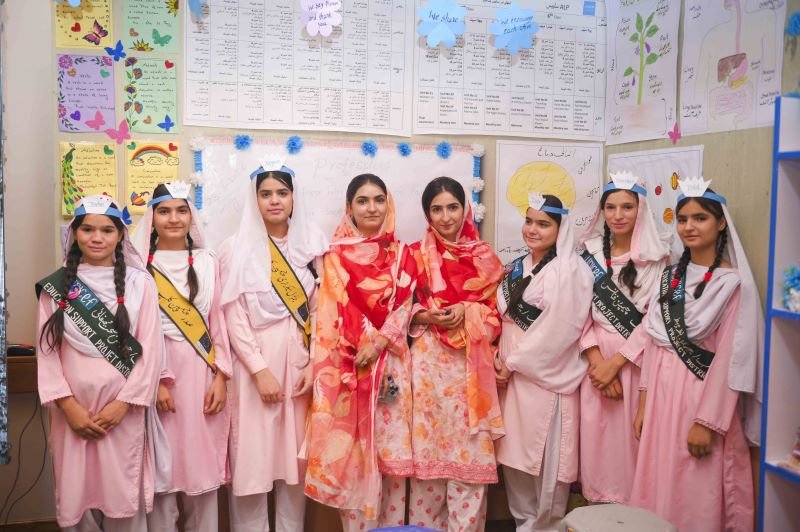
Islamabad (GNP): More than 760,000 children in Balochistan gained access to quality education through expanded learning opportunities and a stronger education system under the Balochistan Education Support Programme II (BES-II). The five-year initiative — funded by the European Union in partnership with the Balochistan School Education Department and UNICEF — wrapped up with a high-level concluding ceremony in Quetta.
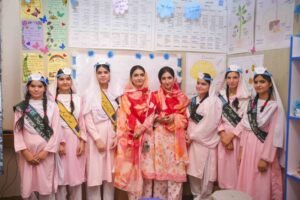
BES-II built on the foundation laid by the Balochistan Basic Education Programme (2016–2021), carrying forward the next stage of education reform in the province with €17.4 million in EU funding over the 2021–2026 period. The programme worked on two parallel tracks: widening access to schooling and building more resilient, inclusive, and data-driven education systems. Nearly 335,000 girls were among those who benefited from better learning opportunities, a result that underscores how central girls’ education is to the social and economic future of the province.
Balochistan Chief Minister Mir Sarfaraz Ahmed Bugti noted that a decade of working with the EU and UNICEF had done much to strengthen the province’s education system and change the lives of children across Balochistan. He expressed appreciation for the partnership and said he looked forward to building on what has been achieved until every child in the province can access quality education.
On the systems side, BES-II introduced a range of innovations designed to improve planning, accountability, and evidence-based management. These included the province’s first digital school census, real-time school monitoring tools, and a Virtual Academy through which more than 10,600 teachers received training. Over 4,000 additional teachers benefited from professional development support, and 3,000 Parent-Teacher School Management Committees were activated, bringing more than 16,000 community members into active roles in school governance and improvement.
These institutional investments translated into real gains in access. More than 20,000 out-of-school children at the primary level and over 2,200 at the middle level re-entered education through Accelerated Learning Programmes, with girls making up the majority of participants. Physical upgrades across 1,230 schools created better environments for more than 150,000 children, helping improve both attendance and retention rates. A further 6,100-plus adolescents acquired skills to support their future educational and employment prospects.
Dr. Sébastien Lorion, Acting Head of Cooperation at the EU Delegation to Pakistan, said investing in education and skills in Balochistan is ultimately an investment in the province’s future. He said the partnership had helped widen access to basic education and strengthen the underlying architecture of the system, and reaffirmed the EU’s commitment to supporting Balochistan in delivering better outcomes for every child.
Also Read: EU Kazakhstan Partnership 2026 Strengthened at Brussels Summit
The programme also helped shield children from learning disruption during emergencies. More than 6,600 children affected by flooding received support to stay in school, while over 72,000 adolescent girls and 26,000 children were reached through health, hygiene, and screening services that contributed to their overall well-being and capacity to learn.
UNICEF Representative in Pakistan Pernille Ironside described BES-II as a partnership that gave hundreds of thousands of children a genuine second chance at learning and skills development — one that will help shape their economic futures. She said the programme’s results demonstrate what becomes possible when government leadership drives investment in children, communities, education systems, and future-ready skills, backed by technical expertise from UNICEF and a committed partnership with the EU.
As BES-II closes, it leaves behind a reformed education sector, stronger institutions, and communities that are now meaningfully invested in schooling outcomes — a foundation that should accelerate progress toward the goal of quality education for every child in Balochistan.

Sohail Majeed is a Special Correspondent at The Diplomatic Insight. He has twelve plus years of experience in journalism & reporting. He covers International Affairs, Diplomacy, UN, Sports, Climate Change, Economy, Technology, and Health.