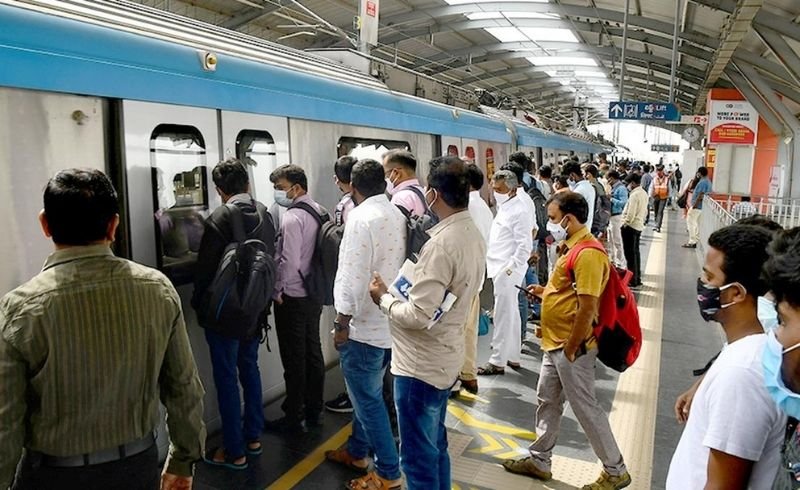
NEW DELHI, India: India’s ambitious push to expand metro rail systems is increasingly coming under criticism, as underwhelming passenger numbers in several cities expose deeper issues related to planning, affordability, and system integration.
Since 2014, the government has invested over $26 billion in metro infrastructure across nearly two dozen cities, rapidly expanding the network to more than 1,000 kilometres. Despite this impressive growth, many metro corridors are struggling to attract the expected number of commuters, raising concerns about the long-term sustainability and effectiveness of these projects.
A prominent example is Mumbai, where the Aqua Line — a key underground route — was projected to serve around 1.5 million passengers daily. In reality, current ridership remains significantly below that target. Similar patterns are visible in other urban centres, where studies suggest that actual usage has reached only 20 to 50 percent of initial projections.
Key Structural Challenges
Transport experts point to overly optimistic demand forecasts as a major factor behind the shortfall. These projections are often based on ideal conditions that rarely materialize, resulting in a wide gap between expected and real-world performance.
Affordability is another pressing concern. For many lower-income commuters, metro fares remain relatively high, taking up a notable portion of monthly income compared to global standards. The gradual reduction in subsidies has further limited access for price-sensitive passengers, reducing the system’s appeal.
In addition, weak last-mile connectivity continues to be a major obstacle. Limited feeder services, inadequate station access, and long or inconvenient transfers between different modes of transport discourage daily use. Without seamless connectivity, even well-built metro lines struggle to attract consistent ridership.
Experts also highlight governance issues. Fragmented management structures — where multiple agencies operate independently — have made it difficult to implement cohesive and integrated transport planning. This lack of coordination has hindered the development of a unified urban mobility system.
As India continues to invest heavily in metro infrastructure, analysts stress that addressing these structural and operational challenges will be crucial to ensuring that these projects deliver their intended benefits and achieve sustainable urban mobility.