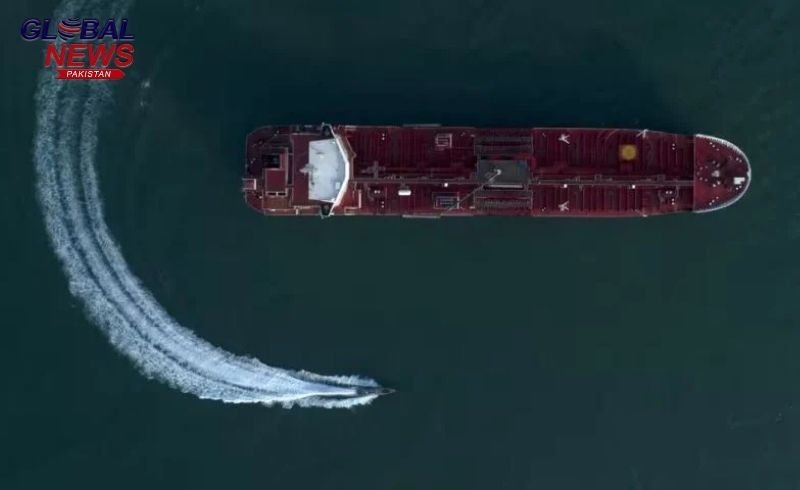
ISLAMABAD: Global oil markets saw a strong rebound on Monday, reversing much of last week’s sharp losses as tensions resurfaced in the Gulf region following the seizure of an Iranian-flagged cargo vessel by United States forces.
The latest incident, which Tehran described as a violation of the fragile ceasefire, came shortly after Israel was accused of breaching a separate truce in Lebanon. In response, Iran once again shut down the strategically vital Strait of Hormuz, only days after reopening it on Friday. The renewed escalation has not only cast uncertainty over the planned second round of US-Iran talks in Islamabad but has also heightened risk perceptions across global energy markets.
Partial Recovery in Prices
In early Asian trading, Brent crude futures jumped by $5.08, or 5.62 percent, reaching $95.46 per barrel. Meanwhile, US West Texas Intermediate (WTI) crude rose by $5.01, or 5.97 percent, to $88.86 per barrel. Despite the sharp rebound, the gains only partially offset the steep decline of more than 9 percent recorded at the end of last week, when oil prices fell after Iran announced the reopening of the Strait of Hormuz — a move that US President Donald Trump had publicly welcomed.
Optimism Fades Quickly
The market’s brief optimism proved short-lived. Reports emerged over the weekend that US forces had intercepted and seized an Iranian-linked cargo vessel attempting to enter restricted waters. The action significantly escalated tensions in the Gulf and reignited concerns about a broader confrontation.
Disruption in a Critical Shipping Route
Shipping activity through the Strait of Hormuz has remained severely disrupted for more than 50 days, raising ongoing concerns about global oil supply chains. The narrow waterway is one of the world’s most critical energy chokepoints, responsible for transporting over 20 percent of global seaborne oil.
As a result, market sentiment shifted rapidly from cautious optimism to renewed scepticism. Traders began factoring in a geopolitical risk premium once again, reflecting uncertainty over both regional stability and the outcome of upcoming diplomatic engagements.
Volatility Returns Ahead of Talks
Analysts noted that recent developments have effectively undone last week’s narrative of de-escalation. Oil markets are once again experiencing heightened volatility as investors await clearer signals on maritime security and the status of the anticipated US-Iran negotiations in Islamabad.
With relatively thin trading volumes amplifying price movements, crude markets remain highly sensitive to geopolitical headlines. Even minor developments in the Gulf region are capable of triggering significant price swings.
Uncertain Outlook Keeps Markets on Edge
The situation has left traders navigating a highly uncertain landscape. While the Trump administration has expressed optimism about reaching a potential agreement, its decision to seize an Iranian-linked vessel has simultaneously intensified tensions.
This dual approach—combining diplomatic outreach with assertive military actions—has created a “swing sentiment” in the market, keeping both analysts and investors cautious as they monitor developments closely.