
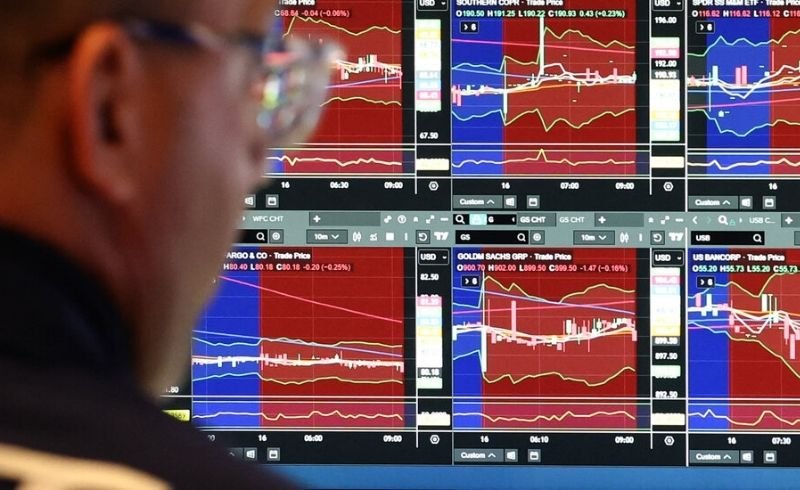
ISLAMABAD: Asian stock markets showed a mixed performance on Monday, with trading activity remaining thin across major exchanges as investors reacted cautiously to renewed tensions between the United States and Iran and shifting global risk sentiment.
Market participation stayed limited, with investors avoiding large positions amid uncertainty surrounding maritime security in the Gulf and the prospects for diplomatic engagement between Washington and Tehran. As a result, market direction was largely influenced by geopolitical developments rather than economic data or corporate earnings.
Regional Market Performance
Japan’s Nikkei 225 traded within a narrow range, with early gains fading later in the session as investor confidence weakened. Buying activity remained cautious, reflecting a lack of strong conviction.
In Hong Kong, equities moved sideways, mirroring uncertain regional sentiment, while South Korea’s markets also showed muted movement as investors largely stayed on the sidelines.
Mainland China’s stock markets remained subdued, with no major catalyst to drive momentum. Across the region, trading volumes were below recent averages, highlighting defensive positioning and weak participation.
Global Context Dominated by Geopolitics
Global equity sentiment remained cautious, with developments in the Middle East continuing to dominate investor psychology. Markets have increasingly been reacting to geopolitical headlines rather than traditional macroeconomic indicators, with volatility concentrated in energy and risk-sensitive assets.
Analysts noted that investor focus has shifted toward geopolitical stability and the security of key global trade routes.
Oil Market Volatility
Oil prices surged more than 5 percent in early trading, extending recent volatility. Brent crude rose to around $95.46 per barrel, while West Texas Intermediate climbed close to $88.86, reflecting a renewed geopolitical risk premium.
The increase followed reports of escalating tensions after the seizure of an Iranian-linked vessel and continued uncertainty over shipping flows in the Gulf. Market participants said oil prices are now being driven more by geopolitical risks than by traditional supply-demand dynamics.
Strait of Hormuz Remains a Key Concern
Disruptions in the Strait of Hormuz continued, with irregular vessel movement reported across major shipping routes. As one of the world’s most critical energy corridors, any instability in the strait has immediate implications for global energy markets and broader financial sentiment.
Freight and insurance costs have also remained highly sensitive to developments in the region, adding to overall market caution.
Uncertainty Around Iran-US Talks
A second round of Iran–United States negotiations is being considered in Islamabad, but uncertainty persists regarding timing and participation following recent maritime escalation.
While the United States has maintained pressure after the vessel incident, Iran has strongly objected to recent actions. Mixed diplomatic signals have left markets reacting to both the risk of further escalation and the possibility of renewed dialogue.
Pakistan Stock Market Shows Resilience
Pakistan’s equity market stood out, with the KSE-100 Index posting gains on selective buying, particularly in banking, energy, and fertiliser sectors.
Investors attributed the upward movement to value buying after recent volatility. However, overall trading activity remained subdued, with volumes below trend levels, reflecting cautious institutional sentiment.
Outlook Remains Cautious
Analysts believe markets will continue to be driven primarily by geopolitical developments in the near term. Volatility in oil prices, uncertainty over Gulf shipping routes, and shifting expectations around Iran–US talks are expected to remain key factors influencing investor sentiment.
For now, investors are closely monitoring developments in the Strait of Hormuz and awaiting clearer signals on diplomatic progress in Islamabad before taking stronger market positions.