Islamabad (GNP): When a natural disasters like floods destroys a village or an earthquake reduces homes to rubble, the first numbers we usually hear are the death toll, the number of displaced people and the estimated economic losses.
These figures are important, but they cannot fully explain what a disaster means for the people who experience it.
Behind every statistic is a family that may have lost its home, a child who can no longer attend school, a farmer whose crops have disappeared or a mother struggling to find clean water.
Natural disasters are therefore not only environmental events. They can become long-term human crises. A disaster also does not affect everyone equally.
People living in poverty, remote communities and those with limited access to healthcare, education, transportation and safe housing often face greater difficulties before, during and after an emergency.
The World Bank notes that disadvantaged communities are often among the hardest hit by climate-related disasters because they have fewer resources to prepare for and recover from them.
When a Flood Becomes a Human Crisis
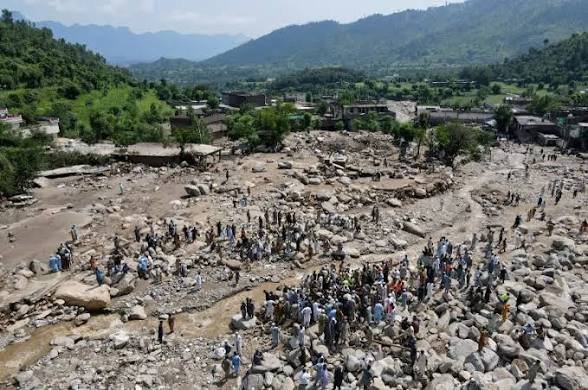
Pakistan’s devastating 2022 floods provide a clear example. Extreme monsoon rainfall caused widespread flooding between June and September, affecting around 33 million people and displacing nearly 8 million.
More than 1,700 people lost their lives, while millions of homes and livelihoods were damaged. However, these figures tell only part of the story.
For families in rural areas, losing a home could also mean losing livestock, agricultural land, documents and their main source of income.
Flooding also disrupted healthcare, education, clean water and food supplies. The World Bank reported that the floods particularly affected rural communities, including women, children and older people, while damaged roads made it harder for emergency services and families to reach health facilities.
Case Study: Noor’s Family in Sindh
One of the most powerful examples comes from Noor, a young woman from Sindh whose story was documented by UNICEF.
Noor was only 22 when the 2022 floods destroyed her home. She had recently given birth and was forced to evacuate with members of her community using a makeshift boat.
The experience placed enormous physical and emotional pressure on her. UNICEF reported that she struggled to eat and breastfeed during the crisis, and her newborn baby died only days later.
Noor’s experience shows why disaster statistics need a human dimension. Saying that millions of people were affected does not reveal the individual losses behind that number.
For one family, the disaster meant the destruction of a home and the loss of a newborn child.Other children faced different but equally serious consequences.
UNICEF documented how some children were unable to return to school, while families struggled with contaminated water, inadequate sanitation and food insecurity.
Also Read: BRICS 2026: A Growing Voice for the Global South
The Disaster Does Not End When the Water Recedes
One common misunderstanding is that a disaster ends when the immediate danger disappears. In reality, recovery can take years.
After the 2022 floods, many Pakistani communities continued to face damaged housing, lost livelihoods, disrupted education and health risks.
The World Bank estimated that the floods could have pushed as many as 9.1 million people into poverty, showing how an environmental disaster can create economic consequences long after the physical event.
Recovery therefore requires more than emergency food and temporary shelters. Communities need safe housing, functioning schools, healthcare, clean water, employment opportunities and infrastructure that can withstand future hazards.
Building a More Human Approach to Disaster Response
The human stories behind disasters also offer an important lesson, resilience should be built around people, not only infrastructure.
Early-warning systems can help families evacuate before floods arrive. Climate-resilient schools can allow children to continue learning during emergencies.
Stronger houses and roads can reduce future losses, while social protection can help vulnerable families recover their livelihoods.
Recent UNICEF work in Pakistan also highlights anticipatory action, including support that helps children continue learning when flooding threatens their communities.
Natural hazards cannot always be prevented. Floods, earthquakes, storms and droughts are part of the natural world.
But their human consequences can be reduced through preparation, resilient infrastructure, effective institutions and community participation.
Most importantly, behind every disaster statistic is a person with a story. Understanding those stories can shift disaster response from simply counting losses to protecting lives, dignity and the possibility of rebuilding a better future.