New York (GNP): Pakistan has reaffirmed its unwavering commitment to supporting peace, stability, and sustainable development in South Sudan during a United Nations Security Council briefing on the situation in the country and the work of the United Nations Mission in South Sudan (UNMISS).
The statement reflects Pakistan’s continued support for multilateral diplomacy and its long-standing contribution to global peacekeeping efforts under the United Nations.
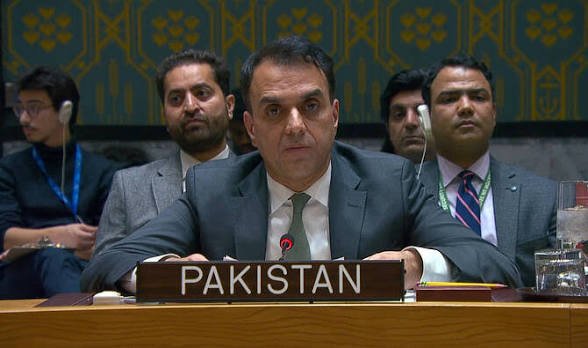
Speaking at the Security Council, Ambassador Usman Jadoon, Deputy Permanent Representative of Pakistan to the United Nations, welcomed the continued engagement of the African Union (AU), the Intergovernmental Authority on Development (IGAD), and the AU High-Level Ad Hoc Committee, led by former Tanzanian President Jakaya Kikwete.
Pakistan emphasized that these diplomatic initiatives remain essential for advancing South Sudan’s peace process and encouraging dialogue among all stakeholders.
Pakistan stressed that regional and international efforts should be closely coordinated within the AU–IGAD–United Nations framework to ensure a unified approach toward resolving political differences and implementing the country’s peace agreement.
According to the statement, sustained political engagement remains the most effective path to preventing renewed conflict and building confidence among South Sudan’s political leaders.
The statement also recognized the significant role played by UNMISS in protecting civilians, facilitating humanitarian assistance, promoting human rights, and supporting peacebuilding initiatives.
Pakistan noted that the mission continues to play a vital role in maintaining stability while helping national institutions strengthen governance and the rule of law.
Pakistan further highlighted the importance of implementing the Revitalized Peace Agreement in its entirety.
The country encouraged all South Sudanese parties to demonstrate political will by honoring their commitments, advancing constitutional reforms, and preparing the necessary conditions for peaceful democratic elections.
Inclusive political dialogue, Pakistan stated, is essential for ensuring long-term national reconciliation and preventing future instability.
Beyond political progress, Pakistan emphasized the need to address humanitarian challenges facing South Sudan.
Years of conflict, displacement, flooding, and food insecurity have left millions in need of humanitarian assistance.
Pakistan called upon the international community to continue supporting relief efforts while investing in long-term development projects that strengthen education, healthcare, infrastructure, and economic opportunities.
The statement also reaffirmed Pakistan’s proud history as one of the largest contributors to United Nations peacekeeping operations.
Pakistani peacekeepers have served in numerous conflict-affected regions around the world, including South Sudan, where they have contributed to civilian protection, humanitarian assistance, and post-conflict stabilization.
Pakistan reiterated its readiness to continue supporting UN peace operations wherever required.
Pakistan further underlined that sustainable peace cannot be achieved solely through military or security measures.
Also Read: Maritime minister forms panel for fish export incentives
Instead, durable stability depends on inclusive governance, strong democratic institutions, respect for human rights, and economic development that benefits all communities.
The country encouraged South Sudan’s leadership to continue working with regional organizations and international partners to create an environment conducive to peace and prosperity.
At the end, Pakistan reaffirmed its full support for UNMISS and pledged continued cooperation with the United Nations, the African Union, IGAD, and other international partners working toward lasting peace in South Sudan.
Pakistan expressed confidence that coordinated diplomatic efforts and sustained international support can help the country overcome existing challenges and build a peaceful, stable, and prosperous future for its people.