California (GNP): Intel has announced a series of artificial intelligence innovations and strategic partnerships at Computex 2026, that forcing its commitment to delivering advanced AI solutions from chip-level technologies to large-scale infrastructure systems.
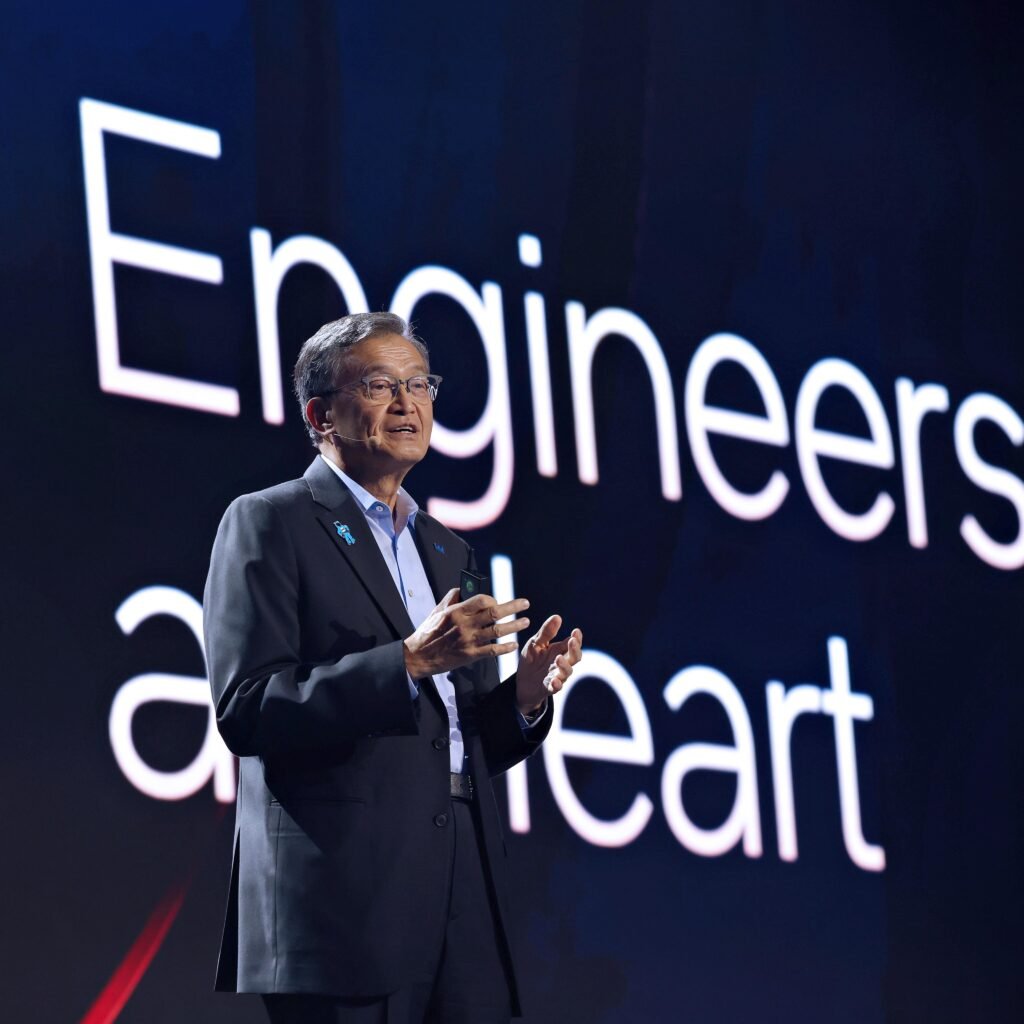
The announcements were made by Intel Chief Executive Officer Lip-Bu Tan during the company’s keynote presentation in Taipei.
The company introduced new rack-scale AI infrastructure, next-generation Intel Xeon 6+ processors, industry-focused AI solutions, and partnerships with leading technology companies aimed at accelerating AI adoption across multiple sectors. “For more than five decades, Intel and its partners have helped shape the PC, internet, and AI eras,” said Lip-Bu Tan. “Today, with the rise of inference, agentic, and physical AI, Intel is introducing innovations that will transform industries and expand access to AI technologies worldwide.
He highlighted that the event was Intel’s new rackscale AI infrastructure that designed to support growing demand for AI inference and agentic workloads. Developed in collaboration with SambaNova and Foxconn, the infrastructure combines Intel Xeon processors with SambaNova’s SN-50 Reconfigurable Dataflow Units (RDUs) to deliver improved performance, scalability, and energy efficiency for modern AI applications.
He added that Foxconn will contribute system integration expertise and plans to manufacture CPU-dense infrastructure that is optimized for data processing, hybrid AI applications, and cost-effective inference workloads. The collaboration aims to support data centers, hyperscale operators, and intelligence centers seeking efficient AI deployment solutions.
The Company also acknowledged a new enterprise inference cloud platform developed by Vector Core Compute, a company formed by Vista Equity Partners and Cambium Capital. During a live demonstration, Intel Xeon 6 processors, SambaNova RDUs, and NVIDIA Blackwell GPUs powered a fully disaggregated inference system designed to maximize efficiency and performance.
Also Read: Meta AI Developing Four New AI Smart Glasses to Challenge Apple and Samsung
This step highlighted the increasing importance of inference workloads as AI models move from training environments into real world deployment. Intel believes this trend is restoring the central role of CPUs in AI infrastructure by enabling orchestration, execution, and large scale data movement.
In addition to infrastructure advancements, Intel announced different strategic partnerships that aimed at creating industry specific AI solutions. Collaborations with Foxconn, Siemens, Hitachi, Echo Neurotechnologies, and Greenstone Biosciences will focus on integrating Intel processors and specialized silicon into solutions for manufacturing, healthcare, neuroscience, biotechnology, industrial automation, and quantum computing.
The partnership with Siemens expands existing cooperation across chip design, manufacturing, automation, and industrial digitalization. Along with that, Hitachi plans to work with Intel on advanced computing and foundry related technologies.
Echo Neurotechnologies will explore innovations in brain computer interfaces and neuro AI systems, and the Greenstone Biosciences aims to accelerate AI powered drug development using Intel technologies.Intel also announced the availability of its new Xeon 6+ processors, built on the Intel 18A manufacturing process. The processors are designed to support cloud native environments, network intensive operations, and emerging agentic AI workloads.
According to Intel, Xeon 6+ processors deliver greater performance density, that accelerate power efficiency, and improved scalability for modern data centers.The company highlighted that a single liquid cooled rack powered by Xeon 6+ processors can provide up to 36,864 cores, that enabling the significant computing density for AI driven applications.Beyond the data center, Intel reported strong market momentum for its Core Ultra Series 3 processor family.
The platform now powers more than 325 consumer and commercial PC designs and is expanding into handheld gaming devices and edge AI applications. More than 130 customers have already selected Series 3 processors for robotics and edge computing deployments.
As artificial intelligence continues to reshape industries all around the world, Intel’s latest announcements explain its strategy of combining advanced hardware, software, and ecosystem partnerships to build scalable AI solutions.
Through these innovations and collaborations, Intel aims to accelerate AI adoption, improve enterprise performance, and support the next generation of intelligent computing.