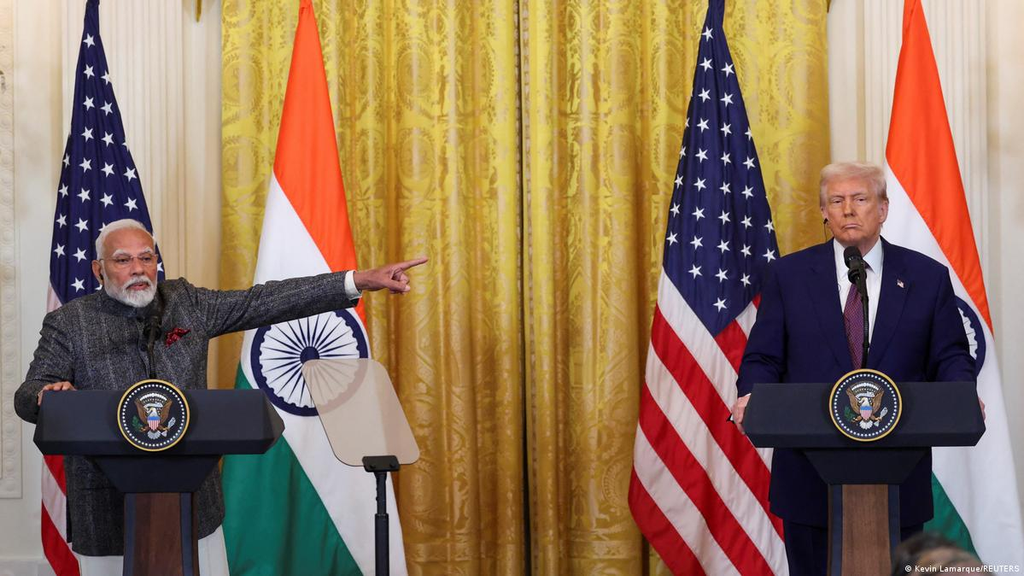
Islamabad (GNP): India cannot assume automatic American backing in a future military crisis with China, Indian strategic affairs experts have warned, pointing to the limits of New Delhi’s expanding defence partnership with Washington and the renewed importance of strategic autonomy in India’s foreign policy calculus.
The assessment comes as Chinese President Xi Jinping and Indian Prime Minister Narendra Modi work to stabilise relations following years of tension after the deadly 2020 clashes along the disputed Himalayan border.
Former Indian foreign secretary Nirupama Rao said American assistance cannot be treated as automatic, though she expected support would likely be far stronger if China attempted a significant unilateral change to the border status quo.
Rao said, “US partnership should multiply Indian capability, not substitute for it.” Her remarks reflect a broader recalibration under way in New Delhi, where officials are weighing how far Washington’s commitments can realistically extend.
Aparna Pande, a senior fellow at the Hudson Institute, said India was returning to its default position of strategic autonomy and multi-alignment, a shift she linked to growing unease over the global order under US President Donald Trump’s second administration. That unease has been compounded by strains in the relationship itself, with India-US ties recently affected by trade disputes, tariffs, oil sanctions, visa restrictions and pointed political rhetoric.
Despite these frictions, defence cooperation between the two countries remains extensive, spanning arms sales, technology transfers, planned defence co-production and joint military exercises across air, land, sea, space and cyberspace domains.
During the 2020 border standoff, Washington supplied New Delhi with surveillance drones and logistical support, and reports indicate it shared real-time intelligence on Chinese troop positions along the Line of Actual Control as recently as 2022.
Sameer Lalwani, a senior fellow in the South Asia Programme at the Carnegie Endowment for International Peace, said he remained confident Washington would back New Delhi in another major border crisis, noting that structural defence cooperation has grown stronger since 2020.
That growing cooperation is reflected in expanded joint exercises such as Tiger Triumph and Malabar, alongside continued coordination through the Quad grouping with Japan and Australia on maritime security and disaster response.
Rao added that the precedent set during the 2020 crisis remains significant, though she expects any future American assistance to be handled discreetly given India’s formal status. Rao said, “The essential qualification is that India is not a US treaty ally.”
Meanwhile, border arrangements introduced since 2024 have eased tensions and revived high-level dialogue, regular flights and people-to-people exchanges between Beijing and New Delhi, including an eight-point consensus on early efforts toward boundary delimitation.
Also Read: PM Shehbaz Condemns Drone Attack, Backs Saudi Arabia
Even so, thousands of troops remain stationed on both sides of the border as infrastructure development continues across the contested terrain. India’s Defence Ministry has reported a significant reduction in People’s Liberation Army deployments along the northern front, estimating that between 40,000 and 50,000 Chinese troops remain at the border, with a similar number held in nearby training areas.
Pande said India is now navigating a delicate balance between a strong China, a weaker Russia and what she described as a less dependable, transactional and semi-isolationist America, a dynamic Rao said is reinforcing New Delhi’s instinct toward strategic autonomy while raising the value of stabilising ties with Beijing. Despite the recent border arrangements, Lalwani cautioned that a genuine thaw between India and China remains unlikely, describing the two countries as clearly rivals, if not adversaries.

Managing Editor at Global News Pakistan (GNP), with a Bachelor's degree in International Relations from Riphah International University, graduated with a Gold Medal. Reach out at sabahtareengnp@gmail.com