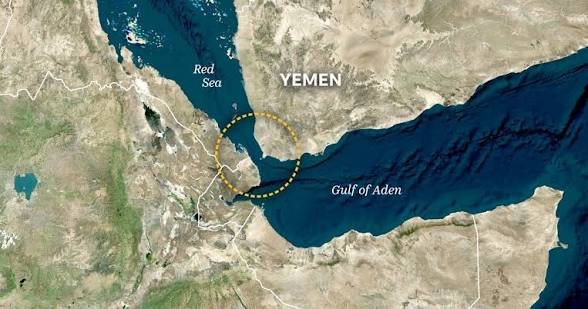
Yemen (GNP): The Houthis have intensified their maritime pressure campaign in the Red Sea by repeatedly warning Saudi linked commercial vessels against transiting the region, raising fresh concerns about global shipping security and the stability of international trade routes.
According to recent reports, Houthi forces issued multiple radio warnings to Saudi owned ships on July 20 and July 21, instructing them not to sail through the Red Sea.
In addition, shipping companies reportedly received emails warning them against loading or unloading cargo at Saudi ports along the Red Sea coast.Although no direct attacks on commercial vessels have been reported during this latest phase, the warnings have already influenced maritime traffic.
At least two vessels reportedly reversed course before crossing the Bab al-Mandeb Strait, while another ship altered its route instead of continuing to a Saudi port.
The developments have increased concerns among shipping companies and insurers. Industry experts note that even without direct attacks, security threats can lead to higher insurance premiums, longer shipping routes, operational delays, and increased transportation costs.
These additional expenses are often passed on to businesses and consumers worldwide, placing further pressure on global supply chains.Saudi Arabia is expected to experience a particularly significant economic impact if commercial shipping through its Red Sea ports declines.
The kingdom relies heavily on maritime trade for imports, exports, and energy related commerce. Reduced shipping activity could affect logistics, port operations, and regional trade flows.
Analysts believe the Houthis’ actions are primarily intended to deter Saudi Arabia from launching further military operations against Houthi controlled areas in Yemen. By increasing the potential economic costs for Saudi Arabia, the group may seek to discourage any renewed military escalation.
At the same time, security observers note that the disruption also aligns with broader Iranian strategic interests. Iran has sought to increase pressure on international markets during periods of regional tension, especially through its influence over key maritime chokepoints.
Instability in both the Strait of Hormuz and the Bab al-Mandeb Strait could increase risks for global shipping and energy markets.However, analysts caution against assuming that the Houthis are acting solely on Iran’s behalf. While the objectives of Tehran and the Houthis may overlap in certain areas, the Houthis also have independent political and military goals centered on Yemen and their conflict with Saudi Arabia.
Their current actions directly support their own efforts to pressure Riyadh while also producing strategic effects that may benefit Iran.The Bab al-Mandeb Strait remains one of the world’s most important maritime corridors, linking the Red Sea with the Gulf of Aden and serving as a critical route for global trade between Europe, Asia, and the Middle East.
Any disruption to traffic through this narrow waterway can have significant consequences for international commerce, energy transportation, and supply chain stability.
International shipping companies continue to closely monitor developments while evaluating potential alternative routes and enhanced security measures.
Also Read: Middle East Maritime Tensions Escalate with Houthi Blockade
Governments and maritime organizations are also watching the situation carefully, as prolonged disruption could affect global trade flows and increase economic uncertainty.
As tensions continue in the region, maritime security experts emphasize that maintaining the safe passage of commercial vessels through international waterways remains essential for global economic stability.
Whether the current warnings develop into direct maritime attacks or remain a coercive strategy will likely shape the next phase of the Red Sea security environment.