Kabul (GNP): Power struggles, corruption and disputes over mineral resources are driving violence in northern Afghanistan, where the Taliban’s opaque handling of the mining sector has sharpened tensions between rival factions, companies and local communities, according to a report by the Pak Asia Youth Forum.
The report, titled Gold, Power and Grievance: Afghanistan’s Mining Sector and Unrest, says the industry operates with little transparency, weak financial oversight and limited legal accountability. It argues that this allows powerful officials and commanders to profit from mineral wealth while communities bear the consequences.
The stakes are high because Afghanistan holds substantial reserves of lithium, rare earth elements, copper, cobalt, gold and precious stones. The report says the absence of transparent concession procedures has turned this wealth into a source of factional competition and local resentment.
At the centre of the rivalry, it identifies a struggle between the Kandahar-based Taliban leadership and the Haqqani Network over mining rights and revenue. Commanders linked to the Haqqani faction have reportedly resisted efforts to hand control of mining operations to officials aligned with Kandahar.
The tension grew after a 2024 reshuffle of the Ministry of Mines and Petroleum, in which Sheikh Shahabuddin Delawar was replaced by Haji Gul Agha, also known as Mullah Hidayatullah Badri, who is aligned with the Kandahar faction. According to the report, the fight over concessions has exposed divisions within the administration and weakened its claim to effective governance.
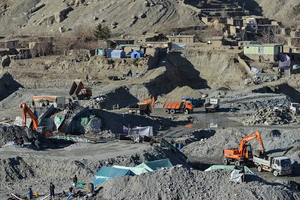
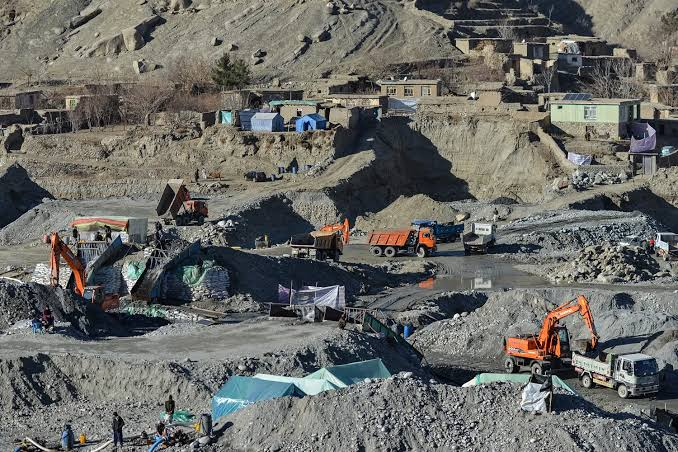
These divisions have been most visible in the northeastern provinces of Badakhshan and Takhar, which are known for gold and gemstones. Local communities there have faced forced displacement, the seizure of farmland, environmental damage and violent crackdowns, and residents complain that the benefits of mining go to influential individuals rather than to the people living near extraction sites.
The report says disputes involving rival factions, mining companies and residents have repeatedly turned deadly. In January 2026, a clash in the Samti area of Chah Ab district in Takhar left four people dead and five injured.
Another confrontation took place in Badakhshan’s Nusay district and involved Jumma Khan Fateh, a commander affiliated with the Haqqani faction. The report says he surrendered on August 17 after the conflict escalated. The Taliban later released an intercepted audio recording suggesting he had contacted the Afghanistan Freedom Front (AFF), an armed group opposed to Taliban rule.
Also Read: Brazil Court Gives Meta 24 Hours to Prove Election Fairness
Behind these clashes, the report points to how contracts are awarded. It says major concessions have gone through informal applications and personal connections rather than open tenders. It cites a $200,000 bribe linked to the Wikador mine and a $700,000 scheme involving talc in Nangarhar province, and it notes undisclosed financial interests held by senior officials in the Awez gold deposit in Shahri Buzurg district.
The lack of independent audits makes this harder to track, the report adds, since it limits public scrutiny of how mining revenue is collected and shared.
The report therefore concludes that the unrest is rooted mainly in domestic power struggles, disputes over revenue and long-standing local grievances, rather than in external interference. Its findings raise questions about the Taliban authorities’ ability to manage the country’s mineral wealth fairly, particularly in regions where competing interests over gold have repeatedly led to violence.

Managing Editor at Global News Pakistan (GNP), with a Bachelor's degree in International Relations from Riphah International University, graduated with a Gold Medal. Reach out at sabahtareengnp@gmail.com