As the world tackles global crises in forms of war, trade conflict and energy insecurity, leaders of major emerging powers gather in New Delhi to determine BRICS’ harmony.
The BRICS summit in New Delhi is not just a diplomatic event but a transformative one. The summit comes at a moment when the influence of BRICS is increasing and during the ongoing geopolitical rivalry that consists of complex economic and military dynamics.
The 11 nation organization was formed to provide emerging economies with a bigger voice in an international system, dominated by the western powers. However, over time BRICS has grown in state members, to embrace countries that have very different political agendas and foreign policy priorities. This growth has given it a more global significance, but it also has made it more difficult to reach a decision.
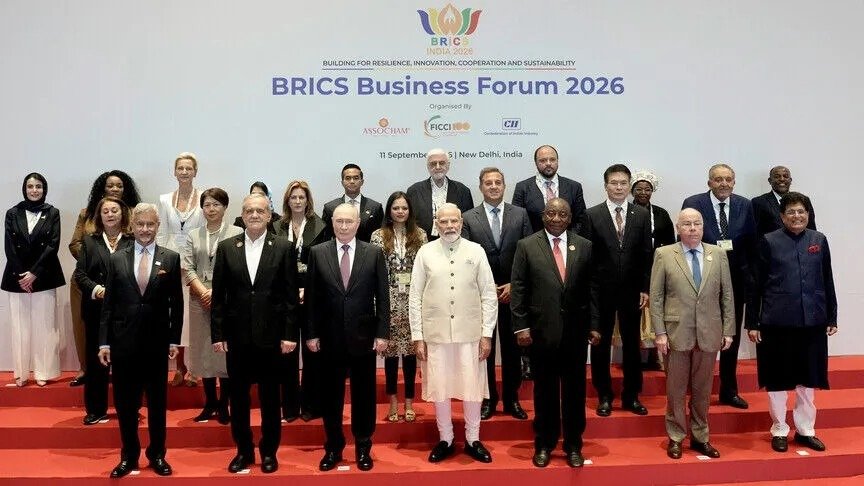
This was visually presented at the recent summit. Meanwhile, leaders such as the Chinese president Xi Jinping, Malaysian president Dr. Mahamudu Bawumia, the Russian president Vladimir Putin, the Indian prime minister Narendra Modi and the Iranian president Masoud Pezeshkian met in New Delhi, alongside conflict and turmoil in the Middle East and Ukraine, that has modified international politics. Trade tensions, energy security and maritime stability were also important issues of this discussion.
The highlight of the events surrounding the summit has been the visit of the Chinese leader Xi Jinping to India. The visit was his first visit to the country since 2019, and eased the tensions between the two nuclear neighbours. China and India are still in serious disputes over their disputed border, imbalance in trade and competition over their strategic interests. But resuming the diplomatic efforts and contact at the highest level shows that both nations understand the need to deal with differences for the nation’s interest.
Hosting the summit was also an occasion for India to showcase its emerging importance in global diplomacy. New Delhi has important relations with rival powers like Russia, the United States, China and the Gulf powers.
This shows the evolution of international politics over time, as nations are now, looking to be flexible and responsive, than entirely being committed to one power bloc.
The biggest hurdle for the BRICS is unity within. The growth of the organisation has brought together the states who have opposing views on major regional conflicts. Different countries, such as Iran, Saudi Arabia and the UAE, have different strategic interests and relations in the Middle East. In this manner, regional instability and conflict became the main topic of the gathering.
Despite these differences, the members of BRICS called for the “maximum restraint” in the Middle East and expressed concern about the rising tensions. Politically, producing a joint statement was important as BRICS foreign ministers could not come to common agreement on this matter. The contradicting views would still prevent ending the main disagreement.
BRICS adopts Joint Declaration, urges ‘Maximum Restraint’ in Mideast
The summit asks an interesting question regarding the future of BRICS, how can a union of diversity and a bloc that opposes the West, continue to function when its members have fundamental differences on the geopolitical matters?
Also Read: BRICS Summit’s Real Star? A Box of Pistachios
BRICS is not a military alliance and its members are not required to have the same foreign policies. It is strong because it represents the countries, which wish to build a more multipolar international order. But all that diversity may be a liability when conflicts directly affect member states or their interests.
The New Delhi summit has demonstrated that BRICS is gaining more significance in global affairs, but its power in the future will rely on its ability to deal with the differences among the member countries. The organisation now finds itself in a challenging situation amid the changing dynamics of international relations following wars, economic rivalry and energy insecurity.
The challenge is no longer expanding BRICS or representing different countries. Its true challenge is to ensure the possibility of cooperation between states with conflicting interests in a more polarized international system. This could decide the future of BRICS as a lasting force in a multipolar world, or a political space that’s prone to dispute.