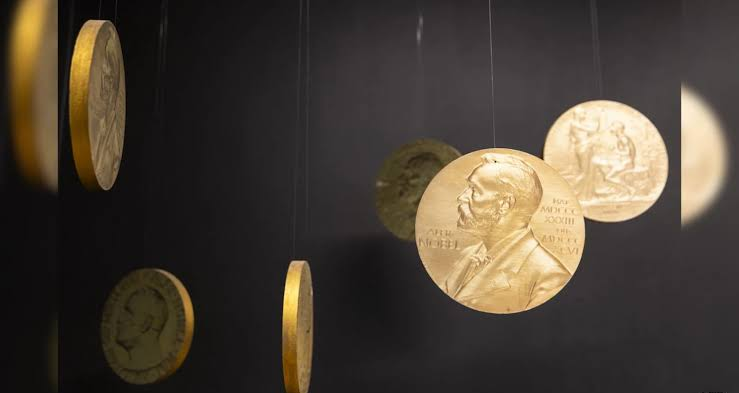
The Norwegian Nobel Committee will make the 2026 announcement on 9 October 2026 at 11:00 a.m. CEST in Oslo, ending the assumptions and prolonged speculation over who will receive the world’s most prestigious title.
This year’s competition is particularly fascinating. According to the Norwegian Nobel Institute, 287 candidates are awaiting the decision, including 208 individuals and 79 organisations. It must be mentioned that this is not an official shortlist revealed to the public.
The identities of nominees have been kept secret for over 50 years. This often leads to several names circulating in international media, expert analysis and hypothetical discussions. That secrecy has turned the matter into a guessing game for the media and the general public.
A Prize That Arose from Alfred Nobel’s Will
The Nobel Peace Prize was established by the last will and testament of Swedish industrialist and inventor Alfred Nobel, dated 1895. Part of his estate was to be used for a prize for the person who had done the most and best work to foster peace, the removal of standing armies and “fraternity between nations.”
First awarded in 1901, the Peace Prize was shared by the founder of the Red Cross, Henri Dunant, and French peace activist Frédéric Passy. It is the only Nobel prize not given in Stockholm. It is given in Oslo, Norway.
Over more than a century, it has been given to presidents, political leaders, human-rights activists, humanitarian organisations and international institutions. It has also produced some of the most politically charged and controversial choices in the history of international awards.
The prize has not been awarded every year. It has been withheld 19 times, mostly when the committee held the opinion that no candidate had reached the required level, including during the two World Wars.
From War and Humanitarianism to Democracy
The concept of peace has evolved over the decades. In the past, the prize honoured a commitment to peace, but it has also recognised action related to human rights, democracy, humanitarian protection, international cooperation and conflict resolution.
An example of this was the 2025 award announcement. Maria Corina Machado, a leader of Venezuela’s opposition who has campaigned for democratic rights and a peaceful transition from dictatorship to democracy, won the 2025 Nobel Peace Prize.
The decision is significant in the context of the 2026 race, as it showed that the committee does not need to select a person who has negotiated a traditional peace agreement. Rather, it can recognise a larger struggle for political rights and for peaceful political change.
How Will the 2026 Winner Be Decided?
The final selection process is much more secretive than the public believes.
Nominations close on 31 January. The Norwegian Nobel Committee, which consists of five members, then considers the nominations and puts together a shortlist for assessment by experts and independent persons.
The committee deliberates throughout the year before making its final decision, usually by mutual consensus. If there is no agreement, a simple majority can decide the winner.
It seems the prize will not be awarded on the basis of popularity or media attention. This is why the result may or may not satisfy people worldwide.
The Candidates and the List of Hopefuls
Several names and organisations have surfaced in expert discussions, but none has been officially named as a nominee or finalist.
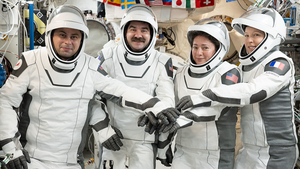
One of the least anticipated options is the International Space Station (ISS). The ISS is a unique case of scientific cooperation between geopolitical rival states. The 2026 list by Peace Research Institute Oslo (PRIO) director Haakon Gjerlow highlights the possibility of recognising space stations.
Another is Ukrainian children’s rights activist Mykola Kuleba, founder of Save Ukraine, together with Save the Children. If they receive the awaited recognition, the protection of children suffering in war would be at the heart of the Nobel message.
Sudan has also joined the discussion. Another option that has been highlighted is the country’s Emergency Response Rooms, grassroots networks of volunteers that respond to civilians during the war.
There may be competition between international institutions as well. Given the importance of international law and accountability, the International Court of Justice and the International Criminal Court have been mentioned in expert discussions.
The Committee to Protect Journalists has also been added to PRIO’s list, possibly pointing to the growing threat to journalists in conflict areas.
Trump Steps into the Picture
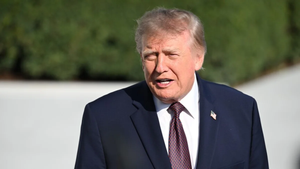
Few names have sparked as much political heat as that of US President Donald Trump. Trump has often spoken of wanting the Nobel Peace Prize, and politicians have declared their intent to nominate him. The Nobel Committee has not verified his nomination.
This has become one of the biggest stories in the lead-up to the 2026 award.
Also Read: Trump Claims He ‘Deserves Nobel Peace Prize’ Ahead of Verdict
Analyst assessments cited by Reuters say he has little chance, considering his involvement in the ongoing Iran conflict. According to Reuters, the committee might also be wary of political pressure on the prize after last year’s controversy involving Machado and Trump.
Canadian Prime Minister Mark Carney has also made headlines. He has been caught up in the political debate on tariff policies with Trump, and has spoken about international cooperation. However, as with his earlier media attention, this was not an indication that he is on the committee’s official list.
Why Is This Year’s Prize So Important?
The 2026 Peace Prize comes at a particularly critical time for the international system.
Wars and political conflict persist in many parts of the world, including Ukraine, Sudan and the Middle East. Pressure on international institutions is intense, with geopolitical competition threatening public cooperation.
The values on which the Peace Prize is based are peaceful dialogue, peaceful conflict resolution and international cooperation. According to the Nobel Committee itself, all of these are especially significant in today’s conflict-ridden world.
This raises interesting questions that the committee must address:
- Will it honour an individual who has directly attempted to end a conflict?
- Will it identify humanitarian figures safeguarding civilians?
- Will it credit institutions that uphold international law?
- Or will it select a symbolic example of international cooperation, such as the International Space Station?
World Awaits Oslo’s Verdict
It is impossible to say who will win or lose.
The uncertainty lies not in the reporting but in the Nobel system itself. Committee discussions are confidential, and even the names of nominees are kept secret. The Norwegian Nobel Committee has not confirmed any of the nominees mentioned in newspapers, prediction markets or expert shortlists.
What can be said is that the 2026 race is remarkably broad. Trump brings politics. Carney is a symbol of international cooperation. Ukraine highlights the question of war and children. Sudan showcases humanitarian survival. International courts carry international law.
One of these major names, or a nominee who has stayed invisible, could be the latest Nobel Peace laureate by Friday. This makes the early hours of 9 October overwhelming.
Now it is not just about who has been nominated, but about what message the Nobel Committee decides to give to a world at war.
Friday will reveal whom Oslo has chosen!