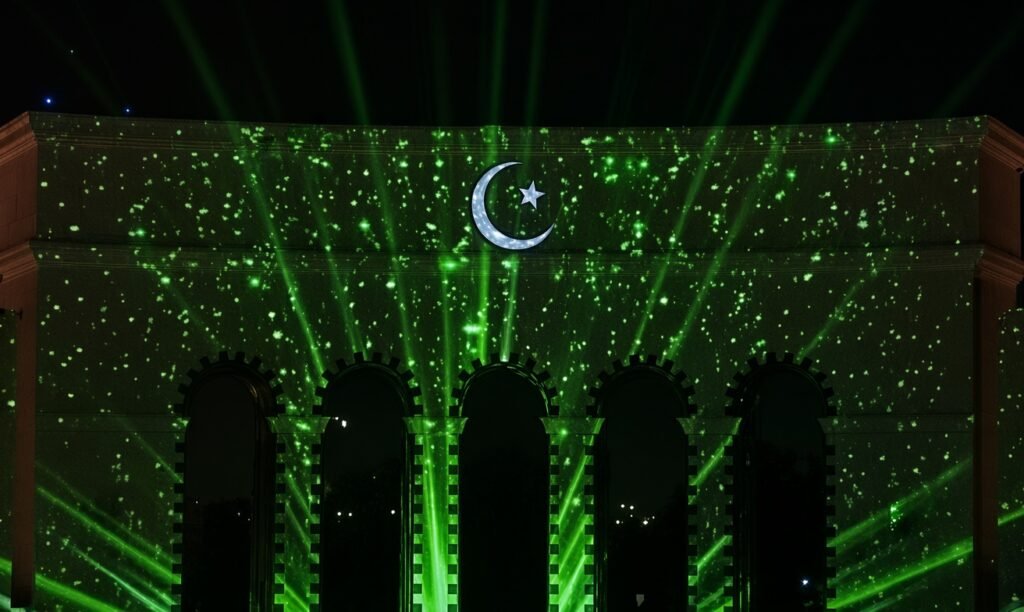
Islamabad (GNP): On 14 August 1947, Pakistan emerged as an independent state with a promise of freedom, dignity, and a better future. Seventy-nine years later, the country stands at another important moment.
Independence Day is not only a celebration of the past it is also an opportunity to ask where Pakistan stands today what challenges continue to hold it back, and what kind of country it wants to become in the decades ahead.
Pakistan at 79 is a story of resilience. It is a country that has experienced wars, political transitions, economic crises, terrorism, natural disasters and social challenges, yet has continued to move forward.
From its early years of state-building to its growing role in regional and international affairs, Pakistan has repeatedly demonstrated that its people possess the ability to endure difficult circumstances.
But resilience alone is not enough. The next chapter requires institutions that work, an economy that creates opportunities, a society that values education and equality, and leadership capable of turning long-term challenges into sustainable solutions.
Honouring the Past
The creation of Pakistan was the result of a historic political struggle. The independence movement was driven by the demand for political representation, security and a future in which Muslims of the subcontinent could determine their own political destiny.
Remembering that history should go beyond ceremonies, flags and patriotic slogans. The real meaning of independence lies in understanding the responsibilities that came with it.
The founders of Pakistan inherited the difficult task of building a functioning state from the ground up.
Millions of people were displaced during Partition, institutions had to be established, and the new country faced enormous economic and administrative challenges.
Yet Pakistan survived those early difficulties. Over the decades, Pakistan has also made significant contributions in diplomacy, science, sports, culture, education and international peacekeeping.
Its people have built businesses, universities, technological ventures and civil society initiatives both at home and abroad. This history deserves to be remembered not as a perfect story, but as a story of struggle, achievement and unfinished work.
Confronting the Present
Celebrating 79 years of independence also means being honest about the problems Pakistan faces today.
The economy remains one of the country’s most important challenges. Pakistan has made progress toward macroeconomic stabilization and continues to implement reforms under its IMF-supported programmes.
In May 2026, the IMF reported that Pakistan’s economic stabilization had continued, while emphasizing the need for reforms in taxation, energy, public-sector enterprises, productivity and human capital.
Economic stability, however, must ultimately be judged by what ordinary citizens actually experience. Growth figures alone are not enough; employment levels, purchasing power, affordable energy, quality education, healthcare, and opportunities for young people matter just as much. What Pakistan needs, therefore, is an economy built to do more than manage one crisis after another.
It needs an economy capable of generating productive employment, encouraging investment, supporting entrepreneurship and expanding opportunities beyond traditional sectors.
Climate Change:
A Challenge We Can No Longer Ignore, Few issues demonstrate Pakistan’s vulnerability more clearly than climate change. Pakistan remains highly exposed to floods, extreme heat, changing rainfall patterns and glacial melt.
The IMF’s 2026 assessment noted that Pakistan continues to face significant climate vulnerability, while severe monsoon flooding in 2025 again caused major damage and displacement. The lesson is clear: climate change is no longer simply an environmental issue. It is an economic, social, and national development issue.
A flood can destroy a family’s home, damage crops, interrupt education, destroy roads and increase pressure on an already struggling economy.
The World Bank has therefore highlighted the importance of strengthening flood resilience, infrastructure and climate adaptation in Pakistan.
Pakistan cannot prevent every climate disaster, but it can become better prepared for them. Climate resilient infrastructure, early warning systems, better urban planning, water management and stronger local disaster response mechanisms must become part of national development planning.
The Youth Question
Perhaps the most important question for Pakistan’s future is what it does with its young population.
Young Pakistanis are not simply the country’s future; they are its present. They are studying in universities, entering workplaces, building businesses, creating digital content and participating in public discussions.
Technology has created opportunities that previous generations could not have imagined. Pakistan’s digital transformation is already becoming part of the country’s development agenda.
In June 2026, the World Bank announced support for Punjab’s digital transformation and broadband expansion, describing digital connectivity as an important foundation for economic opportunity and improved public services.
But digital opportunity must be matched with digital literacy, quality education and employment opportunities. A young person with access to the internet but without quality education or meaningful employment still faces serious limitations.
Pakistan’s challenge is therefore to convert its demographic potential into human capital. This means investing in schools and universities, technical training, research, innovation and skills that match the demands of a changing global economy.
Education Must Become a National Priority. No country can build a strong future while leaving large sections of its population behind in education. Pakistan continues to face challenges related to learning outcomes, child nutrition, and access to quality public services.
The World Bank’s 10-year Country Partnership Framework for Pakistan identifies reducing learning poverty, improving human development and strengthening resilience as major development priorities.
Education should therefore be understood not merely as a social service but as an investment in national strength. A student who receives quality education is more likely to become a skilled worker, entrepreneur, researcher, teacher, policymaker or professional.
In this sense, classrooms are not separate from national development; they are where much of the country’s future is being shaped.
Also Read: Pakistan Embassy in Moscow Hosts 80th Independence Day Reception
Institutions and Governance Matter
Pakistan’s future will also depend on the strength of its institutions. Political disagreements are a normal part of democratic societies. What matters is whether political competition takes place within strong constitutional and institutional frameworks.
A stable country requires institutions that can function beyond individual governments and political personalities. Policies should have continuity, public resources should be used responsibly, and citizens should have confidence that laws apply fairly.
Long term development cannot depend entirely on short term political cycles. Economic reforms, education policies, climate strategies and institutional improvements require consistency over many years.
Shaping the Future
The Pakistan of the future cannot be built by government alone. It requires citizens who understand that independence comes with responsibility.
It requires businesses willing to invest and create employment. It requires teachers who prepare students for a changing world. It requires journalists who inform rather than inflame.
It requires young people who participate constructively in society. It requires political leadership capable of thinking beyond the next election.
The country also needs to strengthen its position internationally. Pakistan’s geography gives it strategic importance, but geography alone cannot guarantee influence.
Economic connectivity, trade, diplomacy, technology and human capital will increasingly determine how countries exercise influence in the 21st century.
Pakistan’s future should therefore be defined not only by its security capabilities but also by the strength of its economy, institutions, education system and international partnerships.
From Independence to Responsibility
At 79, Pakistan has much to celebrate, but also much to confront. The country has survived challenges that could have overwhelmed a young state.
Its people have repeatedly demonstrated resilience in moments of crisis. Yet the next stage of national development requires more than survival. It requires transformation. The real question is not simply what Pakistan has achieved in 79 years. The more important question is what Pakistan can build in the next decade.
Can it create an economy that provides opportunities for its youth? Can it strengthen democratic and public institutions? Can it provide quality education to every child? Can it prepare its cities and communities for climate change? Can it transform its enormous human potential into productive strength?
These are the questions that should define Pakistan’s 80th year and the decades that follow. Independence is not a destination reached in 1947.
It is an ongoing responsibility, to protect freedom, strengthen institutions, create opportunities and build a society in which future generations can live with greater security and dignity.
At 79, Pakistan is carrying the weight of its history while standing before a rapidly changing world. The task now is not merely to honour the past. It is to confront the present and shape a future worthy of the promise with which Pakistan was born.