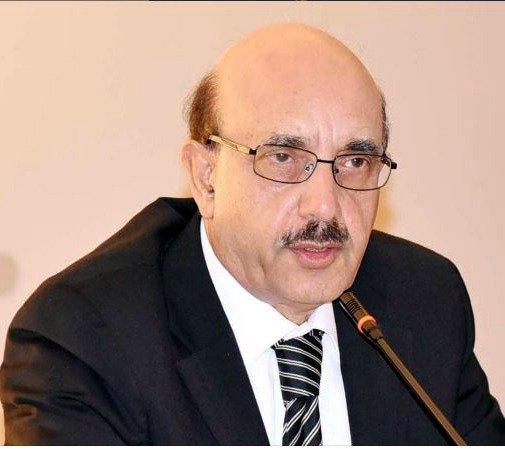
Islamabad (GNP): Sardar Masood Khan said that while the prospects of a renewed large-scale war between the United States and Iran remain low, the continuing conflict in Lebanon and Gaza has created a dangerous regional stalemate that poses a serious challenge to ongoing diplomatic efforts.
Speaking during a television interview on developments in the Middle East, Ambassador Masood Khan observed that Israel has been pursuing a broader strategic objective of reshaping regional realities by maintaining military operations in Lebanon and Gaza.
At the same time, international attention remains focused on Iran. He noted that despite discussions surrounding ceasefires and diplomatic initiatives, military operations in both Lebanon and Gaza have continued, creating conditions that complicate efforts to achieve a comprehensive settlement.
He said that one of the key concerns for regional stability is the continuation of hostilities in Lebanon, where attacks and military activity have persisted despite ongoing diplomatic contacts. According to Ambassador Masood Khan, any durable understanding in the region must address all theatres of conflict rather than focusing on only one aspect of the crisis.
The former ambassador noted that Iran has consistently maintained that a comprehensive ceasefire should form the basis of any broader agreement with the United States. He explained that Tehran’s position has been linked to concerns about developments in Lebanon and Gaza, where continuing military operations are viewed as undermining confidence in the diplomatic process.
Commenting on the broader regional situation, Ambassador Masood Khan stated that the ongoing conflict has caused extensive human suffering and economic damage across the Middle East. He warned that prolonged instability threatens not only the affected populations but also the wider security and economic architecture of the region.
Addressing concerns about the possibility of another major war, he expressed the view that neither the United States nor Iran appears willing to resume full-scale hostilities.
He noted that both sides have already paid a heavy price during the recent conflict and are aware of the risks associated with renewed escalation.
However, he cautioned that the region remains trapped in a fragile stalemate. While large-scale war may be unlikely, unresolved disputes, continuing military actions, and mutual distrust continue to hinder progress toward a lasting settlement.
Also Read: Pakistan Praised for Peace as Mushahid Hails New Global Order
He added that isolated military incidents and retaliatory actions could still threaten stability if not managed through diplomacy. Ambassador Masood Khan emphasized that Pakistan’s diplomatic role has become even more important at this critical stage.
He noted that Islamabad had played a central role in facilitating communication between Washington and Tehran and helping both sides move toward a Memorandum of Understanding that had generated optimism in both capitals.
He said that the emergence of new regional complications has increased Pakistan’s responsibility as a mediator. According to Ambassador Masood Khan, Pakistan remains at the centre of the diplomatic process and is working with regional and international partners to overcome the current deadlock, preserve channels of communication, and prevent a return to wider conflict.
Concluding his remarks, he stressed that dialogue, strategic restraint, and sustained diplomatic engagement remain the only viable path toward regional stability and a peaceful resolution of the ongoing crisis.