New York (GNP): Women’s Sports are attracting a rapidly expanding audience, with a new Nielsen report showing that millions of additional fans are becoming interested in female competitions as viewership, sponsorship and media attention continue to grow.
According to the Nielsen report cited by Reuters, women’s sports generated 28.6 billion minutes of viewing in the United States during the first half of 2026, representing an 18% increase compared with the same period last year. The figures indicate that the growing popularity of women’s competitions is becoming an important development in the global sports industry.
Nielsen found that 122.5 million Americans, equivalent to 52.8% of the U.S. population, are now interested in women’s sports. The finding highlights the scale of the audience that women’s competitions have developed and suggests that their growth is increasingly becoming part of mainstream sports culture.
The expansion is also attracting greater commercial interest. Advertising spending on women’s sports has increased by 120% since 2022, according to Nielsen. Meanwhile, 52% of consumers surveyed believe brands and sponsors should increase their investment in women’s sports.
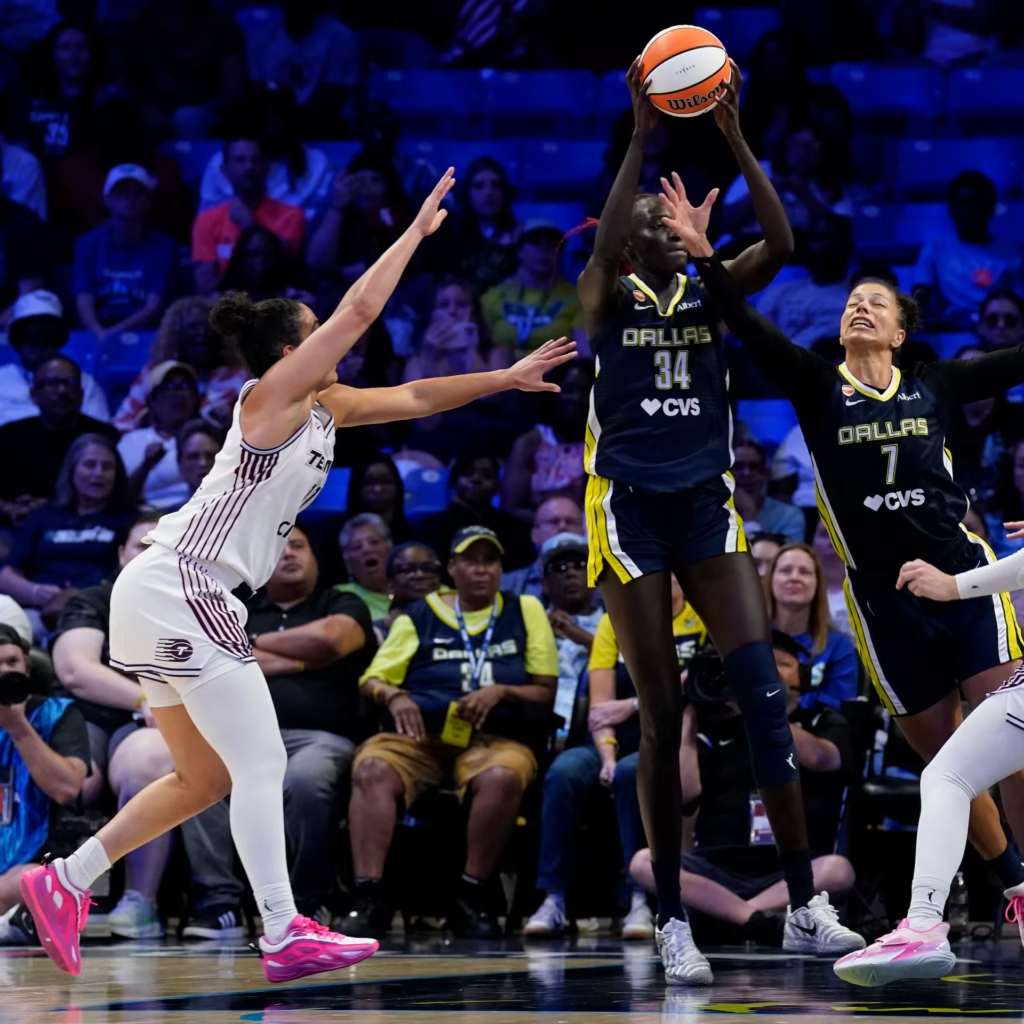
The growth of Women’s Sports has been particularly visible in basketball. The Women’s National Basketball Association recorded 3.8 billion minutes of viewing during the 2026 season leading into the All-Star break, while its sponsor valuation increased by 71%, Nielsen reported.
The figures demonstrate that women’s competitions are increasingly being recognized not only for their sporting value but also for their commercial potential. Greater audience engagement gives broadcasters, sponsors and sports organizations stronger incentives to invest in women’s leagues and athletes.
Another significant finding concerns the changing composition of the wider sports audience. Nielsen estimated that approximately 16 million new sports fans have emerged, with nine million of them being women. The data suggests that women are becoming increasingly important participants in the broader sports market rather than simply following women’s competitions.
Also Read: From Patriotism to Progress: Building a Stronger Pakistan
Female audiences are also contributing to growth in men’s sports. Nielsen reported that female viewership of the NBA increased by 55% between 2024 and 2026, while female viewership of the NHL rose by 44%. This indicates that women’s growing participation in sports fandom extends across different leagues and sporting categories.

The changing audience presents an opportunity for sports organizations to rethink how they engage fans. Women increasingly represent an important part of the global sports economy, creating opportunities for leagues, broadcasters and commercial partners to develop more inclusive marketing and media strategies.
The development also reflects broader changes in the visibility of female athletes. Increased television coverage, digital platforms, social media and athlete-driven storytelling have made it easier for fans to follow competitions and individual players.
Nielsen’s previous research has also highlighted the importance of accessibility and media coverage in expanding women’s sports audiences. Its research found that fans often face difficulties finding information about women’s competitions or accessing live broadcasts.
Improving access could therefore play an important role in maintaining the current momentum. More broadcasting opportunities, digital content, highlights and accessible live coverage can help introduce women’s competitions to audiences that may not previously have followed them.
The commercial potential is also becoming increasingly difficult to ignore. Nielsen has previously identified women’s sports fans as a valuable and highly engaged consumer group, noting that women’s sports investments can generate significant business opportunities for brands and sponsors.
The growth is not limited to the United States. Nielsen’s global research has identified women’s football as a particularly promising area, projecting that its worldwide fanbase could grow from around 500 million to more than 800 million by 2030. The organization expects women to represent a majority of that projected audience.
This international growth could have implications for athletes, leagues and sports organizations across Asia, Europe, Africa and the Americas. As audiences expand, women’s competitions could receive stronger media rights deals, greater sponsorship opportunities and improved professional infrastructure.
The increasing popularity of Women’s Sports also carries a broader social significance. Greater visibility can provide young girls with more sporting role models and encourage participation in athletics. It can also contribute to wider discussions about equal opportunities and professional recognition in sport.
However, continued growth will require sustained investment. The recent figures demonstrate strong audience interest, but maintaining that momentum will depend on consistent broadcasting, professional development, competitive leagues, sponsorship and effective promotion.
The Nielsen findings suggest that the rise of Women’s Sports is no longer simply a niche development within the sporting world. It is becoming an important part of the global sports economy, attracting new audiences and encouraging brands and broadcasters to reconsider where they invest.
As more fans tune in and commercial interest increases, the future of women’s sports appears increasingly promising. The challenge for leagues and organizations will be to convert this growing interest into long-term development and ensure that the momentum continues well beyond the current period of rapid expansion.
Women’s Sports are no longer waiting for mainstream recognition; the growing audience, commercial investment and international interest indicate that they are increasingly becoming part of mainstream global sports culture.