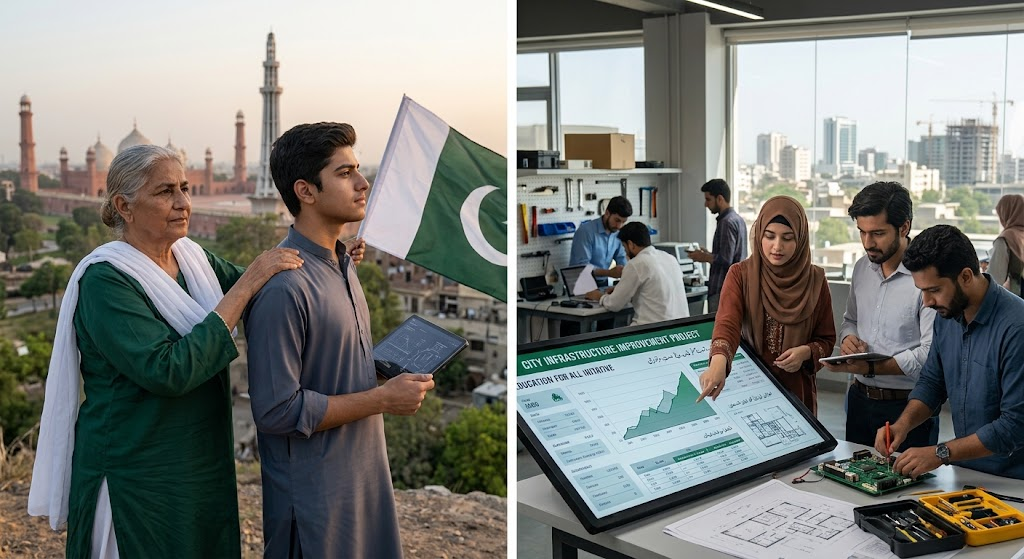
Islamabad (GNP): Every year on August 14, Pakistan celebrates its independence with national flags, patriotic songs, ceremonies, and messages celebrating the country’s history. The day reminds us of the struggle and sacrifices that resulted in the creation of Pakistan in 1947. But beyond the celebrations, Independence Day also provides an opportunity to ask a more important question: What can we do to build a Stronger Pakistan?
Patriotism is often associated with emotions, national symbols and pride in the country. These are important parts of national identity, but patriotism should not end with celebration. It should also involve responsibility, participation and a willingness to contribute to national development.
Pakistan’s challenges are already well known. Political instability, governance difficulties, economic pressures, educational shortcomings and institutional weaknesses have been discussed repeatedly. What Pakistan needs now is not another endless discussion about what is wrong. It needs greater attention to what can be done differently.
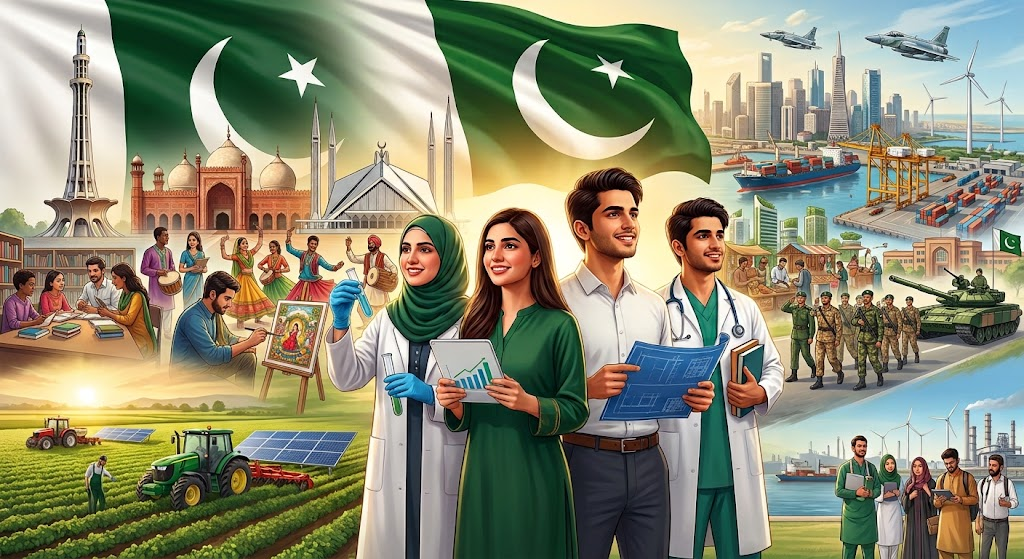
Building a Stronger Pakistan requires a long-term commitment to institutions, human capital, economic development, social unity and responsible citizenship.
Strong Institutions are the Foundation
A Stronger Pakistan must begin with stronger institutions. Political governments and leaders may change, but national institutions need continuity, professionalism and public trust.
Institutions based on merit, transparency, accountability and the rule of law can provide the stability required for long-term development. When institutions function effectively, policies can continue beyond individual governments, citizens can have greater confidence in the state and businesses can make long-term decisions.
Pakistan therefore needs to move beyond the idea that national progress depends entirely on finding the “right” individual leader. Sustainable development requires institutions that can perform effectively regardless of political changes.
Good governance is equally important. A policy has little value if it remains only on paper. Public institutions need to focus on implementation, measurable outcomes and efficient delivery of services.
The objective should be straightforward: better institutions should produce better outcomes for ordinary citizens.
Pakistan’s Youth Are Its Future
One of the greatest opportunities for a Stronger Pakistan is its young population.
The World Bank identifies human capital as a major area of importance for Pakistan’s long-term development and highlights the need for sustained investment in education, skills, and productive employment.
Pakistan’s young people should not be viewed merely as a demographic challenge. With the right opportunities, they can become one of the country’s greatest economic and social assets.
That requires investment in technical education, digital skills, entrepreneurship, research, professional training and employment opportunities. Young Pakistanis should have the opportunity to become innovators, entrepreneurs, scientists, diplomats, teachers, engineers, researchers and policymakers.
A country cannot build a Stronger Pakistan while leaving a large part of its young population without the skills or opportunities necessary to contribute.
Education Must Go Beyond Degrees
Education should be treated as a national investment rather than simply a pathway toward obtaining degrees.
Pakistan needs an education system that encourages critical thinking, research, creativity, problem-solving and practical skills. Universities should create stronger links with industries, research institutions and international academic networks.
The World Bank’s Pakistan Human Capital Review emphasizes a life-cycle approach to human capital, from early childhood and schooling through to productive employment.
This means educational reform cannot be limited to universities. Improvements are required throughout the education system.
Students should leave educational institutions with the ability to apply knowledge rather than simply reproduce information in examinations. Skills in technology, communication, research and entrepreneurship can help young Pakistanis compete in an increasingly interconnected global economy.
Also Read: Pak, Kazakhstan Turn Agricultural Potential into Trade Opportunity
Building a Productive Economy
A Stronger Pakistan also requires a stronger and more productive economy.
Pakistan possesses significant human resources, agricultural capacity, geographical advantages, and access to important regional markets. However, these advantages need to be converted into productivity, exports, investment, and employment.
Greater support for small and medium-sized enterprises can encourage entrepreneurship and create jobs. Investment in technology can improve productivity, while agricultural modernization can increase efficiency and value addition.
Pakistan can also develop sectors such as information technology, tourism, renewable energy, manufacturing and knowledge-based industries.
Economic policy should therefore focus not only on managing short-term crises but also on building long-term productive capacity.
A successful economy is ultimately one that creates opportunities for ordinary people to improve their lives.
Unity Through Diversity
A Stronger Pakistan does not require every citizen to have the same language, culture or regional identity.
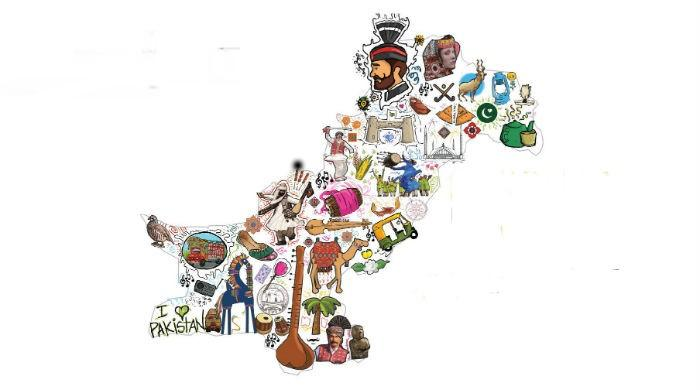
Pakistan’s diversity is one of its defining characteristics. Sindh, Punjab, Balochistan, Khyber Pakhtunkhwa, Gilgit-Baltistan, and Azad Jammu and Kashmir all contribute different traditions, languages and cultural identities to the national story.
National unity should therefore be based on shared citizenship rather than cultural uniformity.
Political differences should also not become permanent social divisions. Democratic societies require disagreement, but they also require dialogue, tolerance, and respect for institutions.
Pakistan can become stronger when political competition focuses more on policies and performance and less on hostility between opposing groups.
Responsible Citizenship Matters
Governments cannot build a Stronger Pakistan alone.
Citizens have an equally important role. Patriotism can be expressed through everyday actions: obeying laws, rejecting corruption, protecting public property, respecting other communities, supporting education, helping vulnerable people, and performing professional responsibilities honestly.
A student who studies seriously contributes to Pakistan. A teacher who educates responsibly contributes to Pakistan. A doctor who serves patients honestly contributes to Pakistan. A journalist who reports accurately contributes to Pakistan. An entrepreneur who creates employment contributes to Pakistan.
National development is therefore not the responsibility of one institution or one political party. It is a collective responsibility.
Pakistan’s Story Beyond Its Problems
Another important part of building a Stronger Pakistan is changing how Pakistan presents itself to the world.
Pakistan’s international identity is sometimes dominated by discussions of political instability, security challenges, and economic difficulties. These issues are real and should not be ignored, but they do not represent the entire country.
Pakistan also has a rich cultural heritage, talented people, historical sites, sporting achievements, creative industries, universities, entrepreneurs and a large diaspora.
This is where public diplomacy and soft power can become important.
Pakistan’s Ministry of Foreign Affairs describes public diplomacy as a means of promoting knowledge and awareness about Pakistan, including its history, culture and languages. It also highlights educational and cultural engagement as part of these efforts.
Cultural exchanges, educational partnerships, sports, tourism, literature, music and Pakistani cuisine can all contribute to stronger people-to-people relationships.
Pakistan’s international image should not only be defended when criticism emerges. It should also be actively developed by showcasing the country’s achievements and potential.
Also Read: PM Shehbaz Inaugurates Monument of Victory on Independence Day
From Patriotism to Progress
The meaning of independence should evolve with every generation.
The generation that created Pakistan fought for a sovereign homeland. The responsibility of today’s generation is different: to make that homeland stronger, more prosperous, more stable and more capable of providing opportunities for its citizens.
A Stronger Pakistan will not be created overnight. It will require institutional reform, investment in human capital, economic productivity, political tolerance and responsible citizenship.
But progress does not require perfection. It requires direction.
Pakistan already possesses many of the foundations necessary for progress: a large population, a young generation, cultural diversity, strategic geography, natural resources and a significant position in regional and international affairs. The challenge is to use these assets effectively.
Independence Day should therefore be more than a celebration of the past. It should also be a moment to think about the future.
We should celebrate Pakistan, but we should also contribute to it.
We should be proud of the country, but we should also have the courage to improve it.
We should criticize what needs to change, but we should also offer solutions.
Most importantly, patriotism should not mean believing that Pakistan is already perfect. True patriotism can mean believing that Pakistan is capable of becoming better and accepting responsibility for helping make that happen.
The journey from patriotism to progress begins when national pride becomes national responsibility.
A Stronger Pakistan will not be built through speeches alone. It will be built through stronger institutions, educated citizens, skilled youth, productive businesses, responsible leadership and millions of ordinary Pakistanis choosing to contribute to the country they call home.
This Independence Day, therefore, the most meaningful question may not be “How much do we love Pakistan?”
It may be: “What are we willing to do to build a Stronger Pakistan?”