Islamabad (GNP): Sonam Wangchuk was born on September 1, 1966, in Uleytokpo, a hamlet near Alchi in Ladakh so small it counted only five households at the time. There was no school in the village, so his early lessons came from his mother, Tsering Wangmo, a woman he later described as never formally schooled but deeply wise. He didn’t sit in a classroom until he was around nine, when his family moved to Srinagar after his father, Sonam Wangyal, won a seat in the state legislative assembly.
That move shaped him in ways beyond geography. Wangyal was a well-known political figure, first with the National Conference and later the Congress party, remembered chiefly for pushing the rights of Ladakh’s people onto the national stage.
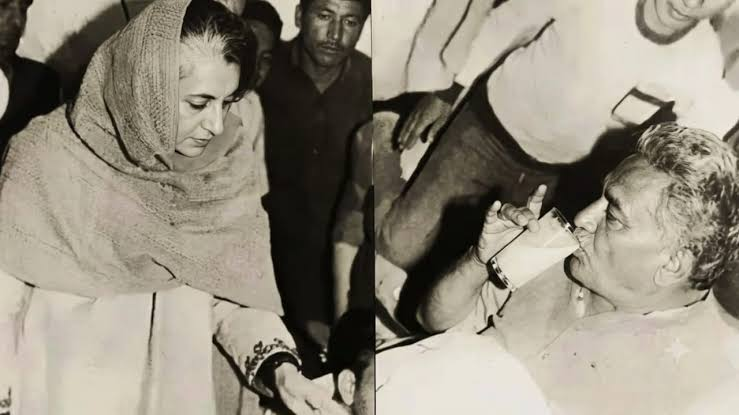
In 1984, Wangyal went on a hunger strike demanding tribal protections for Ladakhis, a strike serious enough that Prime Minister Indira Gandhi flew to Leh herself to talk him out of it. It’s hard not to notice the echo, four decades later, in his son’s own choice of protest.
School wasn’t easy for young Wangchuk. Having grown up speaking only Ladakhi, he found himself lost in Srinagar classrooms taught mostly in Urdu, and corporal punishment was still common practice among teachers there.
His family eventually moved him to a school in New Delhi that suited him better, before he returned to Srinagar to complete a bachelor’s degree in mechanical engineering at what was then the Regional Engineering College, now the National Institute of Technology, Srinagar.
He graduated in 1987 and didn’t look for corporate work. Instead, he and a group of fellow Ladakhi students founded the Students’ Educational and Cultural Movement of Ladakh, known as SECMOL, to tackle a state exam failure rate that had climbed to a staggering 95 percent.
The organization found that much of the problem lay in a curriculum with little connection to local language or culture, paired with poorly trained teachers, and it built its early work around fixing exactly that. The approach worked well enough that by 1994 it had grown into Operation New Hope, a wider reform program eventually absorbed into the regional government’s own education policy.
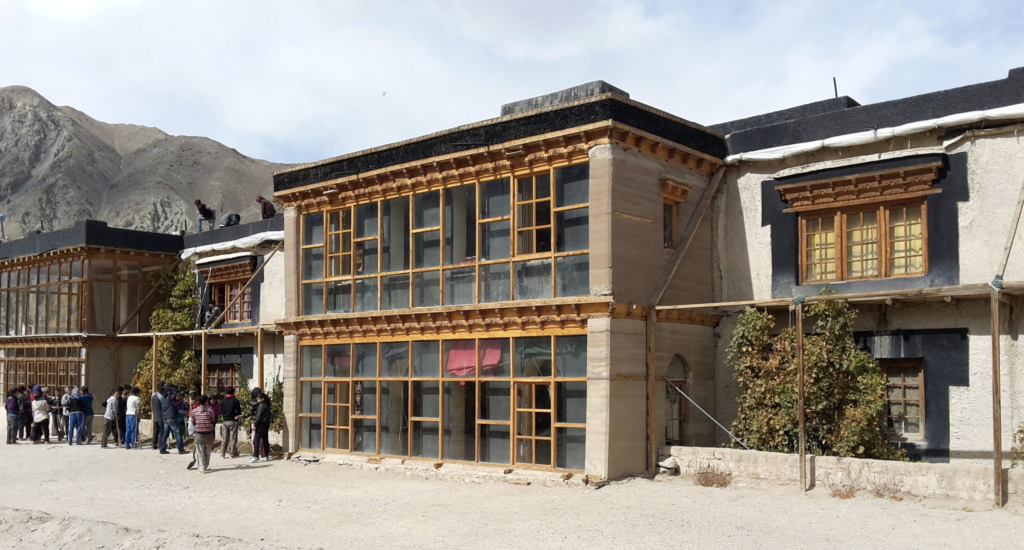
SECMOL’s campus near Phey village still runs on that same philosophy today. Built from rammed earth and straw-clay and powered entirely by solar energy, it takes in students who’ve failed conventional exams and teaches them cooking, farming, construction and sanitation alongside academics, encouraging them to build and tinker rather than memorize.
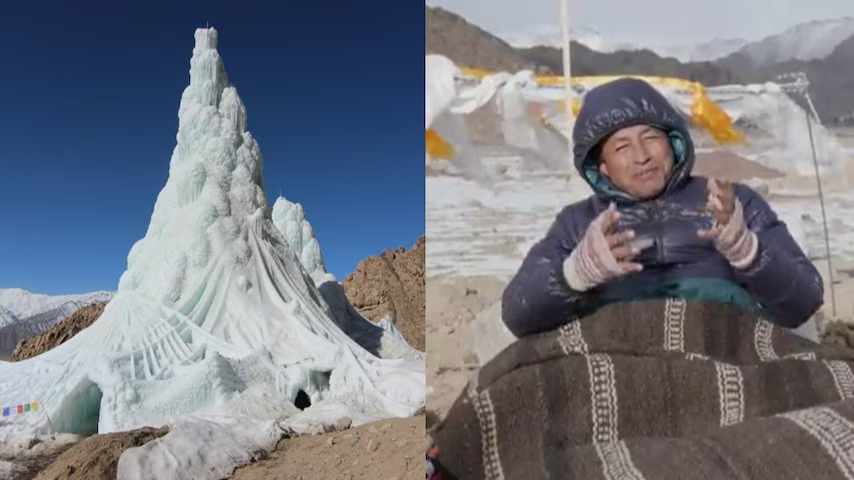
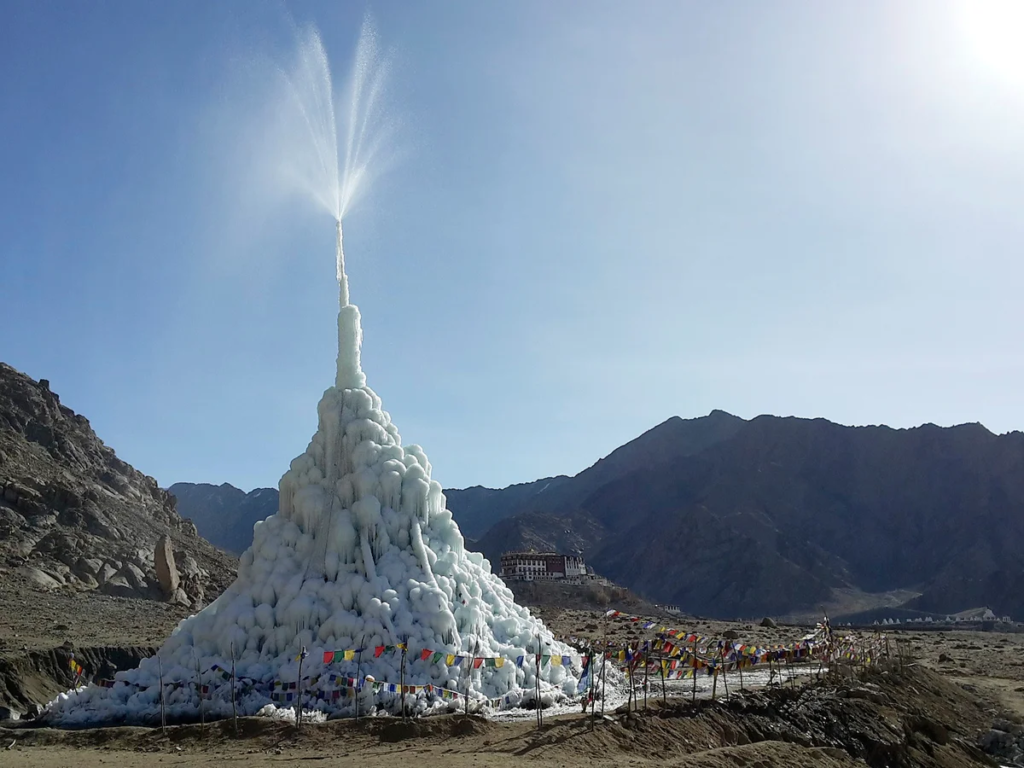
It was here, in 2013, that Wangchuk adapted an idea from fellow engineer Chewang Norphel, freezing glacial stream water into towering conical structures — ice stupas — that store winter runoff and release it slowly through Ladakh’s dry spring months.
The ice stupa earned him a Rolex Award for Enterprise in 2016 and an invitation to build one in the Swiss Alps. Two years later came the Ramon Magsaysay Award, one of Asia’s most prestigious honors for selfless public service. In 2017, he and his wife, Gitanjali J Angmo, founded the Himalayan Institute of Alternatives, Ladakh, a higher-education center focused on sustainability that later drew attention for building solar-heated tents used by the Indian Army.
Somewhere along the way, Wangchuk became a household name for reasons that had nothing to do with any of this. Many Indians associate him with Phunsuk Wangdu, the inventor-reformer played by Aamir Khan in the 2009 hit 3 Idiots. Khan has said the character wasn’t based on him, and director Rajkumar Hirani has credited someone else entirely as his inspiration, but Wangchuk himself has said he met Khan the year before the film released and suspects he may have played some part in shaping it, even if not directly.
His activism deepened as his engineering work matured. He helped found the New Ladakh Movement in 2013, and welcomed the 2019 decision to separate Ladakh from Jammu and Kashmir as a union territory, calling it the fulfillment of a long-held regional dream.
But the years since have been marked by growing frustration that constitutional protections for Ladakh’s tribal lands never materialized, pushing him toward repeated hunger strikes: five days in 2023, twenty-one days in 2024, and a march to Delhi later that year that ended in a 16-day fast at the capital. Talks that followed each of these efforts largely went nowhere.
Also Read: India Protesters Vow to Continue Stir Till Pradhan Resigns After Wangchuk Ends Fast
Matters escalated sharply in 2025. A five-week fast in Leh was cut short after clashes between protesters and police left four people dead, and Wangchuk was detained soon after under India’s National Security Act, held for 170 days over alleged links to Pakistan tied to a climate conference he’d attended there. The government also moved that year to revoke SECMOL’s foreign funding license and cancel a decades-old land lease held by his Ladakh institute, actions Wangchuk has called a witch hunt.
None of that kept him out of Delhi’s streets for long. Within months of his release, he’d thrown his support behind the Cockroach Janta Party, a youth movement that began as an online joke and grew into a nationwide campaign against examination corruption. In June, he joined its sit-in at Jantar Mantar, fasting to demand the resignation of Education Minister Dharmendra Pradhan and a resolution on Ladakh’s constitutional status.
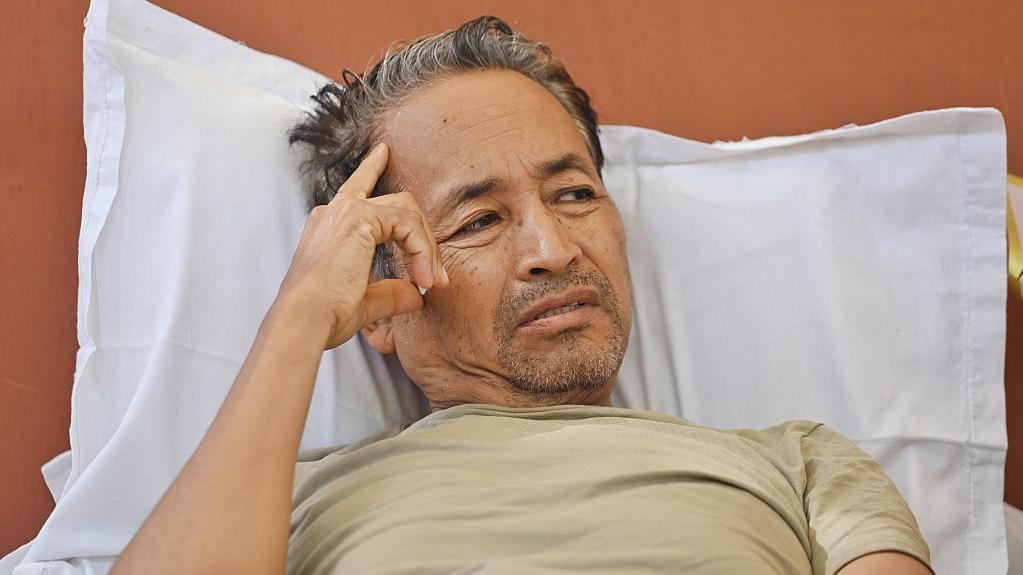
Police forcibly removed him from the site after 21 days, and from his hospital bed he kept urging protesters onward, even after a march toward parliament was met with tear gas and baton charges. He finally agreed to end the fast on its 26th day, after a delegation of union ministers secured commitments on legal protection for protesters and parliamentary debate on exam reform — a fast that, by his own account, marked not an ending but the start of a longer push for accountability.

Managing Editor at Global News Pakistan (GNP), with a Bachelor's degree in International Relations from Riphah International University, graduated with a Gold Medal. Reach out at sabahtareengnp@gmail.com