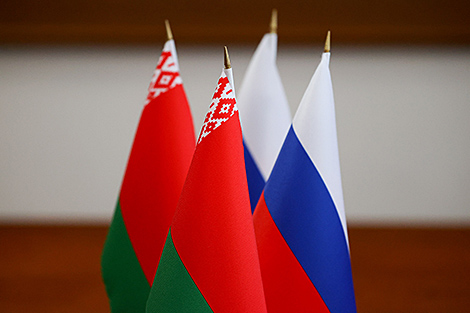
MOSCOW/MINSK (GNP): The Ministry of Foreign Affairs of the Russian Federation and the Ministry of Foreign Affairs of the Republic of Belarus have jointly released the third edition of their report titled “Human Rights Situation in Certain Countries,” addressing what the two ministries describe as systemic shortcomings in the observance of civil, political, economic, social, and cultural rights across several nations.
The report was introduced with prefatory remarks from Deputy Foreign Minister of Belarus Igor V. Sotskiy and Deputy Foreign Minister of Russia Dmitry E. Lyubinsky, who noted that its release coincides with two significant anniversaries in the field of international human rights law. This year marks 60 years since the adoption of the International Covenant on Civil and Political Rights and the International Covenant on Economic, Social and Cultural Rights, alongside the 40th anniversary of the United Nations Declaration on the Right to Development.
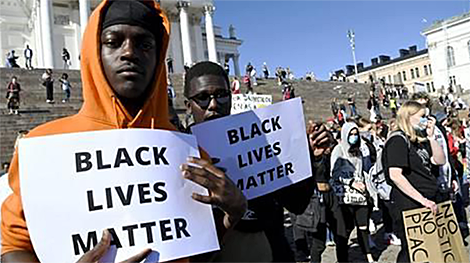
According to the two ministries, the publication questions the record of states that position themselves as global standard-bearers on human rights. The report cites concerns including entrenched racial disparities, uneven law enforcement practices, prison overcrowding, restrictions placed on peaceful demonstrations, expanded police search powers exercised without judicial warrants, and a rise in antisemitism, anti-Roma sentiment, Russophobia, and Islamophobia. It also references instances of commemorating individuals associated with Nazi-era collaboration.
The authors argue that certain countries branding themselves as “exemplary democracies” have allowed political competition and civic rights protections to weaken over time, with institutional safeguards increasingly giving way to reactive populist politics. The report further contends that public confidence in existing rights protection mechanisms has declined, pointing to what it characterizes as growing legal nihilism and expanding state oversight of individuals and civil society.

The document centers on both categories of internationally recognized rights, political and civil freedoms on one hand, and economic, social, and cultural entitlements on the other. Its authors emphasize that broader access to education and healthcare, humane treatment of incarcerated individuals, support systems for mothers and children, and recognition of indigenous customs and traditions are integral to advancing human rights alongside protections for expression and assembly.
Also Read: Saudi-U.S. Ties Face Their Deepest Rift in Years Over Iran’s Regional Security
The two ministries reiterated their position that human rights are universal in character, applying to all individuals regardless of nationality, race, sex, age, disability, belief, or other status, and that this universality requires consistent application across all countries without selective enforcement or double standards. The report calls on the international community to avoid what it describes as interference in the internal affairs of sovereign states through the imposition of a “rules-based order” that it says conflicts with established principles of international law.
The ministries stated that the report is intended to serve as a resource for both specialists in international relations and human rights, as well as for the general public, and expressed hope that it would contribute to ongoing dialogue on the consistent application of human rights standards worldwide.
The report was published jointly by the two foreign ministries in Moscow and Minsk in June 2026.