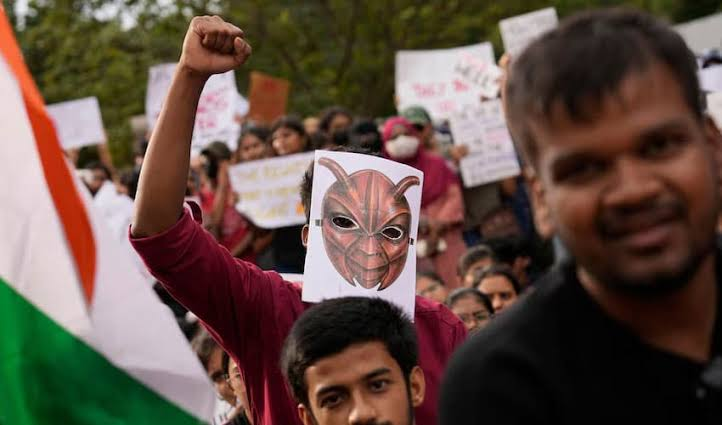
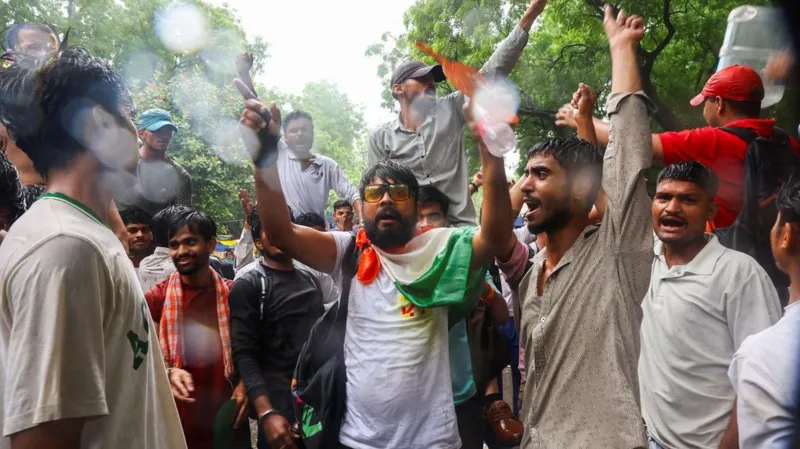
NEW DELHI (GNP): Pressure is mounting on India’s government as thousands of supporters of the Cockroach Janta Party (CJP) continue to gather at Delhi’s Jantar Mantar despite heavy overnight rain, extending a youth-led protest movement demanding education reforms and the resignation of Education Minister Dharmendra Pradhan.
The movement gained further momentum on Tuesday when leaders of India’s main opposition Congress party staged a protest outside Prime Minister Narendra Modi’s residence, condemning what they described as a brutal police crackdown on Monday’s CJP march. Congress shared footage showing its MP Rahul Gandhi and other leaders being detained and taken to police buses before their later release.
On Monday, tens of thousands of protesters had gathered in central Delhi as the CJP called for a march toward parliament coinciding with the start of the monsoon session. At least 60 people were injured after police used batons and tear gas to disperse the crowds, and officers subsequently dismantled the stage and tents protesters had set up at Jantar Mantar. Demonstrators have nonetheless continued a round-the-clock sit-in at the site.
Following the violence, senior opposition figures including former Delhi Chief Minister Arvind Kejriwal and veteran politician Sharad Pawar visited the protest site. On Tuesday, Congress president Mallikarjun Kharge and Gandhi led a march to Modi’s residence, calling for the resignations of Pradhan, Home Minister Amit Shah, and the prime minister himself.
Gandhi said the government owed students an apology for the crackdown and stated that Congress had staged its protest outside Modi’s residence because it had not been permitted to raise the matter in parliament, adding that discussions with the speaker made clear the government had no interest in a debate. Federal Minister Jitendra Singh disputed this account, saying the government had agreed to a discussion but accused Gandhi of subsequently shifting his demands and refusing to end the protest despite being informed the site was unsuitable for continued demonstration.
Pradhan, in his first public comments since Monday’s violence, criticized the Congress party for what he called exploiting students for political purposes, saying in a post on social media platform X that the government remained committed to delivering reforms and accountability for students.
The CJP, a satirical political movement that emerged after India’s chief justice used the word “cockroach” earlier this year in reference to unemployed young people turning to journalism and activism, has evolved from an online phenomenon into a movement capable of mobilizing tens of thousands onto the streets. The chief justice later clarified he had been referring specifically to individuals holding fake or fraudulent degrees.
The protests, which have continued for the past month at Jantar Mantar, drew international attention after activist and educationist Sonam Wangchuk joined demonstrators on June 28 and began an indefinite hunger strike in support of their demands. Wangchuk was forcibly removed from the protest site by police on Saturday and taken to hospital, where he has continued his fast. Support for the movement has since spread beyond Delhi to cities including Mumbai, Hyderabad, Bengaluru and Ahmedabad.
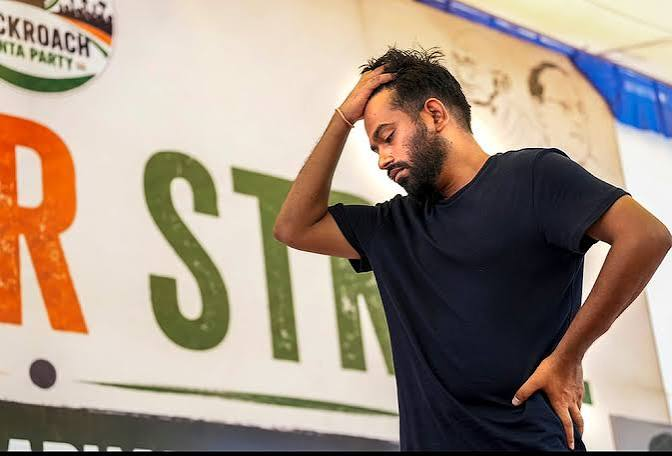
CJP founder Abhijeet Dipke criticized Mumbai Police, calling the detention of peacefully protesting students a “shameful act” and asking what was wrong with demanding accountability. He added that “accountability will be set on all levels,” addressing the officers involved.
Also Read: Maduro Manhattan Hearing Set Ahead of Proposed 2027 Trial
The CJP’s rapid evolution from a satirical online reaction into a mass mobilization capable of drawing more than 50,000 people onto Delhi’s streets in a single day signals a broader shift in how India’s youth, a demographic exceeding 600 million, are channeling frustration over education and employment issues into organized dissent.
The involvement of Congress leadership, including Gandhi’s detention outside the prime minister’s residence, suggests the opposition sees an opportunity to align itself with what has become one of the most visible expressions of public discontent against the Modi government in over a decade in power. The government’s response, framing the protests as politically motivated disruption while emphasizing its openness to dialogue, reflects an attempt to separate the movement’s underlying grievances from the opposition’s involvement, even as the continued detention of Wangchuk and the scale of police action on Monday keep the crackdown itself central to the unfolding narrative.

Managing Editor at Global News Pakistan (GNP), with a Bachelor's degree in International Relations from Riphah International University, graduated with a Gold Medal. Reach out at sabahtareengnp@gmail.com