Since the war with Iran began on February 28, the Strait of Hormuz has been all but shut. Pakistan, which draws close to four-fifths of its oil from the Middle East, has rationed fuel and subsidized petrol for motorcyclists and rickshaw drivers. Bangladesh has not received a single LNG cargo from Qatar’s Ras Laffan terminal since the fighting started, and its garment factories are running on rolling power cuts. Sri Lanka and India are paying sharply higher prices for energy.
This year has taught South Asia a hard lesson: a region that lives by the sea cannot rely on one or two chokepoints. Thousands of kilometers to the north, a different set of waters is opening. South Asia should pay attention, and it should do so together.
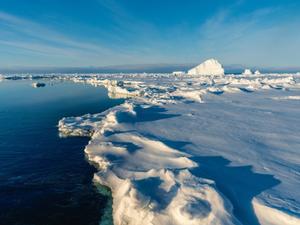
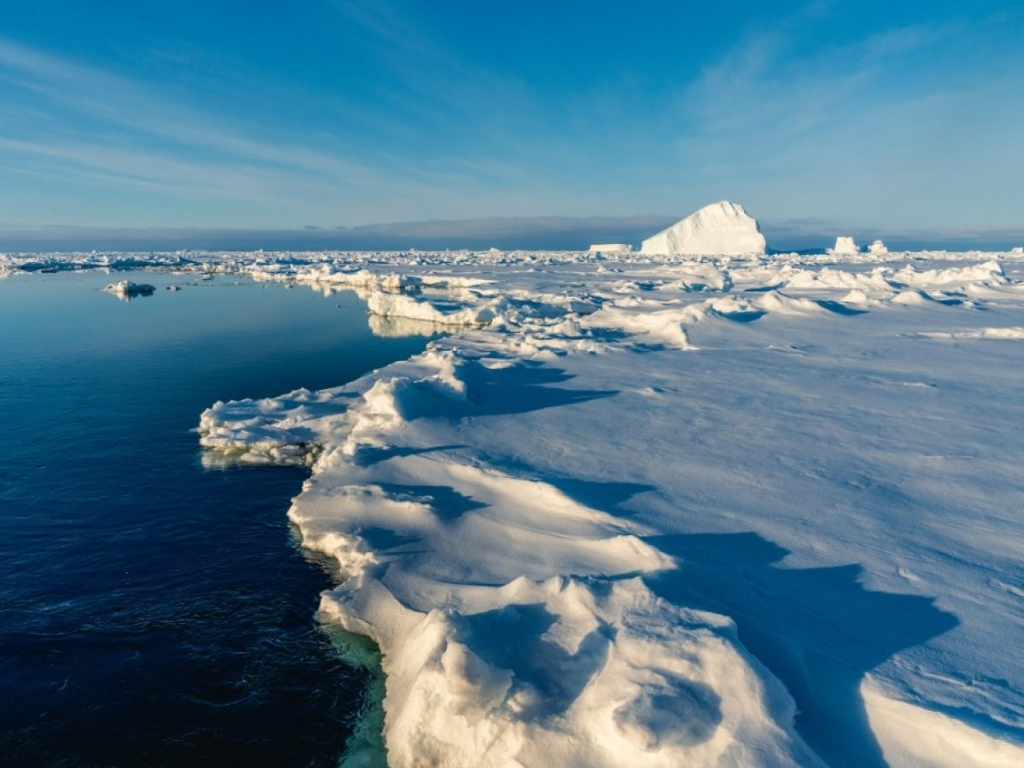
The Arctic was long a place of heroic failures. Britain lost Sir John Franklin’s entire expedition searching for the Northwest Passage in the 1840s. Roald Amundsen finally completed that passage between 1903 and 1906. In 1932, the Soviet icebreaker Sibiryakov crossed the Northern Sea Route in a single season, and Moscow set up a state agency to run the route as national infrastructure. Russia still runs it that way. What has changed is the ice. The Arctic is warming nearly four times faster than the global average, and in 2025 the Northern Sea Route logged a record 103 transit voyages.
The great powers have already moved. Russia is rebuilding Soviet-era bases and expanding its icebreaker fleet. NATO launched its Arctic Sentry mission in February 2026. China, calling itself a “near-Arctic state”, is building a “Polar Silk Road” and now receives sanctioned LNG from Russia’s Arctic. South Asia, with a quarter of humanity, is barely in the room.
Start with Pakistan, because it has the most to gain and, surprisingly, a foundation to build on.
Pakistan is not a stranger to the poles. In 1991, it opened the Jinnah Antarctic Station, and in 2012 it acceded to the Antarctic Treaty. The program has since gone dormant for lack of funds, but the institutional memory exists at the National Institute of Oceanography and in the Pakistan Navy. Few developing countries can say as much.
Pakistan also has three hard interests in the Arctic. The first is climate. The 2022 floods submerged roughly a third of the country and caused damage and losses estimated at more than $30 billion. Pakistan’s rivers are fed by the Karakoram and Himalayan glaciers, often called the “Third Pole”. The science of melting ice, from permafrost to glacial lakes, is one field. A Pakistani glaciologist working in Svalbard is learning skills that matter in Gilgit-Baltistan.
The second is energy. Pakistan began importing discounted Russian crude in 2023, and in June 2026 Islamabad and Moscow agreed to sign a program of economic cooperation running to 2030. Much of Russia’s future oil and gas comes from the Arctic: Yamal, Arctic LNG 2 and the fields along the Northern Sea Route. As Gulf supply becomes less reliable, Arctic hydrocarbons, shipped east to Asian hubs or west through the Suez Canal, become part of Pakistan’s energy security calculus, whether Islamabad plans for it or not.
The third is connectivity. Russia has backed linking the International North-South Transport Corridor to Gwadar, and the two countries are discussing a freight rail route from Karachi towards Russia. China, Pakistan’s closest partner, sees its Polar Silk Road and the China–Pakistan Economic Corridor as parts of one Eurasian web. A logistics map whose northern edge is the Arctic Ocean and whose southern edge is the Arabian Sea is no longer fanciful. Pakistan should make sure Gwadar and Karachi are on it.
Pakistan also has a diplomatic asset few others enjoy: workable relations with Beijing, Moscow and Washington at the same time. And it has a human bridge to the Arctic. Norwegians of Pakistani origin form one of Norway’s largest immigrant communities. That diaspora can open doors in Oslo and Tromsø.
What should Islamabad do? Create an Arctic desk at the Foreign Office. Revive the Antarctic program as a broader polar and cryosphere program. Seek accession to the Svalbard Treaty of 1920, which gives all parties equal rights to research and commerce on the archipelago; India is a party, and Pakistan and Bangladesh are not. Train officers of the Pakistan National Shipping Corporation and the navy under the Polar Code. Then apply for observer status on the Arctic Council.
Bangladesh comes next, and its case is the most urgent. It is a delta nation that faces losing large parts of its coast to sea-level rise driven in part by melting Greenland ice. It has felt the Hormuz shock as sharply as anyone: QatarEnergy has halved its scheduled 2026 deliveries to Dhaka. And it already has an Arctic link. In 2021 the Russian nuclear-powered cargo ship Sevmorput carried equipment for the Rooppur nuclear power plant from St Petersburg via the Northern Sea Route. Bangladesh’s Oceanographic Research Institute could anchor polar research, and Dhaka, too, should join the Svalbard Treaty and plan for observer status.
India is South Asia’s Arctic pioneer. It opened the Himadri research station in Svalbard in 2008, became an Arctic Council observer in 2013 and published an Arctic policy in 2022. Its Chennai–Vladivostok maritime corridor, activated in 2024, puts Russia’s Far East, and through it the Arctic, within India’s trade reach. Sri Lanka, whose ports sit astride the Indian Ocean’s main shipping lanes, needs to understand how Arctic routes could reshape Asia–Europe traffic. Nepal and Bhutan host Himalayan glaciers and, in Kathmandu, the International Centre for Integrated Mountain Development. The Maldives, perhaps the country most threatened by rising seas, has every reason to speak loudly about Arctic melt.
Here lies the case for collective action. Individually, most South Asian states are too small to matter in Arctic politics. Together they represent close to two billion people, several fast-growing economies, two nuclear powers and some of the world’s largest seafaring workforces.
Also Read: The Ally That Outgrew Its Patron
The obvious obstacle is politics. SAARC has been frozen since 2016, and relations between India and Pakistan remain hostile after their clashes in May 2025. A grand regional Arctic strategy is not realistic. But polar cooperation has always been a field where rivals can work together. During the Cold War, the United States and the Soviet Union shared science in Antarctica. Today, Russia and Norway still manage Barents Sea fisheries jointly despite the war in Ukraine.
South Asia can take the same functional path. A South Asian cryosphere and polar research network, anchored at ICIMOD in Kathmandu, could link glacier science in the Himalaya with ice science in the Arctic. Coordinated positions at the International Maritime Organization could press for stronger Polar Code rules and for Arctic shipping revenue to support climate adaptation. Joint training for seafarers would prepare the region’s large maritime workforce for ice navigation. And a coordinated push by Pakistan, Bangladesh, Sri Lanka and others for observer status would make it harder for the Arctic Council to keep the region out.
None of this requires India and Pakistan to settle their disputes first. It requires recognizing a shared interest: the ice that is melting at the top of the world is the same ice that will flood Sindh and Barishal, and the routes it opens will shape the energy and trade of every South Asian economy.
South Asia missed the start of the Arctic race. It does not have to miss the rest of it. Pakistan, with its polar foundations and its relationships across the great-power divide, is well placed to take the first step. Its neighbors should follow, and the region should act as one.

Political and International Affairs Analyst; Research Fellow, Bangladesh Neeti Gobeshona Kendra (Policy Research Center, NGK)