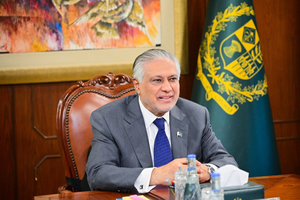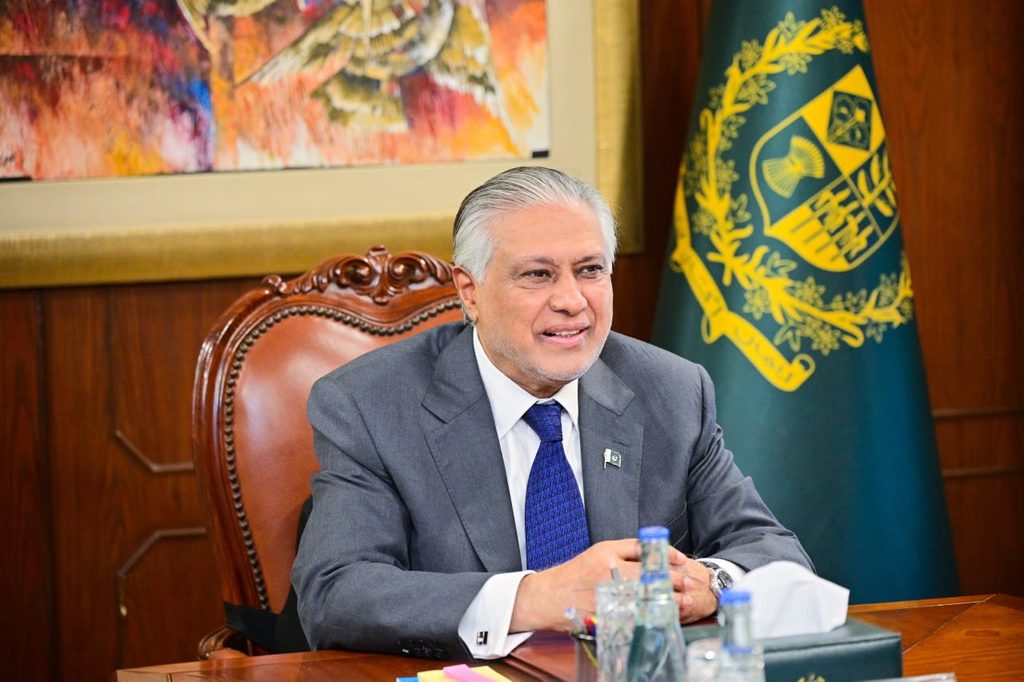
Islamabad (GNP): Deputy Prime Minister and Foreign Minister Senator Ishaq Dar stressed the need to forge stronger regional cooperation across the Economic Cooperation Organization (ECO) through practical initiatives that strengthen economic linkages and deliver lasting benefits to its people, amid geopolitical uncertainty, economic pressures, and rapid technological change.
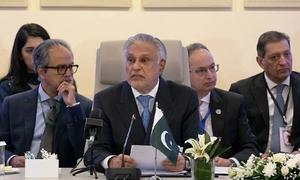
The deputy prime minister, in his welcome address at the 30th meeting of the Council of Ministers of the Economic Cooperation Organization (ECO) here, said that the closer cooperation among businesses and communities across the region could open new markets, lower trading costs, attract investment, and create new opportunities for employment and enterprise.
He said that stronger connectivity was essential to facilitate trade, greater investment was key to create economic opportunities, and cooperation in resilience and human development would help sustain these gains.
Welcoming the delegates on behalf of the government and people of Pakistan, the deputy prime minister thanked the senior officials, the preparatory committee, the ECO Secretariat, and ECO Secretary-General Dr. Asad Majeed Khan for their contributions.
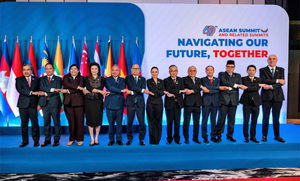
The deputy prime minister earlier welcomed the participating delegates at the venue before proceeding to the formal proceedings of the summit and a group photograph.
He also appreciated Kazakhstan for its chairmanship in 2025, noting its focus on regional transport connectivity and sustainable development.
Highlighting that Pakistan was honored to serve as ECO Chair for 2026-2027 under the theme “Reviving Regionalism for a Resilient ECO,” Senator Dar said that reviving regionalism did not require reinventing the wheel, but rather building upon laid foundations and making regional cooperation responsive to the people’s needs.
Outlining five core priorities for Pakistan’s chairmanship, the deputy prime minister listed supporting wider market access, stronger regional value chains, and greater private sector participation, particularly by SMES; improving transport and transit links between Central Asia, South Asia, and Pakistan’s ports on the Arabian Sea; supporting sustained engagement towards a more effective, inclusive, and digitally enabled regional trade framework based on the November 2025 negotiating strategy; enhancing cooperation in disaster preparedness, early warning systems, sustainable water management, and climate-resilient infrastructure; and equipping the region’s youth with skills through education, research, innovation, and vocational training.
Deputy Prime Minister Dar emphasized that peace and development reinforced each other, expressing deep concern over conflict and instability in the region that disrupt trade routes, energy supplies, and investments.
He stated that Pakistan had consistently advocated the peaceful resolution of disputes through dialogue and diplomacy in accordance with international law and the United Nations Charter, noting that Prime Minister Shehbaz Sharif, Chief of Army Staff and Chief of Defence Forces Field Marshal Syed Asim Munir, and the Foreign Office remained closely engaged with brotherly countries and international partners to facilitate peaceful outcomes.
He reiterated that Pakistan would continue its diplomatic efforts in support of dialogue, de-escalation, and lasting regional stability.
Also Read: Dar Ties ECO Connectivity to Trust and Respect for Treaties
Regarding Afghanistan, the deputy prime minister said that Pakistan desired a peaceful, prosperous, and stable Afghanistan, fully integrated within the ECO framework and at peace with itself and all its neighbors.
At the same time, he stressed that meaningful progress required the Afghan authorities to address the legitimate security concerns of neighboring countries, particularly the threat of terrorism, as a secure environment was essential for sustained regional economic partnerships.
The deputy prime minister said that regional connectivity rested upon trust between states and the honoring of international commitments, urging member states to translate geographic proximity into connectivity, connectivity into commerce, and commerce into lasting prosperity for the region’s people.
He said that Pakistan looked forward to working with ECO member states and the secretariat to advance focused initiatives in trade facilitation, transit connectivity, and disaster preparedness.
“We have an opportunity to give renewed regionalism practical direction and strengthen our capacity to face challengers together. The true measure of our success will lie not merely in the commitments we make, but in the progress they bring to the lives of our people in the region,” he said and reaffirmed Pakistan’s readiness to work with all member states in a spirit of partnership and mutual respect for sustained progress in the region.

Sohail Majeed is a Special Correspondent at The Diplomatic Insight. He has twelve plus years of experience in journalism & reporting. He covers International Affairs, Diplomacy, UN, Sports, Climate Change, Economy, Technology, and Health.