India (GNP): More than a decade after receiving a personal challenge from former President and renowned scientist Dr. APJ Abdul Kalam, Bellatrix Aerospace has emerged as one of India’s most innovative space technology companies, developing homegrown propulsion systems that could transform the future of satellite operations.
The story began in 2012 when Rohan M. Ganapathy, then a 19 year old aeronautical engineering student from Coimbatore, presented his propulsion research at a NASA event. Impressed by the young engineer’s vision, Dr. Kalam sought him out, handed him a recommendation letter, and issued a simple challenge prove your concept.
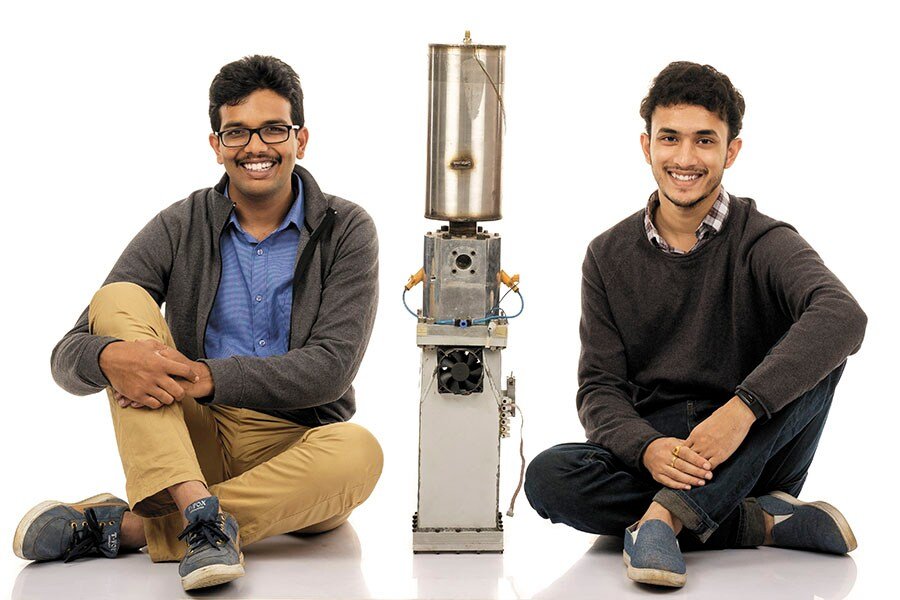
Three years later, Ganapathy joined forces with family friend Yashas Karanam to establish Bellatrix Aerospace from an incubation lab at the Indian Institute of Science (IISc) in Bengaluru. Their mission was ambitious to solve a problem affecting nearly every satellite operating in space.
For decades, the satellite industry has relied on hydrazine, a highly toxic and carcinogenic propellant that has remained the industry standard since the 1960s. Hydrazine requires specialized handling procedures, dedicated loading facilities near launch sites, and strict safety measures, making satellite operations expensive and complex.
India currently imports all of its hydrazine requirements, creating a strategic dependency for the country’s growing space sector.Recognizing the need for a safer and more sustainable alternative, Bellatrix Aerospace developed two groundbreaking propulsion systems.The first, Rudra, is India’s first high performance green propulsion system.
According to the company, Rudra delivers thrust comparable to conventional hydrazine based systems while reducing handling and operational costs by more than 60 percent. The technology offers satellite operators a safer, cleaner, and more cost effective alternative without compromising performance.The second innovation, Jal, is a microwave plasma thruster that uses water as its propellant.
Bellatrix claims Jal is the world’s first water-based microwave plasma propulsion system developed by a private company. By utilizing water instead of hazardous chemicals, the technology represents a major step toward environmentally sustainable space operations.Importantly, both systems have moved beyond laboratory demonstrations and have successfully proven their capabilities in orbit.
Also Read: Oxford University to Host New UK AI Research Lab Under £60 Million Initiative
Rudra was tested aboard ISRO’s POEM-3 mission in January 2024 and again on POEM-4 in January 2025, marking significant milestones for India’s commercial space ecosystem.Bellatrix has also expanded its ambitions with Pushpak, an orbital transfer vehicle designed to optimize satellite deployment after launch. The company states that Pushpak could reduce satellite deployment costs from approximately $45,000 per kilogram to $25,000 per kilogram, potentially making access to space significantly more affordable for satellite operators worldwide.
In October 2024, Bellatrix strengthened its relationship with India’s space sector by signing a Memorandum of Understanding with NewSpace India Limited (NSIL), ISRO’s commercial arm. The agreement aims to integrate Pushpak into future launch missions, opening new opportunities for commercial satellite deployment services.Investor confidence has mirrored the company’s technological progress.
Bellatrix Aerospace has raised approximately $31 million in funding from prominent investors, including BASF Venture Capital, Inflexor Ventures, and Cactus Partners.For India, the success of Bellatrix Aerospace carries strategic significance.
A domestically developed green propulsion ecosystem can reduce reliance on imported hydrazine, lower operating costs for Indian satellite startups, and position the country as an exporter of advanced space technologies in a global market increasingly shifting away from toxic propellants.What began as a challenge from Dr. APJ Abdul Kalam has evolved into a tangible achievement for India’s private space industry. More than ten years after being asked to prove his concept, Rohan Ganapathy and Bellatrix Aerospace have done exactly that not in theory, but in orbit.