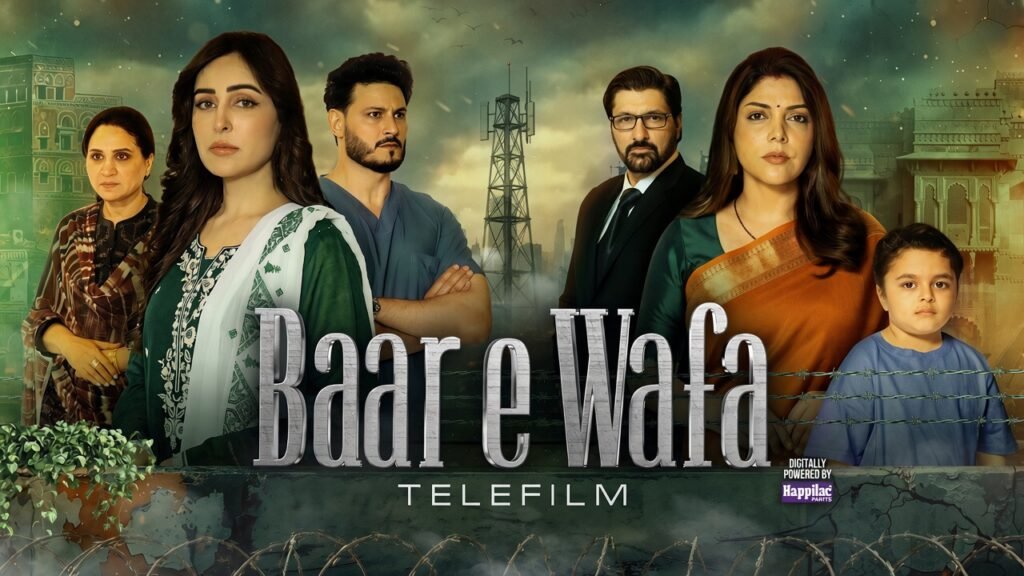
Islamabad (GNP): Every Independence Day, Pakistani television tends to return to familiar themes: patriotism, sacrifice, national identity, and the struggle that led to the creation of Pakistan.
But Baar-e-Wafa appears to take a somewhat different route. Associated with veteran television figure Sultana Siddiqui, the project has attracted attention for presenting a more thought-provoking approach to the Independence Day television landscape. Rather than relying only on familiar patriotic imagery, Baar-e-Wafa invites viewers to think about the meaning of loyalty, responsibility, and the values attached to the idea of a nation.
Beyond the Usual Independence Day Story
Independence Day programming has an important place in Pakistan’s television history. Special dramas and telefilms have traditionally used August 14 as an opportunity to revisit the country’s past and remind audiences of the sacrifices associated with independence. However, the challenge for contemporary television is to make these themes meaningful for audiences who already know the historical narrative.
This is where a title like Baar-e-Wafa becomes interesting. Its very name, suggesting the burden or weight of loyalty, creates space for a broader conversation about what people owe to one another and to the society they belong to. Instead of treating patriotism simply as a slogan, the story can be viewed through the more personal dimensions of loyalty, relationships and responsibility.
Why the Idea of Wafa Matters
The word wafa carries a particularly strong emotional meaning in Urdu culture. It is usually associated with loyalty, faithfulness and standing by someone through difficult circumstances. But loyalty is rarely simple. A person can be loyal to a family, a relationship, a principle or a country, and sometimes these loyalties can come into conflict.
That tension can make a television story much more meaningful than a straightforward patriotic narrative, and this is potentially what makes Baar-e-Wafa stand out. It allows viewers to consider patriotism through human experiences rather than simply through speeches and symbols.
Sultana Siddiqui’s Return Adds Weight
The involvement of Sultana Siddiqui is another reason the project has generated interest. Siddiqui has been an influential figure in Pakistani television and has been associated with the development of quality drama programming. Her return to a project of this nature naturally creates expectations among audiences who value stories with social and emotional depth.
FUCHSIA described Baar-e-Wafa as a “thought-provoking drama” and highlighted its departure from the conventional Independence Day programming audiences usually encounter. That distinction is important, as Pakistani television does not necessarily need to abandon patriotic storytelling; instead, it can find new ways of approaching it.
Patriotism Can Be Personal
One of the strongest possibilities of Baar-e-Wafa is its ability to present patriotism as something personal. For many people, love for a country is not expressed through grand political statements. It can be found in ordinary responsibilities: caring for family, contributing to society, protecting one’s principles, helping others and remaining hopeful during difficult times.
A story that explores these quieter dimensions of loyalty can connect with viewers differently. It also allows younger audiences to engage with Independence Day through questions that are relevant to their own lives. What does it mean to remain loyal to your values? What responsibilities come with freedom? Can love for one’s country exist alongside criticism of its problems? And perhaps most importantly, what does a person owe to the society they call home? These are questions that can make patriotic television feel contemporary rather than repetitive.
A Different Kind of Independence Day Story
The timing of Baar-e-Wafa is particularly significant because Pakistani television has increasingly experimented with different forms of Independence Day content. Older special programmes often focused directly on the Pakistan Movement, national heroes and historical sacrifices, whereas contemporary productions have greater freedom to explore what independence means in everyday life.
Also Read: World Pays Tribute to Qawwali Legend Nusrat Fateh Ali Khan
That shift does not make history less important; instead, it connects history with the present. Pakistan’s independence was achieved in 1947, but the questions surrounding identity, responsibility, unity and national progress continue to evolve. A drama such as Baar-e-Wafa can therefore be understood as part of a wider effort to ask what those ideas mean to people today.
Why Viewers May Connect With It
The strength of a good telefilm is often its ability to tell a complete emotional story within a limited amount of time. Rather than requiring viewers to commit to dozens of episodes, a telefilm can introduce a central conflict, develop its characters and leave the audience with a message within a single sitting. That format is particularly suitable for Independence Day programming, when viewers are looking for something meaningful but accessible.
If Baar-e-Wafa successfully balances its emotional narrative with its larger ideas about loyalty and responsibility, it could become more than another seasonal production. It could become a conversation starter.
Final Thoughts
Baar-e-Wafa arrives at a time when Pakistani audiences are increasingly looking for stories that say something beyond entertainment. Its apparent focus on loyalty and responsibility offers a refreshing way to approach the themes surrounding Independence Day. Instead of asking viewers simply to celebrate the past, it creates an opportunity to think about the responsibilities that come with belonging to a nation.
That may ultimately be the most meaningful form of patriotic storytelling: not simply telling people to love their country, but encouraging them to think about what that love requires from them. Baar-e-Wafa therefore has the potential to turn an Independence Day telefilm into something more reflective, a story about loyalty, identity, relationships and the weight of the values we choose to carry.