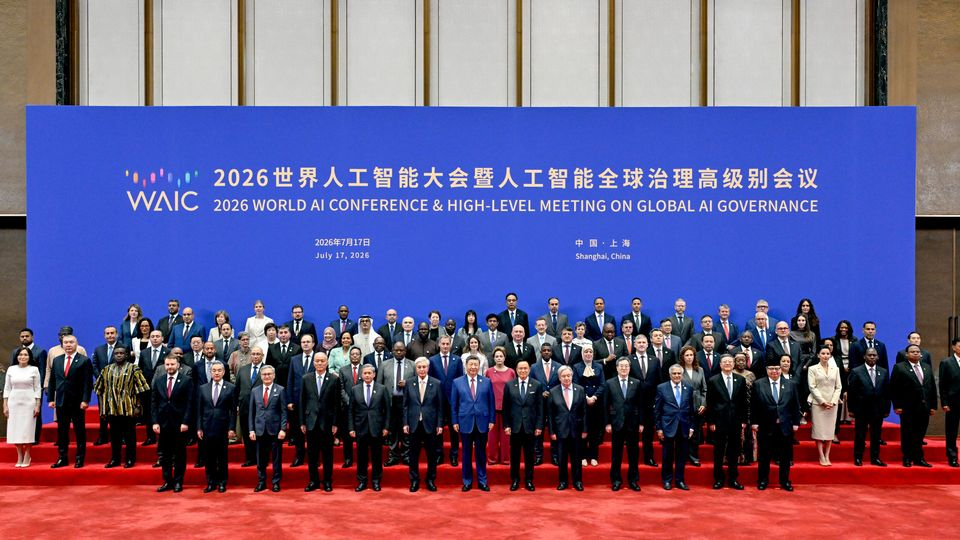
At a recent international conference, an academic made a point that deserves wide attention. Countries of the Global South, he said, must combine their efforts and resources on artificial intelligence.
I agree, and I would go further. Without pooling, AI is likely to add a new layer of techno-colonisation to the dependencies the Global South already lives with. These countries already depend on others for capital, technology, trade rules and even the news the world hears about them. AI threatens to add dependence in how they run their services, govern their citizens and produce their knowledge.
This series has shown why. Control over AI is concentrated in two countries and a handful of companies. Most nations are customers, with little say over price, terms or access. The costs of building AI, from low-paid content moderation to energy-hungry data centres, fall heavily on the South. And no single developing country can afford to build its own AI alone. Even the United States depends on Taiwan for chips. For a mid-sized or poor country, full independence is not a realistic option.
But there is a third path between dependence and impossible independence. It is cooperation.
Why pooling can work
The idea is not wishful thinking. A 2025 study for the Paris Peace Forum, prepared with Oxford University’s AI Governance Initiative, examined it closely. It concluded that mid-sized countries, which it calls “bridge powers,” could build competitive advanced AI models by pooling their computing power, talent and data.
The ingredients exist. The same study found that 87 of the world’s 100 most-cited AI researchers either come from or work in countries other than the United States and China. Talent is not the monopoly of two superpowers.
The price of entry is also falling. The study points to China’s DeepSeek and France’s Mistral. Both showed that clever design can reach near-leading performance at a fraction of the usual cost. Open models, which anyone can download and adapt, now offer a starting point that did not exist a few years ago.
There is a historical model too. In 1954, European countries that could not afford big physics research alone founded CERN. By pooling their money and scientists, they built a laboratory that now leads the world. AI could follow the same logic.
Also Read: Who Holds the Switch?
What history teaches
History also offers a warning. In 1980, UNESCO’s MacBride Report described a world where news flowed one way, from North to South. Developing countries called for a New World Information and Communication Order. The idea won many declarations. It produced few lasting institutions and little money. It faded amid Cold War politics and strong opposition from Western governments.
The lesson is plain. Speeches and summits are not enough. Pooling only works when it creates real institutions, with real budgets and clear rules.
Some building blocks already exist. The African Union adopted a Continental AI Strategy in 2024. India’s AI Compute Portal offered subsidised access to around 10,000 graphics processors by early 2025, and could serve as a South-South partner. Grassroots networks such as Masakhane bring researchers together to build language tools for African languages. These are a start. They are not yet a system.
What pooling should look like
What would real cooperation involve? Six steps stand out. Each answers one of the five sovereignties discussed earlier in this series, or the hidden costs the South already bears.
Shared computing power. Groups of countries should jointly own data centres and processing capacity. Their universities, governments and start-ups could then use it on fair terms, rather than renting it from foreign giants.
A common negotiating front. Alone, a small country is a customer. Together, the Global South is a market of billions. As a bloc, it can bargain with American and Chinese firms over price, guaranteed access, where data is stored, and promises not to switch services off in a crisis.
A shared language commons. Countries should pool text, speech recordings and archives in their own languages. They can then adapt open models to serve their people properly, instead of waiting for foreign firms to care.
A common testing centre. Before governments use an imported model in schools, courts or hospitals, it should be tested for bias, cultural fit and safety. One shared centre can do this far more cheaply than each country doing it alone.
A research and education compact. Joint research programmes can keep scientists in the region and reconnect it with its diaspora. Schools and universities must teach people to use AI and to question it, so that verification and critical thinking survive.
Fair standards for AI work. The bloc should set minimum pay and mental-health support for content moderators and data labellers. It should also set environmental rules for data centres. This is how the South stops being the place where the dirty work is done.
Two principles should guide all of this. First, build on open models rather than starting from scratch. Second, buy from many suppliers at once – America, China, Europe and India. That way no single company or country holds the only switch.
Also Read: Three Powers, Three Philosophies, and a World of Dependents
The honest objections
This proposal faces real obstacles, and they should be stated plainly.
Coordination is hard. Global South countries differ in politics, wealth and alliances. Many past South-South initiatives promised much and delivered little.
A large member could dominate. A bloc led by one big country risks swapping dependence on the North for dependence on a Southern giant. That would be techno-colonisation under a new flag. Any pooled body must give smaller members a real voice and clear protections.
The superpowers may resist. They can offer attractive one-to-one deals to split the bloc. That is exactly why a common front matters, and why members must agree in advance not to undercut one another.
Finally, sovereignty can be misused. Governments may hide censorship, surveillance or protectionism behind the language of “AI sovereignty.” A pooled system must protect citizens, not become a tool to control them. Strong rules on rights and transparency must be built in from the start.
Also Read: Three Powers, Three Philosophies, and a World of Dependents
The last cheap chance
The Global South missed the industrial revolution. It arrived late to the digital one and has paid for it ever since. AI is a third chance, and possibly the last cheap one, before costs rise and dependencies harden.
The choice is stark. Alone, each country is a small customer, signing whatever terms it is offered. Together, the Global South is a market of billions, a deep pool of talent and a voice that cannot be ignored.
The question this series began with was simple – who holds the switch? For the Global South, the honest answer today is someone else. Acting together is the only realistic way to put a hand on it. The alternative is to be colonised again, this time by code.
This is the final of a four-part series on AI sovereignty.

Political and International Affairs Analyst; Research Fellow, Bangladesh Neeti Gobeshona Kendra (Policy Research Center, NGK)