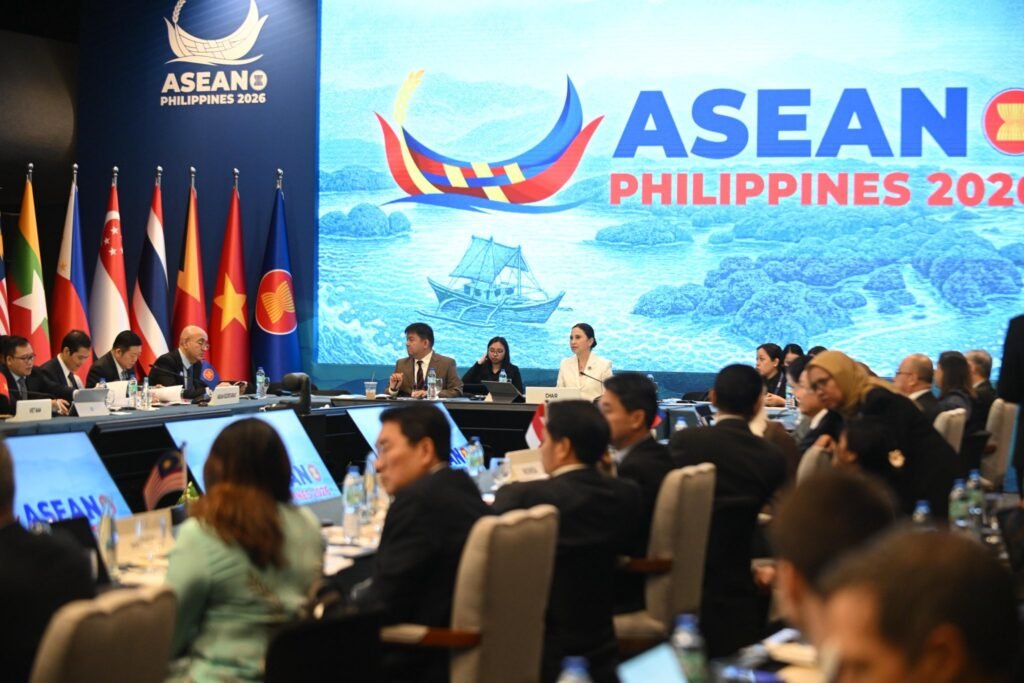
Manila (GNP): ASEAN Secretary-General Dr. Kao Kim Hourn participated in the 14th East Asia Summit Economic Ministers’ Meeting in Manila, where participating countries exchanged views on the global and regional economic outlook and discussed ways to strengthen economic cooperation.
The meeting brought together representatives of the East Asia Summit participating countries to consider areas where regional cooperation could support trade, investment and economic integration amid changing global economic conditions.
According to ASEAN, discussions focused on strengthening trade and investment linkages, advancing regional economic integration and enhancing supply-chain resilience.
Cooperation in energy security, digital transformation and sustainable economic development was also highlighted as part of the meeting’s agenda.
Dr. Kao’s participation reflects ASEAN’s continuing engagement with the wider East Asian economic architecture.
The East Asia Summit brings together ASEAN member states and its participating partners, providing a platform for dialogue on issues affecting the region’s economic and strategic environment.
The latest economic ministers’ meeting comes as governments across Asia continue to examine ways of strengthening supply chains and maintaining trade and investment flows amid changes in the global economy.
Energy security, digital transformation and sustainable development have increasingly become interconnected with questions of economic resilience.
Supply-chain resilience was among the key themes highlighted at the Manila meeting. Disruptions affecting transportation, energy supplies, manufacturing and international trade have demonstrated the importance of diversified and reliable regional supply networks.
Cooperation between economies can help create additional channels for trade and investment while reducing vulnerabilities associated with concentrated supply chains.
Energy security was another area identified for cooperation. East Asian economies have substantial and interconnected energy requirements, while the transition toward cleaner and more sustainable energy systems is creating new investment and technology needs.
Also Read: OIC Chief Joins Middle East Ministerial Dinner
Regional dialogue can provide opportunities to exchange approaches and explore areas for cooperation in energy infrastructure, technology and market development.
Digital transformation was also included in the discussions. ASEAN has increasingly placed digitalisation at the centre of its economic agenda, with digital trade, technology adoption and regional connectivity forming important components of efforts to deepen economic integration.
Dr. Kao has also participated in several ASEAN economic and digital initiatives during 2026. ASEAN records show that he has addressed issues including the digital economy, supply-chain resilience, regional integration and economic cooperation with major partners throughout the year.
The Manila meeting follows the 13th East Asia Summit Economic Ministers’ Meeting held in Kuala Lumpur in September 2025.
At that meeting, participants also exchanged views on the global and regional economic outlook and discussed cooperation in emerging areas to support regional growth.
The continuation of these discussions highlights the role of the East Asia Summit economic process in maintaining dialogue among economies with extensive trade and investment relationships.
For ASEAN, stronger economic integration remains closely connected to efforts to improve connectivity, facilitate trade and attract investment.
Cooperation with East Asia Summit partners can complement ASEAN’s existing regional economic arrangements and create additional opportunities for businesses operating across borders.
Sustainable economic development was also part of the Manila discussions. As governments seek to combine economic growth with environmental and social objectives, cooperation on technology, investment and sustainable production can influence the region’s future development patterns.
The emphasis on digital transformation similarly reflects the changing structure of regional economies.
Businesses are increasingly dependent on digital infrastructure, cross-border services and technology-enabled trade.
Strengthening digital capabilities can therefore contribute to productivity while supporting deeper connections between markets.
The meeting also provided an opportunity for participating countries to exchange perspectives on the broader global economic environment.
With East Asian economies closely linked through trade, manufacturing and investment, developments in one market can have effects across regional supply chains.
ASEAN said the discussions in Manila focused on practical cooperation aimed at strengthening trade and investment relationships, advancing integration and building greater resilience through cooperation in energy, digitalisation and sustainable development.
The 14th East Asia Summit Economic Ministers’ Meeting consequently provided another platform for regional economic dialogue, with participating countries examining areas of cooperation that could support more connected, resilient and sustainable economies across East Asia.