Lahore (GNP): The United States and Pakistan are exploring opportunities to strengthen cooperation across the cotton and textile value chain, with a focus on sustainable sourcing, traceability, innovation and greater supply-chain transparency.
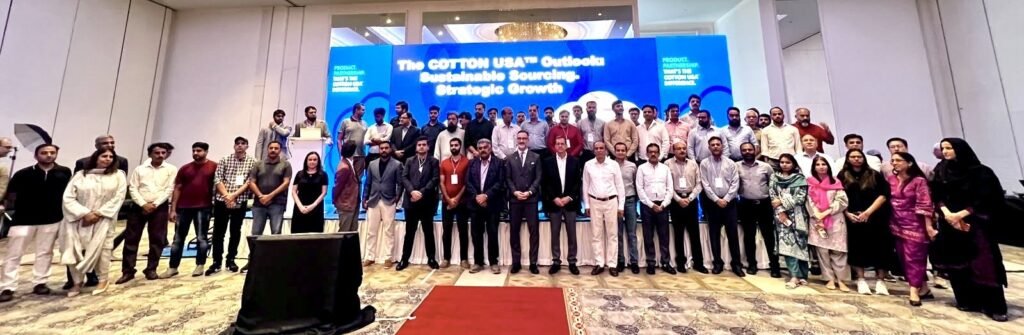
According to the U.S. Consulate General Lahore, Consul General Stetson Sanders met with a visiting U.S. cotton delegation and representatives of Pakistani textile mills to discuss opportunities for deeper industry-to-industry engagement.
The meeting highlighted the importance of Pakistan’s textile manufacturing sector to international cotton supply chains and the potential for stronger commercial connections between U.S. cotton suppliers and Pakistani manufacturers.
The U.S. Consulate described Pakistan as the second-largest export market for U.S. raw cotton, underscoring the importance of the Pakistani textile industry to American cotton exporters and the broader global textile network.
The discussions focused particularly on how closer cooperation could support sustainable sourcing practices, improve traceability and encourage the adoption of innovative approaches across textile manufacturing.
Supply-chain transparency was also identified as an important area of engagement as international buyers and brands increasingly seek information about the origin and production of textile products.
Cotton Council International (CCI), the export promotion arm of the U.S. National Cotton Council, plays a role in connecting American cotton suppliers with mills, manufacturers, brands and retailers in international markets.
CCI says its COTTON USA programme operates across more than 50 countries and promotes U.S. cotton fiber, yarn and manufactured cotton products.
Recent CCI initiatives have also placed particular emphasis on strengthening the U.S.-Pakistan cotton relationship.
Also Read: Pakistan, Japan Discuss Fintech and Finance Opportunities
The organization says it has led U.S. cotton industry delegations to Karachi and Lahore for COTTON USA Leadership Forums, where American cotton representatives engaged Pakistani textile leaders on global supply-chain issues and changing trade dynamics.
The engagement comes as textile producers face changing expectations in international markets, including greater attention to sustainability, product traceability and supply-chain accountability.
For manufacturers, access to consistent raw materials and technical knowledge can form part of efforts to improve production efficiency and meet evolving requirements from global buyers.
CCI has also promoted traceability through the U.S. Cotton Trust Protocol, which provides a framework for documenting sustainability-related information associated with U.S. cotton.
The organization has described traceability and environmental data as increasingly relevant to brands and retailers seeking greater visibility across their supply chains.
For Pakistan, stronger connections with U.S. cotton suppliers could provide opportunities for textile mills to engage more directly with international industry expertise and sourcing networks.
Pakistan has a large textile manufacturing base, spanning spinning, weaving, processing and apparel production, making the sector an important part of the country’s export economy.
The meeting also reflects a broader trend toward industry-to-industry engagement in international trade.
Rather than focusing exclusively on government-level commercial relations, direct engagement between cotton suppliers, textile mills and manufacturers can provide a platform for identifying practical business opportunities, technical requirements and areas for cooperation.
The discussions in Lahore highlighted several areas where collaboration could develop further, including sustainable cotton sourcing, supply-chain traceability, manufacturing innovation and commercial partnerships.
Greater transparency could also help companies respond to changing expectations from global brands and consumers.
As textile markets become increasingly focused on responsible sourcing and documented supply chains, access to reliable information about raw materials and production processes is becoming an important component of international competitiveness.
The U.S. Consulate said stronger industry-to-industry connections can create new commercial opportunities, support more transparent and resilient supply chains and contribute to Pakistan’s competitiveness in global textile markets.
The latest engagement therefore places cotton at the centre of a wider conversation about trade, manufacturing, sustainability and innovation between the United States and Pakistan.
Continued cooperation between American cotton suppliers and Pakistani textile manufacturers could provide additional channels for technical exchange and commercial engagement across the textile value chain.