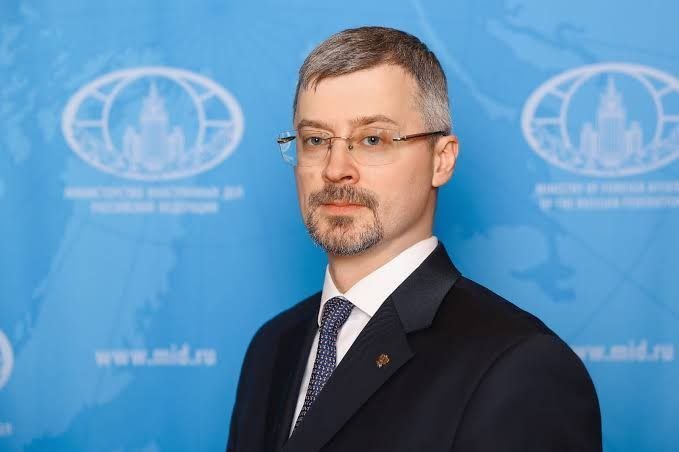
Islamabad (GNP): Russia and Pakistan are continuing efforts to establish new freight railway connections between the two countries, with discussions focused on launching freight routes linking Moscow with Faisalabad and Karachi in both directions, according to comments by Russian Ambassador to Pakistan Albert P. Khorev.
The proposed railway initiative is aimed at strengthening transport and trade connectivity between Russia and Pakistan while creating additional opportunities for the movement of goods across the region.
The project could also provide a framework for expanding commercial links between Pakistan, Russia and other countries along the proposed transportation corridors.
According to Ambassador Khorev’s comments to the Russian newspaper Izvestia on August 8, Russian and Pakistani partners are working toward launching the first freight railway routes along the Moscow–Faisalabad and Moscow to Karachi corridors.
The possibility of involving Belarus in the project is also being considered, potentially expanding the geographical reach of the proposed freight network.
The initiative comes amid broader efforts by Russia and Pakistan to enhance economic and logistical cooperation.
Improved railway connectivity could facilitate the transportation of commercial goods while providing businesses with an alternative route for international trade.
The implementation of the project has faced delays. Ambassador Khorev noted that geopolitical tensions in the region during 2025 and early 2026 resulted in the project being postponed several times.
Despite these challenges, both sides have continued discussions regarding the practical arrangements required to move the initiative forward.
At present, Russian and Pakistani authorities and relevant partners are reportedly working to finalize a contract concerning the proposed railway service.
The two sides are also identifying companies in countries along the planned route that may be interested in transporting their goods through the new freight corridors.
The identification of potential commercial users is an important component of the project because the long-term sustainability of a freight railway connection depends significantly on demand from exporters, importers and logistics companies.
Establishing a reliable customer base could help determine the volume, frequency and operational requirements of future services.
The proposed Moscow–Faisalabad and Moscow–Karachi routes could also contribute to Pakistan’s broader efforts to improve its role as a regional trade and transit hub.
Faisalabad is one of Pakistan’s major industrial and textile centers, while Karachi serves as the country’s principal commercial and maritime gateway.
Connecting these locations with Russian markets by rail could create new possibilities for the movement of industrial, agricultural and manufactured products.
For Russia, stronger rail connectivity with Pakistan could provide another avenue for expanding trade relations with South Asia.
The potential participation of Belarus could further broaden the network and connect additional commercial interests to the proposed route.
The project also reflects the growing importance of land-based transportation corridors amid changes in global trade and logistics.
Also Read: PM Resolve to Protect Rights of Minorities
Efficient railway connections can reduce dependence on individual transportation routes and provide businesses with additional options for moving goods across long distances.
While the exact launch date and operational details of the proposed freight services have not yet been finalized, ongoing work on contractual arrangements and the identification of interested companies indicates that discussions remain active.
The development of the railway corridors will therefore depend on the completion of commercial agreements, logistical preparations and coordination among the countries and companies involved.
If successfully implemented, the Moscow–Faisalabad and Moscow–Karachi freight corridors could become an important component of expanding Russia–Pakistan economic relations and contribute to wider regional connectivity.