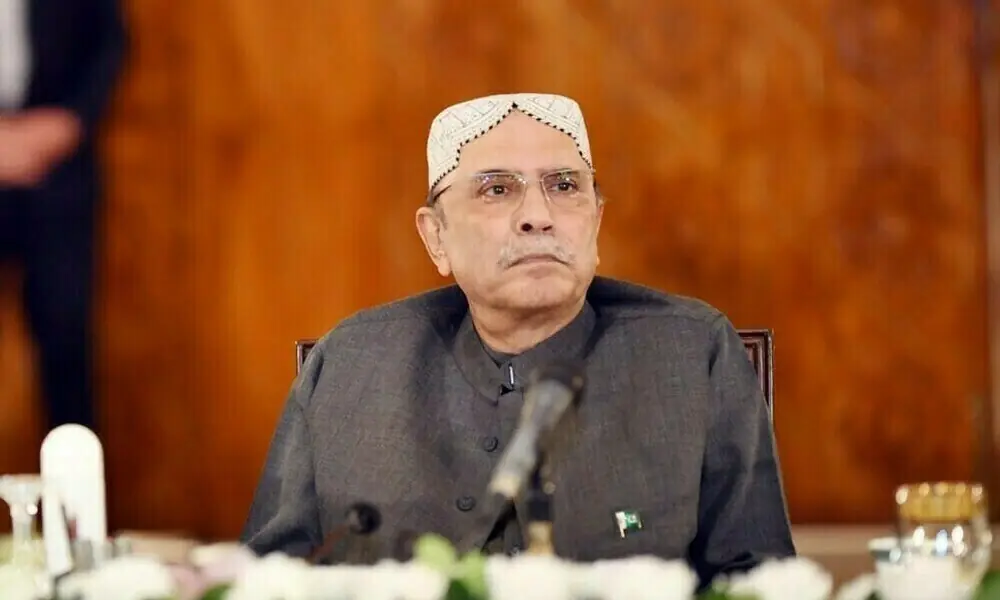
Islamabad (GNP): President Asif Ali Zardari has highlighted Pakistan’s rich cultural diversity and emphasized the importance of recognizing and preserving the traditions and heritage of indigenous communities on the occasion of the International Day of the World’s Indigenous Peoples, observed annually on August 9.
In his message, President Zardari described Pakistan as a country with a diverse cultural mosaic, noting that its heritage includes communities such as the Kalash and the people of the northern mountainous regions.
He emphasized that Pakistan’s cultural diversity extends across the country, from Gilgit to Gwadar and from the plains to the deserts of Cholistan and Thar.
The President’s message underlines the importance of recognizing communities that have preserved their distinctive cultural identities, traditions and ways of life across generations.
Indigenous and traditional communities form an important part of Pakistan’s social and cultural landscape, contributing to the country’s diversity through languages, customs, festivals, traditional knowledge, crafts and other cultural practices.
The International Day of the World’s Indigenous Peoples provides an opportunity for governments and societies around the world to recognize the contributions of indigenous peoples and draw attention to the challenges they face.
It also encourages efforts to protect their cultural identities, traditional knowledge and rights.Pakistan’s cultural heritage is particularly diverse because of the country’s varied geography.
From the high mountain valleys of Gilgit-Baltistan and Khyber Pakhtunkhwa to the deserts of Sindh and Punjab and the coastal communities of Balochistan, different communities have developed traditions closely connected with their local environments.
The Kalash communities are among the most distinctive cultural groups highlighted in discussions about Pakistan’s indigenous heritage.
Located primarily in the valleys of Chitral, the Kalash have preserved unique traditions, festivals, clothing, music and social practices.
Their cultural heritage represents an important component of Pakistan’s wider cultural diversity.Pakistan has also taken steps to protect its intangible cultural heritage through international cooperation.
The country ratified the UNESCO Convention for the Safeguarding of the Intangible Cultural Heritage in 2005.
The convention seeks to safeguard living cultural practices while encouraging the participation of the communities that maintain and transmit them.
UNESCO has documented several elements of Pakistan’s intangible cultural heritage and has supported community-based safeguarding initiatives.
Such efforts recognize that cultural heritage is not limited to monuments and historical buildings but also includes traditions, knowledge, skills and practices passed from one generation to another.
The protection of indigenous heritage is increasingly important as communities face social, economic and environmental changes.
Globalization, modernization, climate change and migration can affect traditional lifestyles and the transmission of cultural knowledge between generations.
Preserving cultural heritage therefore requires meaningful participation from the communities themselves.
Also Read: Dar, Canadian FM Discuss Regional Developments
Documentation, education and awareness programmes can help younger generations understand and continue their cultural traditions while allowing communities to maintain ownership of their heritage.
President Zardari’s message serves as a reminder that Pakistan’s cultural identity is built upon the diversity of its people and regions.
Recognizing communities from the northern mountains to the deserts and coastal areas can strengthen national appreciation for the country’s cultural richness.
The observance also provides an opportunity to promote greater awareness about the need to protect indigenous and traditional communities from cultural marginalization.
Ensuring that their voices are included in cultural and development policies can contribute to more inclusive national development.
As Pakistan marks the International Day of the World’s Indigenous Peoples, the President’s message reinforces the importance of protecting the country’s diverse cultural heritage and ensuring that distinctive traditions continue to be valued and passed on to future generations.