
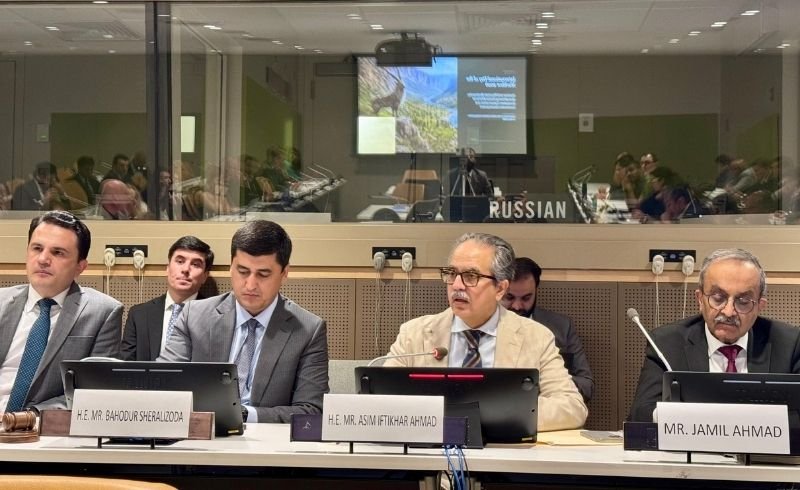
United Nations GNP: Markhor conservation and mountain biodiversity protection took center stage at the United Nations as Pakistan highlighted its successful efforts to save the species from extinction and called for stronger international cooperation to protect fragile mountain ecosystems.
Speaking at a special event marking the International Day of the Markhor 2026, Asim Iftikhar Ahmad said the Markhor is not just a wildlife species for Pakistan but a national symbol representing resilience and majesty in the country’s northern and western mountain regions.
The event was jointly hosted by the Permanent Missions of Pakistan and Tajikistan in collaboration with United Nations Environment Programme and International Union for Conservation of Nature.
Ambassador Ahmad said Pakistan’s conservation initiatives, including a CITES-recognized program, helped increase the Markhor population after the species once faced the threat of extinction. However, he warned that climate change, habitat degradation, disease pressures, and illegal hunting continue to threaten the species across mountain regions.
He stressed that warming temperatures and ecosystem disruption are affecting predator patterns, increasing risks for young Markhor populations. Calling the challenges interconnected and rapidly growing, he urged greater global cooperation to ensure long-term protection of mountain biodiversity.
Officials and conservation experts from different countries also highlighted successful recovery efforts, especially in Tajikistan, where the Markhor population has significantly increased through community-based conservation and scientific monitoring.
Also Read: Planning Minister Urges NFC Reforms for Population Control
Environmental experts warned that mountain ecosystems are warming faster than lowland areas, leading to glacier melt, water stress, and biodiversity loss. Speakers emphasized that the Markhor has become a symbol of successful conservation driven by political commitment, scientific research, and local community participation.
The event concluded with a collective call for stronger international action to protect mountain ecosystems, restore biodiversity, and support sustainable development for future generations.