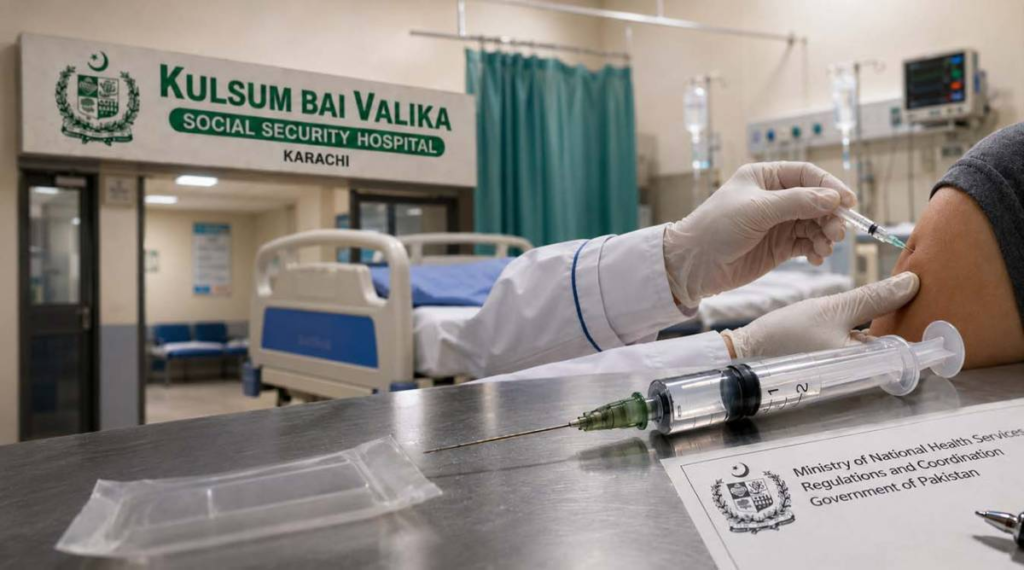
KARACHI (GNP): The number of confirmed HIV cases linked to an outbreak at Valika Hospital has climbed to 120, Sindh Labour, Human Resources and Social Security Minister Saeed Ghani said Tuesday, announcing criminal proceedings against those found responsible as officials pointed to broader structural gaps in Pakistan’s HIV response.
Speaking at a press conference in the Sindh Assembly committee room, Ghani said more than 10,500 people had been screened in and around the hospital, with 120 testing positive for HIV. He said affected children were currently receiving treatment at five major hospitals across the country.
Addressing criticism over the government’s response, Ghani said authorities acted swiftly after the first cases emerged in October 2025, with the health department’s disease surveillance team beginning screening the following day and an inquiry committee formed within days. He said the initial investigation confirmed HIV infection in 16 children along with two deaths, while a subsequent report raised the total to 78 cases and six fatalities. The minister said show-cause notices had already been issued to 37 doctors and staff members, adding that those found responsible would be dismissed from service and face criminal charges, including the registration of FIRs.
Ghani announced the establishment of a Rs2 billion endowment fund to support the treatment and welfare of affected children, saying the amount could be increased if needed. He said the identities of patients and their families would remain confidential under the Sindh HIV Control Act 2006 to protect them from stigma.
Of the 120 confirmed cases, Ghani said 81 patients were registered under the social security system, while the government was covering treatment costs for the remaining 39. He added that around 2,000 people had been screened separately at the Landhi Social Security Hospital, where 10 additional HIV cases were detected. Despite concerns over a possible rise in infections, the minister said screening would continue, stressing that timely diagnosis remains key to controlling the spread. He said all reported cases traced back to infections predating October 2025, with no new cases of this nature identified since.
Responding to questions on medical waste disposal, Ghani acknowledged that while a disposal mechanism exists, lapses occur due to non-compliance by certain parties pursuing vested interests, adding that action was being taken against those responsible.
Indus Hospital CEO Dr Abdul Bari Khan, also present at the press conference, said the prevalence of HIV and hepatitis C in Pakistan remains a serious concern, calling for coordinated efforts between the government and healthcare institutions to address the issue.
Nationwide challenges
The Valika Hospital outbreak reflects wider vulnerabilities documented in HIV research on Pakistan. Although the country is classified as high-risk but low-prevalence, with an estimated national prevalence below 0.1 percent, Sindh and Punjab together account for roughly 91 percent of people living with HIV, with Karachi, Lahore and Islamabad identified as major hubs. Despite a global decline in new HIV infections, Pakistan has emerged as one of the fastest-rising HIV nations in Asia.
Researchers attribute the country’s vulnerability to a combination of factors, including widespread poverty, illiteracy and unhygienic medical practices, compounded by stigma that discourages routine testing. Reuse of unsterilized injection equipment has been flagged as a particularly acute risk, with studies cited in the research indicating that up to 94 percent of injections in some settings are administered with used equipment, against a backdrop of Pakistan’s comparatively high rate of medical injections per capita. Weaknesses in blood donation and transfusion screening at under-resourced healthcare facilities have also been identified as contributing to transmission.
The research further points to systemic gaps since health administration was devolved to the provinces in 2010, including poor coordination among government units, inconsistent case reporting, limited public engagement, and treatment by unqualified individuals. Of Pakistan’s roughly 240,000 officially registered HIV cases, only about 55.6 percent of patients were receiving antiretroviral therapy through the country’s 50 treatment centers, a capacity researchers describe as insufficient for the population. An estimated 89.6 percent of HIV patients nationally are not receiving any treatment, largely due to absence of symptoms, reluctance to disclose test results, and fear of social stigma.
Also Read: Sindh Confirms 120 HIV Cases at Karachi Hospital, Vows Legal Action
Recommendations
The research outlines several measures to curb the spread of HIV in Pakistan, including expanding awareness campaigns, treatment centers and testing access in urban areas, where 87 percent of HIV-positive patients reside. It recommends closer coordination between federal and provincial governments, additional international funding support given an estimated $201 million shortfall against the Ministry of Health’s five-year strategic plan, and stronger accountability within the healthcare system for unqualified practitioners linked to unsafe injection practices. It also recommends routine HIV screening for patients with a history of drug use, citing studies suggesting injection drug users constitute a significant share of the country’s HIV caseload.
Existing initiatives cited in the research include a Pre-exposure Prophylaxis program launched in Karachi in 2022 by the Sindh health department in collaboration with the United Nations, as well as harm-reduction work by organizations such as Nai Zindagi and the RAAH Foundation, which provide counselling, testing and needle-exchange services for high-risk populations.