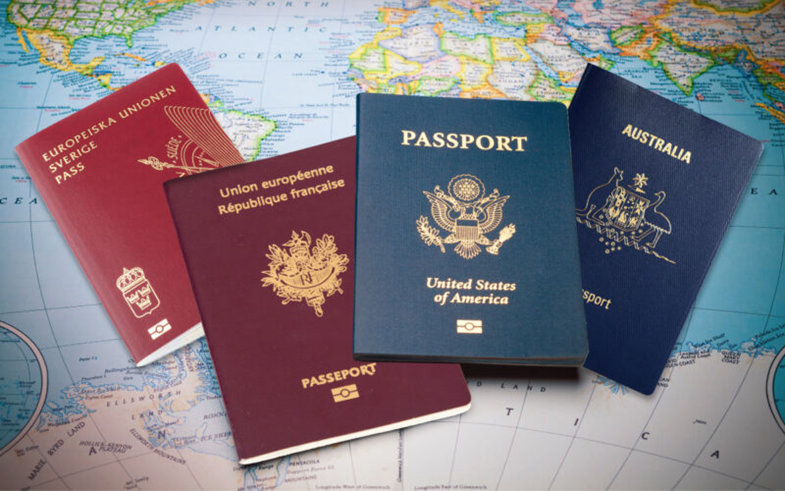
From China’s policy of exit control to EU visa constraints on Georgian diplomats, and Brazil’s reciprocity policy, passport privileges exposes the geopolitical power dynamics.
A passport is not just an attribution to prove a person’s citizenship, but it reflects the international standing and its influence on the state. The significance of any country in the international community directly affects the opportunities of its people. Citizens of influential states are able to obtain visa-free entry in several countries, where citizens of a developing country could face challenges, such as lengthy visa procedures, strict and repetitive security checks and discriminatory-based restrictions.
This unequal access exposes an important geopolitical reality that is often overlooked, international mobility is not equal for everyone. It is led by power, negotiations and national interest.
The European Union suspended visa-free travel for Georgian diplomats and service officials passport holders earlier this year. This was a response to disagreement with the announced EU foreign policy, anti-democratic system and restrictions on civil liberties. It is an example of how mobility could be used as a diplomatic leverage.
This act of you has symbolised that visa-free travel is not an unconditional privilege, but there are specific political expectations and coordinations linked to this arrangement. One element of this decision is that ordinary Georgian citizens are still allowed to obtain visa-free access, meanwhile officials are targeted. This is a case of selective diplomatic pressures where political elites and dominating states influence others to pursue their objectives.
The European Union is using its passport privilege as reward and punishment. If a government doesn’t align with the expectations of the organisation then it intends to restrict it. In this case, visa policy has become an instrument of foreign policy.
China’s Policy and the Right to Move
China’s State Council Decree No. 841, was proposed on 22 July 2026 implemented on 15 September 2026, introducing rigid regulations for governing the exit and entry of the state, and expanded its administration powers on travel documentation, and territorial control restrictions on the person leaving China.
The article 2 of Decree No. 841, specifically warns citizens traveling to high alert or conflicted regions and provides Chinese authorities with the right to discourage such travel. Article 3 requires legitimate reasons for travelling, whereas article 4 is the restrictions over exit.
These unconventional regulations are justified for safeguarding national interest, security, sovereignty and economic development of the state. Human Rights Watch has expressed concern over this, highlighting the internationally recognised individual right to leave a state’s territory without restrictions.
This development shows the increasing securitisation of mobility in China where global travel is treated as a potential threat to national security rather than being considered as an exercise of individual rights. Traditionally, the powerful passport shows the privilege of freedom to commute, but China gives another angle where the state has the ability to restrict or permit its citizens over territorial movement. Flexible mobility is not only for international borders but becomes an issue of domestic state authority.
Also Read: Return of Great Power Competition in the Arctic Race
The Politics of Reciprocity
The visa reciprocity policy of Brazil is another example of passport privilege in recent times. In 2023 Brazil issued Decree No. 11515, which listed the short-stay visa requirements for passport holders of the United States, Canada, Japan and Australia. While the policy was scheduled to be implemented from 1 October 2023, it was postponed to make further adjustments and later became effective on 10 April 2025. By this time, Japan got a reciprocal visa exemption through an agreement with Brazil
This decision was based on the principle of reciprocity. If Brazilian citizens are required a visa to travel in these countries, then Brazil would have equivalent expectations from their citizens. This policy highlights the unjust nature of global mobility where compromises are to be made by the citizens of developing countries.
These reciprocity policies can not directly eliminate inequality in the passport privilege phenomena. Every state has a different bargaining tool such as, economic influence, military power or international credibility. Visa restrictions over a developing country could affect its businesses and tourism, whereas the same restrictions on a powerful country have relatively less impact.
Passport privilege is an understood example of hierarchy in the international system and political economy. The privilege that the European Union has over third world countries could help in aligning their political agenda with it. The geopolitics of passport privilege raises a critical question about the global order: does the principle of state sovereignty also give them control over the movement of citizens? Therefore, passport politics within the international community shows how states recognise equal sovereignty, but their citizens experience different levels of freedom