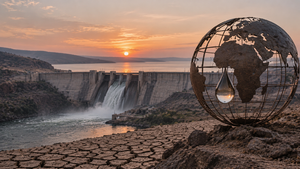
Water has become a major instrument of geopolitical pressure, from the Indus Basin to the Middle East. The weaponization of water exposes the increasing intersection of resource accessibility, power politics and global stability.
Water is the most essential commodity for survival and development, hence it’s considered more than just a resource but has instilled itself into political and economic assets. With regard to global power politics, water shows a pattern of control and dominance of the powerful actors that shape the distribution and accessibility of this natural commodity. The key assumption of ‘water equality-for-all’ is often overlooked. Along with global politics, the mismanagement and governance of water could lead to scarcity and unjust division.
The weaponization of water has become a major concept in security studies. It revolves around the idea of intentional manipulation of water resources. As some states control the distribution system and the infrastructure of water bodies, it restricts the natural river flows. This manipulation has led to unjust accessibility of water, and its scarcity has become a main crisis for the civilian population.
Water Competition and Security
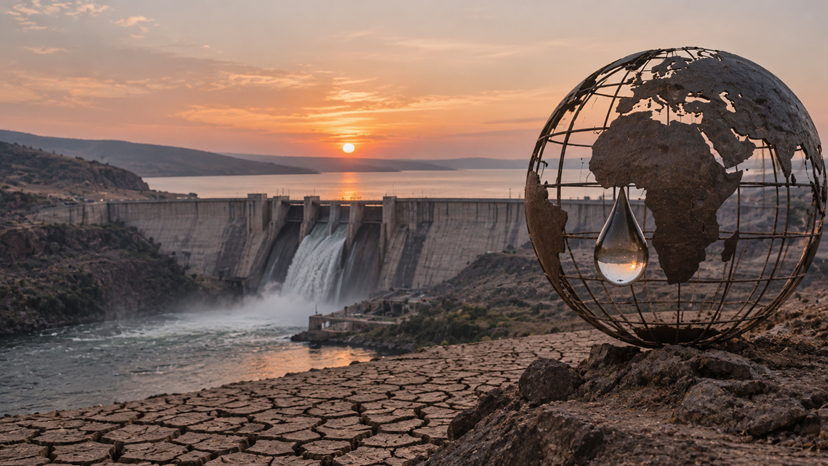
In recent times, the Grand Ethiopian Renaissance Dam (GERD) is noted as one of the most important examples of the global water crisis. It’s constructed on the blue Nile, and Ethiopia’s huge hydroelectric project has led to long-standing conflicts with Egypt and Sudan regarding water distribution and its management. With approximately 90% of renewable freshwater resources from the Nile, Egypt views it as a disruption to the natural river flows and raises serious concern over its national security. Ethiopia on the other hand is confident that the dam is important for its economic development and energy sovereignty. Ethiopian Dam inaugurated in 2025 September, led to serious debate over the region’s water security and governance.
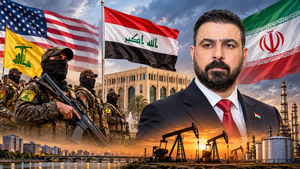
The 21st century witnessed water being weaponized by non-state actors. For example, the Islamic State from 2012 to 2015, conducted half of recorded water weaponized incidents in Syria and Iraq. In 2014, ISIS seized Mosul Dam in Iraq which provided them control over the state’s major water infrastructure and led to threat for communities, including Baghdad.
Diverted river flows, flooded agriculture fields and limited water supply to the civilian population, showed how a natural resource such as water could be used for territorial domination.
The Emerging Crisis of Water
Weaponization of water revolves around the expansion of security agendas beyond traditional military and economic threats. Controlling one’s water is not just a threat to the national interest or territorial sovereignty but also to food security, environmental integrity, livelihood and civilian survival. Similarly, the hydro politics transformed development projects into strategic crises.
The future conflicts are predicted to revolve around water security, with problems circulating the sharing of this natural commodity. Weak international or regional institutions and political mistrust among governments could lead to issues, for coordinating to resolve the water crisis.
Also Read: Global Trade Rules: Three Key Reforms in 2026
In 2026, there are several water crises that could potentially lead to a major conflict over this commodity. For example, Afghanistan’s Qosh Tepa Canal project is raising concerns in Central Asia, including Uzbekistan and Tajikistan over availability of water from Amu Dariya. Similarly China proposed a mega dam project on Yarlung Tsangpo River, which has led to tensions for India over the downstream water security.
The water weaponization is a case of contemporary evolution of the geopolitical competition that has resulted from the manipulation of this life-sustaining resource. The consequences of this could extend beyond geographical limitations. Once a water crisis has erupted, it would influence the entire International Community.
In the time where rivers have become a tool of political coercion, the concern has shifted from who accesses it to who has the power to make water-related decisions.