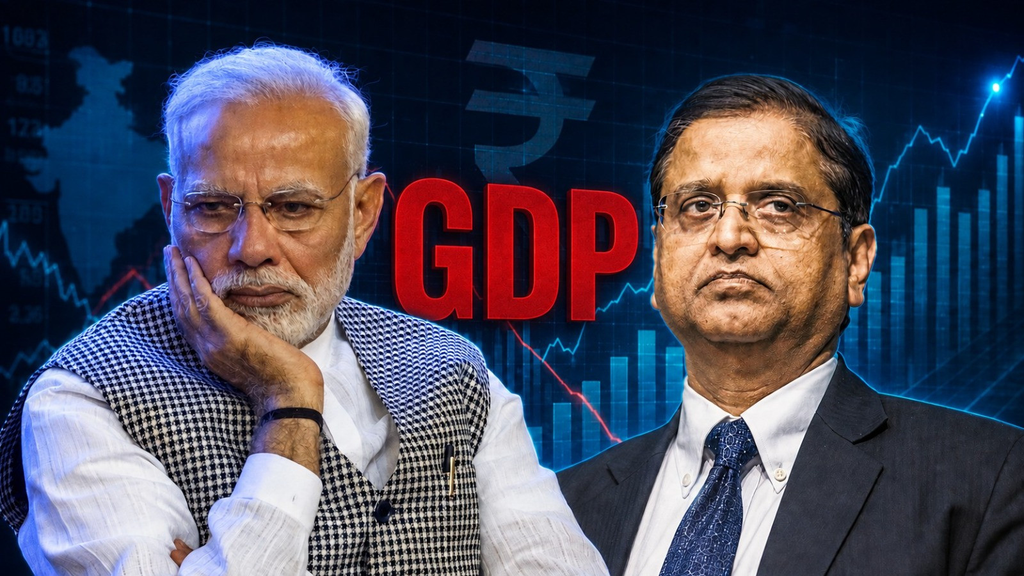
New Delhi (GNP): India’s latest economic growth figures have triggered a sharp dispute over the credibility of official data after former Finance Secretary Subhash Chandra Garg questioned the government’s reported 7.8 percent gross domestic product growth for the April to June quarter of fiscal year 2026-27.
Garg has argued that a sharp downward revision to the GDP estimate for the corresponding quarter of the previous fiscal year has significantly boosted the headline growth figure.
According to Garg, nominal GDP growth would have stood at around 2.6 percent had the earlier base figure not been revised, leading him to question whether the latest data accurately reflects the underlying strength of the Indian economy.
The dispute followed the release of revised national accounts data by India’s Ministry of Statistics and Programme Implementation, which reported real GDP growth of 7.8 percent for the first quarter compared with 6.9 percent a year earlier, alongside nominal GDP growth of 10.3 percent.
Central to Garg’s criticism is the revision of the previous year’s current price GDP estimate, which he says was reduced from roughly 86 lakh crore rupees to about 80 lakh crore rupees under the new calculations. He argues that this change materially affects the base against which the latest growth is measured, producing a far stronger headline figure than the underlying economy would otherwise show.
His assessment was quickly amplified by India’s opposition Congress party, with senior leader Jairam Ramesh accusing the government of using statistical presentation to project an exaggerated picture of economic performance.
The government has defended its statistics. Statistics Secretary Saurabh Garg, who shares a surname with the former finance secretary, said the revisions reflect the introduction of a new GDP series based on 2022-23, along with updated data sources and methodological improvements, rather than any deliberate attempt to lower the previous year’s figures.
He noted that the new methodology incorporates more detailed price information through the producer price index and expands the number of price deflators used in GDP calculations from around 180 to more than 300. Officials added that quarterly revisions over the past three years have moved in both directions rather than consistently reducing earlier estimates.
Also Read: Arab League Warns Houthi Escalation Threatens Regional Stability
Under the new series, real GDP at constant prices stood at 81.36 lakh crore rupees for the June quarter, against 75.46 lakh crore rupees in the same quarter of the previous fiscal year, producing the reported 7.8 percent real growth rate, while real gross value added rose 8.2 percent. Manufacturing expanded 9.2 percent and services grew close to 10 percent, supported by stronger investment and consumption, according to the official data.
The dispute nonetheless highlights broader concerns around transparency and predictability in India’s economic statistics, with questions over revisions, methodology and the availability of detailed underlying data making it difficult for outside observers to assess some of the sharp changes seen in quarterly estimates. India is expected to release further methodological details later this month, which officials say could bring greater clarity to the disputed calculations.
Garg said, “The revision to the previous year’s GDP base has produced a much stronger headline growth rate.”