
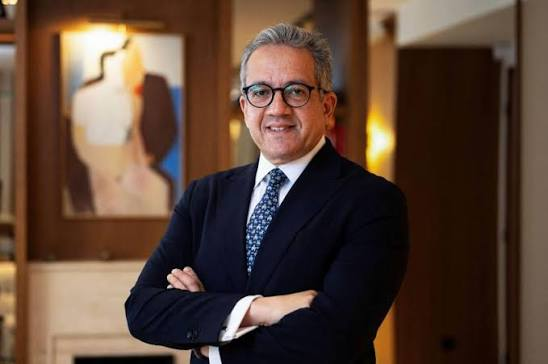
Paris (GNP): UNESCO Director-General Khaled El-Enany has praised the organisation’s partnership with Saudi Arabia and welcomed the Kingdom’s efforts to advance ethical artificial intelligence, ahead of the Global Forum on the Ethics of Artificial Intelligence set to be held in Riyadh from September 14 to 17. El-Enany said the forum presents an important opportunity to strengthen international cooperation and ensure global AI governance keeps pace with rapid technological change.
He emphasised that no single country can address the challenges of AI governance alone, given the speed at which the technology continues to reshape societies worldwide. Noting that five years have passed since UNESCO Member States adopted the world’s first global standard on AI ethics, the UNESCO Recommendation on the Ethics of Artificial Intelligence, El-Enany said countries are increasingly converting its principles into concrete policies, strategies and institutions.
El-Enany stressed that AI ethics extends beyond preventing harm, adding that it is equally about ensuring artificial intelligence remains people centred, supports sustainable development and serves the broader common good. His remarks come as Saudi Arabia positions itself as a central player in the global conversation on responsible AI governance, having emerged as a major hub for private AI investment and innovation.
According to the World Bank Group’s World Development Report 2026, Saudi Arabia now ranks among the world’s top ten countries for private AI investment, while gaining recognition as an attractive destination for AI talent and a model for government data integration. The report, described as the World Bank’s first comprehensive assessment of AI’s impact on developing economies, examines the opportunities the technology can create for individuals, businesses and governments, alongside the requirements for maximising its benefits while managing associated risks.
The World Bank identified capabilities, concentration and complements as the three key dimensions shaping AI’s impact on development, and highlighted Saudi Arabia’s progress as part of a broader national strategy supported by Saudi Vision 2030. That strategy aims to build a data, computing and innovation driven economy while strengthening the Kingdom’s role in shaping the future of artificial intelligence, a trajectory that aligns closely with the themes El-Enany is set to address at next week’s forum in Riyadh.
El-Enany said, “No country can address the challenges of AI governance alone.”UNESCO Chief Praises Saudi Arabia’s Push for Ethical AI
Paris (GNP): UNESCO Director-General Khaled El-Enany has praised the organisation’s partnership with Saudi Arabia and welcomed the Kingdom’s efforts to advance ethical artificial intelligence, ahead of the Global Forum on the Ethics of Artificial Intelligence set to be held in Riyadh from September 14 to 17. El-Enany said the forum presents an important opportunity to strengthen international cooperation and ensure global AI governance keeps pace with rapid technological change.
He emphasised that no single country can address the challenges of AI governance alone, given the speed at which the technology continues to reshape societies worldwide. Noting that five years have passed since UNESCO Member States adopted the world’s first global standard on AI ethics, the UNESCO Recommendation on the Ethics of Artificial Intelligence, El-Enany said countries are increasingly converting its principles into concrete policies, strategies and institutions.
El-Enany stressed that AI ethics extends beyond preventing harm, adding that it is equally about ensuring artificial intelligence remains people centred, supports sustainable development and serves the broader common good. His remarks come as Saudi Arabia positions itself as a central player in the global conversation on responsible AI governance, having emerged as a major hub for private AI investment and innovation.
Also Read: OpenAI Maths Breakthrough: 5 Astonishing Signs of a New AI Era
According to the World Bank Group’s World Development Report 2026, Saudi Arabia now ranks among the world’s top ten countries for private AI investment, while gaining recognition as an attractive destination for AI talent and a model for government data integration. The report, described as the World Bank’s first comprehensive assessment of AI’s impact on developing economies, examines the opportunities the technology can create for individuals, businesses and governments, alongside the requirements for maximising its benefits while managing associated risks.
The World Bank identified capabilities, concentration and complements as the three key dimensions shaping AI’s impact on development, and highlighted Saudi Arabia’s progress as part of a broader national strategy supported by Saudi Vision 2030. That strategy aims to build a data, computing and innovation driven economy while strengthening the Kingdom’s role in shaping the future of artificial intelligence, a trajectory that aligns closely with the themes El-Enany is set to address at next week’s forum in Riyadh.
El-Enany said, “No country can address the challenges of AI governance alone.”

Managing Editor at Global News Pakistan (GNP), with a Bachelor's degree in International Relations from Riphah International University, graduated with a Gold Medal. Reach out at sabahtareengnp@gmail.com