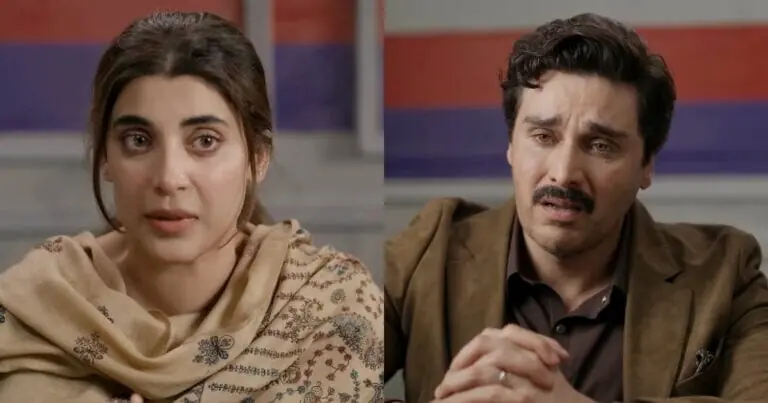
Karachi (GNP): A single scene from Hum TV’s drama Aap Ki Izzat has drawn an outpouring of praise from Pakistani celebrities, with actress Urwa Hocane’s performance in particular winning widespread admiration.
The reaction followed the 15th and 16th episodes of the show, starring Hocane alongside Ahsan Khan, in which their characters confront the collapse of a fourteen year marriage undone by emotional neglect and a loss of mutual respect.
In the episodes, Hocane’s character Beena finally confronts her husband Tabish, played by Khan, giving voice to years of accumulated pain, calling out his religious hypocrisy and naming the emotional neglect she endured.
The monologue struck a chord with viewers and fellow actors alike, prompting a wave of social media tributes rarely seen for a single scene in Pakistani television.
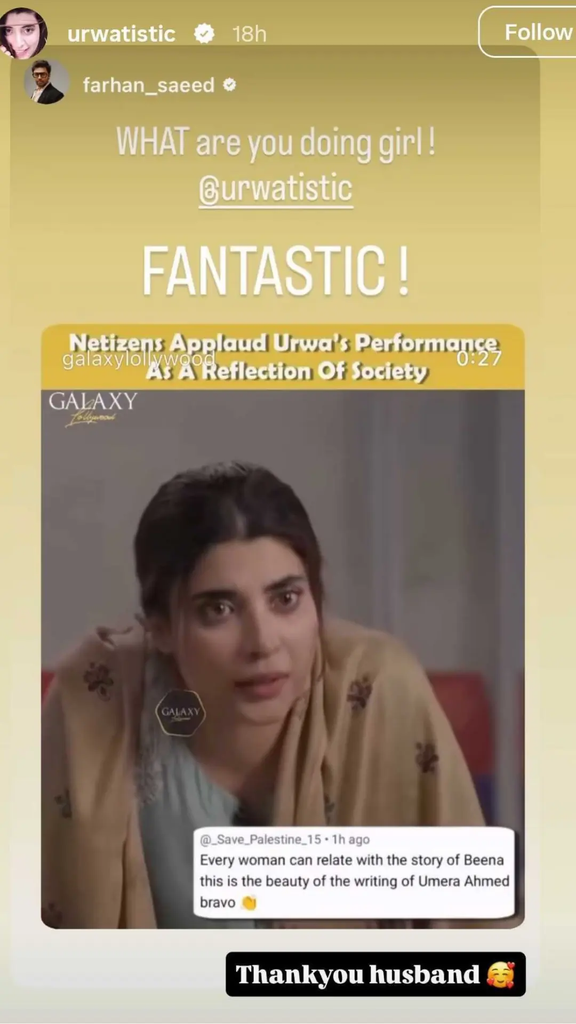
Hocane’s husband, singer and actor Farhan Saeed, was among the first to publicly praise her performance, followed shortly by her sister, actress Mawra Hocane, who also expressed admiration on social media. Fellow actress Sonya Husyn described the delivery as powerful yet subtle and precise, while Zhalay Sarhadi, Yumna Zaidi, Zara Noor Abbas and Ayesha Omar each shared their appreciation for both leads through their Instagram stories.
Beyond the acclaim, Aap Ki Izzat has prompted wider conversation around the themes it depicts. Directed by Saife Hasan and written by Umera Ahmed, the drama explores struggles many couples face privately, opening up discussion around respect, dignity and the courage required to speak up within a marriage.
Also Read: Harry, Meghan ‘Surprised’ by King’s Letter on Private Citizen Status
The response to Hocane and Khan’s performances suggests the show has resonated well beyond its immediate audience, drawing attention to experiences that are often left unspoken.
The scale of the reaction, from fellow actors to viewers online, reflects both the strength of the performances and the resonance of the story Aap Ki Izzat is telling. As the drama continues, the conversation it has sparked around emotional neglect and self respect within relationships looks set to remain part of its legacy.
Sonya Husyn said, “Such powerful dialogue delivery yet so subtle and precise.”