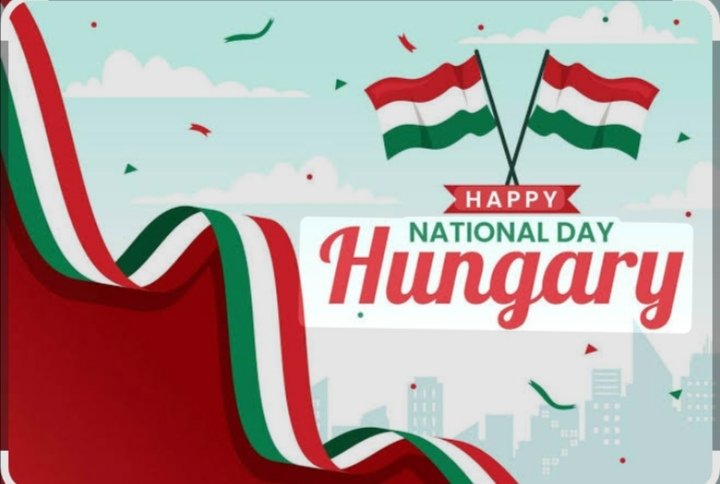
Islamabad (GNP): President Asif Ali Zardari has congratulated András Baka on his election as the President of Hungary and conveyed his best wishes to the Hungarian people on their National Day.
In his message, the President expressed confidence that Pakistan-Hungary relations, founded on mutual trust and shared interests, would continue to strengthen in the years ahead.
President Zardari said he looks forward to working closely with President-elect Baka to further broaden bilateral cooperation, particularly in political and parliamentary exchanges, trade and investment, development cooperation, climate action, education, culture as well as migration and mobility.
The President also conveyed his best wishes for President-elect Baka’s good health, well-being and success, as well as for the continued progress and prosperity of the people of Hungary.
Hungary National Day, also known as Saint Stephen’s Day, commemorates the founding of the Hungarian state and the canonization of its first king, Stephen I, every August 20. This significant public holiday is a vibrant celebration of national identity, marked by fireworks, parades, and cultural events. Join in the festivities by learning about Hungarian history, exploring its traditions, and sharing your appreciation for its culture.
As a national holiday focused on historical and cultural recognition rather than commercial sales, Hungary National Day doesn’t typically feature widespread retail deals.
However, cultural institutions like the Hungarian National Museum and the Hungarian State Opera often host special exhibitions, concerts, or open house events. Local businesses, particularly restaurants and artisan shops, may offer special menus or themed products celebrating Hungarian heritage. Look for opportunities to support Hungarian-owned businesses or explore cultural programs. We will update this page with confirmed live cultural events as August approaches.
Before the establishment of the Hungarian state, the territory was settled by various groups, including Celts, Romans, Huns, Germanic peoples, Avars, and Slavs. Statehood began in the late ninth century with the Principality of Hungary, which became a medieval Christian kingdom under King Stephen I in 1000.
After it was defeated by the Ottoman Empire at the Battle of Mohács in 1526, the kingdom was split into three regions for over 150 years until its reunion under Habsburg rule before the turn of the 18th century.
Several uprisings against the Habsburgs precipitated the formation of the Austro-Hungarian Monarchy in the Compromise of 1867; Austria-Hungary remained a European great power until World War I. Hungary’s modern borders were then established by the 1920 Treaty of Trianon, which resulted in severe losses for the country, including 71% of its historical territory and the majority of its economy and population; a third of ethnic Hungarians were left outside the new borders.
Also read: President Stresses Merit, Transparency in Recruitment
Hungary endured turmoil in the early interwar period, culminating in the national-conservative regime of regent Miklós Horthy. Hungary joined the Axis powers in World War II, suffering significant damage and casualties. After a brief Soviet occupation, the Hungarian People’s Republic was established in 1949 as a satellite state inside the Warsaw Pact.

Sohail Majeed is a Special Correspondent at The Diplomatic Insight. He has twelve plus years of experience in journalism & reporting. He covers International Affairs, Diplomacy, UN, Sports, Climate Change, Economy, Technology, and Health.